Skip to content

Advertisement

Viewpoints » Contributors

The truth about trauma

Health education programs are not a solution to the South Side’s structural disadvantages.

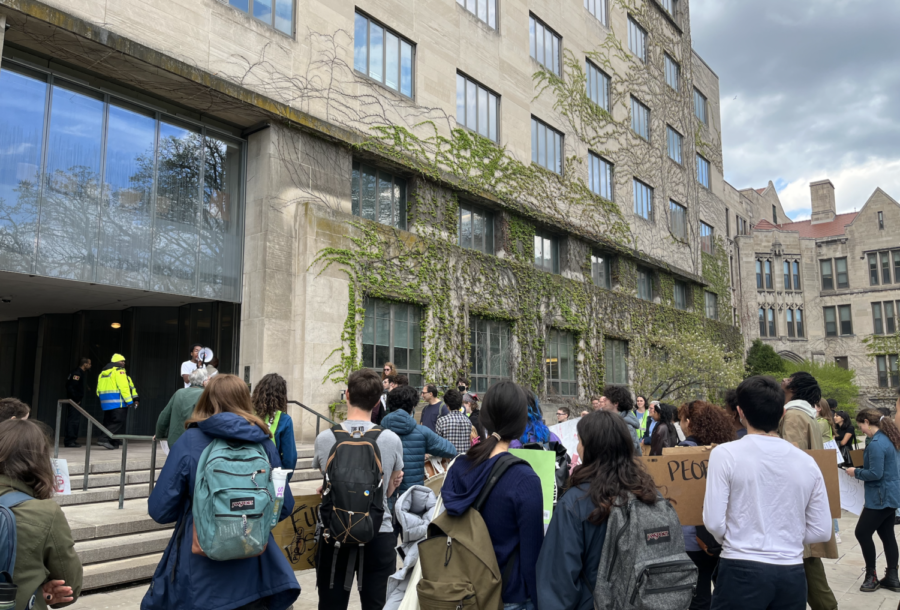
I’ve worked with STOP and FLY on the trauma center campaign for nearly a year now, and read with frustrated familiarity Maya Fraser’s critiques of the movement. She iterates quite perfectly the logic I’ve heard many other members of this institution use in order to justify complacency, a logic that, while perhaps valid, remains unsound, as its premises fail to grasp the fundamental point. While I found something objectionable in nearly every paragraph of the op-ed, I will attempt here to break it down into the most important points.

The first is one I’ve encountered the most, and is indeed the strongest point Fraser makes, which is that there are more pressing issues on the Southside than trauma care which require more immediate attention. More lives could be saved per dollar spent, to cite two of her examples, if we created programs to target the risky behaviors of smoking and lack of exercise. And indeed if it were a question of such simple calculus, I would put down my protest placards and bend before logic. But there are several reasons why it is not so simple.

Fraser tries to make the case that it is regrettable but necessary that in any healthcare system with limited resources a price must be put on lives to ensure that the most possible lives be saved; and, that within such a system some people will lose loved ones and they will feel that this loss is unjust. While this is reasonable, she then writes something I find very troubling: “This feeling of injustice is strengthened by the fact that there are so many people whose fates are not determined by how much the medical establishment is willing to pay.” Now we must ask, is this a “feeling” of injustice, when we admit that our system does not put any effective price on many lives while triaging others on the basis of their wealth (or lack of wealth)—or is it simply injustice in the clearest and most concrete sense of the term?

It is pretty much beyond dispute that the reason the U of C closed its center in the eighties is because they were seeing a high volume of uninsured or underinsured patients. But this is the same reason it is difficult for Southsiders to get any kind of care, not just trauma care. Enacting an anti-smoking program, however helpful it may be, does not increase access to care or highlight that the root of the problem is structural. High smoking rates and other risky behaviors do not occur in a vacuum; what must be changed is the structural disadvantage the Southside is placed at. What Ms. Fraser is proposing is more like enlightened despotism, born of either despair or complacency towards addressing the roots of our healthcare inequities.

She writes, “Unfortunately, we are stuck within the bounds of an often unjust and dysfunctional system. There are not enough resources, and those resources are not allocated equally.” And concludes that, “Repairing the disorganized state of the American medical system is far in the future, if it is to happen at all.” But this is precisely what must be done, and in the meantime I see no reason to stop demanding a system that provides equal access to care and values each life equally. That is the nature of this issue at its most fundamental.

Cynicism is not the mark of a sophisticated ethical stance; it is the mark of complacency and ethical laziness. Of course our healthcare system can change. We live in the world’s first revolutionary democratic state: What right have we to say that there is nothing to be done because we are “stuck” without putting forth the first effort at releasing ourselves?

Potentially because it is not “we” who are truly stuck—as Ms. Fraser points out, she herself has no difficulty receiving care. Now, if we fought for more money for anti-smoking and exercise programs as Ms. Fraser suggests (while not believing it is possible to achieve success anyway), we would not be increasing access to care.

We would also not be addressing the high anxiety that contributes to young people beginning smoking in the first place, anxiety perhaps caused—among the other stressors of poverty—by the fact that the number one killer of black men ages 15 to 34 is homicide. The violence evident everywhere on Chicago’s Southside might also contribute to low rates of exercise, simply because people don’t want to be outside. I’ve heard one woman speak about how she brings her children to play in Hyde Park rather than her own neighborhood playground for safety, but her son doesn’t want to go anyway since he saw a member of his family shot in a park; all parks now terrify him. There seems something deeply condescending in asking people to change their “behavior” before providing more resources to address the root of those behaviors in the first place.

Certainly a trauma center won’t fix all the issues surrounding violence on the Southside, but it could help, and this movement won’t stop there. The fundamental reason this is not about behavior is because behavior has nothing to do with political power. This movement is about demanding equal access to care through building political power, not enacting “public policy” that alone will never solve the myriad problems the Southside faces, and that does not come from the people. The medical establishment no doubt has good intentions, but it will never do all that it can until it is in its interest to do so. If things remain as they are, it never will be; things must change.

Michael McCown is a second-year in the College majoring in philosophy.

8 comments on “The truth about trauma

  1. reply

    I completely agree with Michael’s comments on the article- Maya makes an intentional and insightful argument that is nevertheless blind to the necessity of fundamental change in our attitude towards broad access to care.

    To learn more and get involved, please come to FLY’s march this Saturday from 12 to 2. It begins at 61st and Cottage Grove, will go to 58th and Maryland for a press conference, then go to the Friend Family Health Center (55th & Cottage) to discuss divestment from access to affordable healthcare across the Southside and other un/underinsured communities.

  2. reply

    This piece fundamentally misunderstands the column it critiques. Far from “justify[ing] complacency” or ignoring the “structural disadvantage” people in this area face, Fraser pointed out that “life expectancy can be as much as 15 years shorter for those who live on the South Side than for those in predominantly white, middle-class areas of the city” and criticizes the failings of the public health care system. She even calls the lack of a trauma center “deplorable.”
    Her argument, however, which McCown does nothing to address, is that even if more money were directed to community health bu the University, more lives would be saved if it were directed toward other programs rather than a trauma center. McCown may trivialize anti-smoking programs, but maternal and pre-natal health care, mental health clinics, disease screenings, pediatric care, and vaccinations (all issues Fraser highlights) do in fact save lives and improve quality-of-life. In direct contrast to McCown’s characterization, Fraser’s proposals are exactly about “increas[ing] access to care.”
    Reasonably people may disagree about specific priorities in public health, but we should all acknowledge that a trauma center is a policy proposal just as much as an anti-smoking program (if that were even what Fraser wanted). Neither is more inherently a solution to the systemic health care problems that McCown actually is writing about. Either must justify their existence, ultimately, by whether they would save more lives than spending their budget elsewhere.
    And surely it is better to debate the facts, rather than accuse those who arrive at different conclusions of “enlightened despotism” or “complacency and ethical laziness.”

  3. reply

    In this argument debating the facts about certain policy decisions is not the point: the problem is that resources for any solution to any problem are not forthcoming, and when they are they are firmly on the terms of the institution that offers them, not as part of a democratic process, and until they are it will never be enough.

    Of course mental health clinics and neo-natal care are all important. The problem is not that Fraser arrived at a different conclusion about what is important, but the suggestion that we ought to quit campaigning for a trauma center because it would be too much of a sacrifice for the U of C, or because there are cheaper ways to improve health outcomes. Let me try to recap my argument in a clear way:

    1) Things are bad. Washington Parkers can expect to live nearly 20 years less than their Hyde Park neighbors, when we’re served by the same hospital.

    2) With these kind of statistics, it’s hard for the hospital to argue that it is doing enough, and has done enough to serve the South Side. Even if it’s not their fault that the whole system is stacked against the South Side, as a medical institution they should never be satisfied that they’ve done enough until that gap is filled.

    3) The trauma center is one thing among many things that the South Side needs – the U of C is the only institution on the South Side capable of addressing this particular need.

    4) The different conclusions that Fraser and I have drawn is that this fight doesn’t end until everything is being done to rectify this injustice, as opposed to any certain program put forward that is deemed ‘enough’, or ‘adequate’.

    The same organization (STOP – Southside Together Organizing for Power) fighting for the trauma center is also behind the Mental Health Movement, and aims to build the power for the South Side so that it doesn’t have to rely on the largesse of those in control of our society’s resources to create programs on their terms, terms framed with a keen eye to the bottom line. I think we all agree the issue is about money – Fraser’s critique of the trauma center campaign is based on the idea that society, or the U of C, will only spend so much on the South Side and we should use that money as well as possible – an argument that misses that what we’re trying to do is bring more resources to the South Side, to challenge the structural disadvantage the South Side is placed at.

    Perhaps you think that ‘enlightened despotism’ and ‘ethical laziness’ is hyperbolic rhetoric, but I do not for a moment doubt Fraser has good intentions. My language is merely willing to diagnose the hard reality, which is that we’re in a crisis of democracy. What allows us to accept so easily the fact that trauma, among other health programs, is something that richer people ought to have better access to? How do we square that with a firm belief that all people are created equal? Fraser indeed called the system ‘deplorable’, but rather than sound the call to action she endorsed accepting the terms.

    I cannot accept those terms in good conscience. Rule by the people is at risk of being fundamentally thwarted by powerful interests, not just in healthcare policy but in every aspect of our economic policy, and the U of C exists in the matrix of those powerful interests and as students we must be willing to recognize that reality.

    I think that the best characterization of the difference between Fraser’s approach and my own is that she is positions her critique from a conservative point of view in a ‘classic’ sense, and I am approaching it from the standpoint of someone who believes that we not only can but have the duty to challenge structural injustices.

  4. reply

    In the heat of all that grandstanding I forgot to include that:

    1) we’re not arguing for a trauma center instead of something else, only in addition to, and

    2) it’s difficult to assess how much impact the trauma center might have when the U of C refuses to publicly study the issue.

  5. reply

    And, last thing I’m going to say because I know this is getting comically long but,

    3) even claiming that “Either must justify their existence, ultimately, by whether they would save more lives than spending their budget elsewhere.” presupposes a sort of democratic process or rational adjudication in determining how health resources are spent: as though all of the UCMC’s decisions have had the character of ‘what is the way we can improve access to healthcare on the South Side per dollar of our budget?’.

    It strikes me as unlikely.

  6. reply

    I am also hesitant about the claims that access to trauma care will decrease smoking and increase rates of exercise.

Leave a Reply

Your email address will not be published. Required fields are marked *

By submitting a comment, you agree to the terms of service of The Chicago Maroon.