On April 11, MODA’s celebration of fashion drew a sold-out audience of UChicago students. Everywhere I looked, I saw my peers experimenting with their outfits. The audience gathered inspiration from one another as we anticipated the more than 80 models who would walk down the runway, styled by 35 student designers.
The on-campus fashion organization MODA was established in 2003 and is widely known for its annual fashion show. This year, they chose the theme of Specimen, with each look referring to a different specimen. Under this theme, the designers had the freedom to focus on contradiction and tension within their designs. Specimen is an individualistic term but this show was anything but, instead serving as a celebration of student collaboration.
In what has now become a tradition, UChicago dance group Maya prepared to open the show. Maya formed in 2009 and is renowned for its diversity of dance styles weaved together through intentionally detailed choreography. The repeated pairing of MODA and Maya has made it difficult to imagine the MODA fashion show without Maya as the opener.
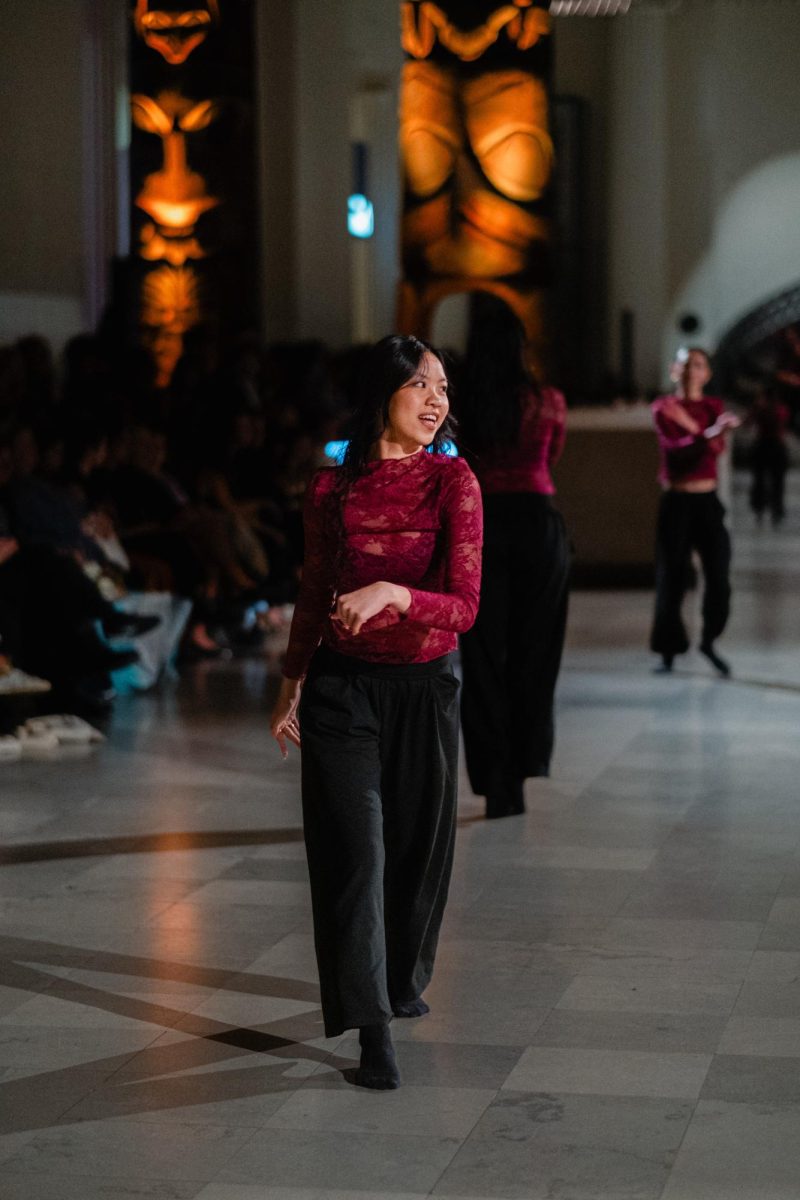
If the audience wasn’t already brimming with energy from MODA’s reputation and the incredible venue, Maya’s dance performance heightened the collective excitement. The dancers emerged unified, dressed in black flowy pants and long-sleeved purple laced tops, contrasting beautifully against the surrounding marble. Charli xcx’s “Von dutch” rang from the speakers, and the dancers took on the energy of the beat. The hype kept building as the tempo grew faster and the crowd kept cheering. Against the electropop music, the dancers flipped their hair, dropped to the floor, and smiled at each other in perfect unison. The beat dropped and their bodies folded before straightening back up and performing the signature Maya high kick. They moved between ethereal and rigid in their style, shifting the energy back and forth in a way that should’ve felt disjointed but didn’t. This contradiction elevated their performance, acting as a precursor for the contradictory elements of the designers’ work. As the dancers walked offstage, the excitement was palpable.
A couple of hours before the show, the designers quietly made their final preparations. The atmosphere was tense and anxious as models and designers paced around the crowded backroom. Yet this anticipation was met with a profound level of support and excitement. As fourth-year model Matt Ho practiced his walk, a fellow model told him, “You got it down.”
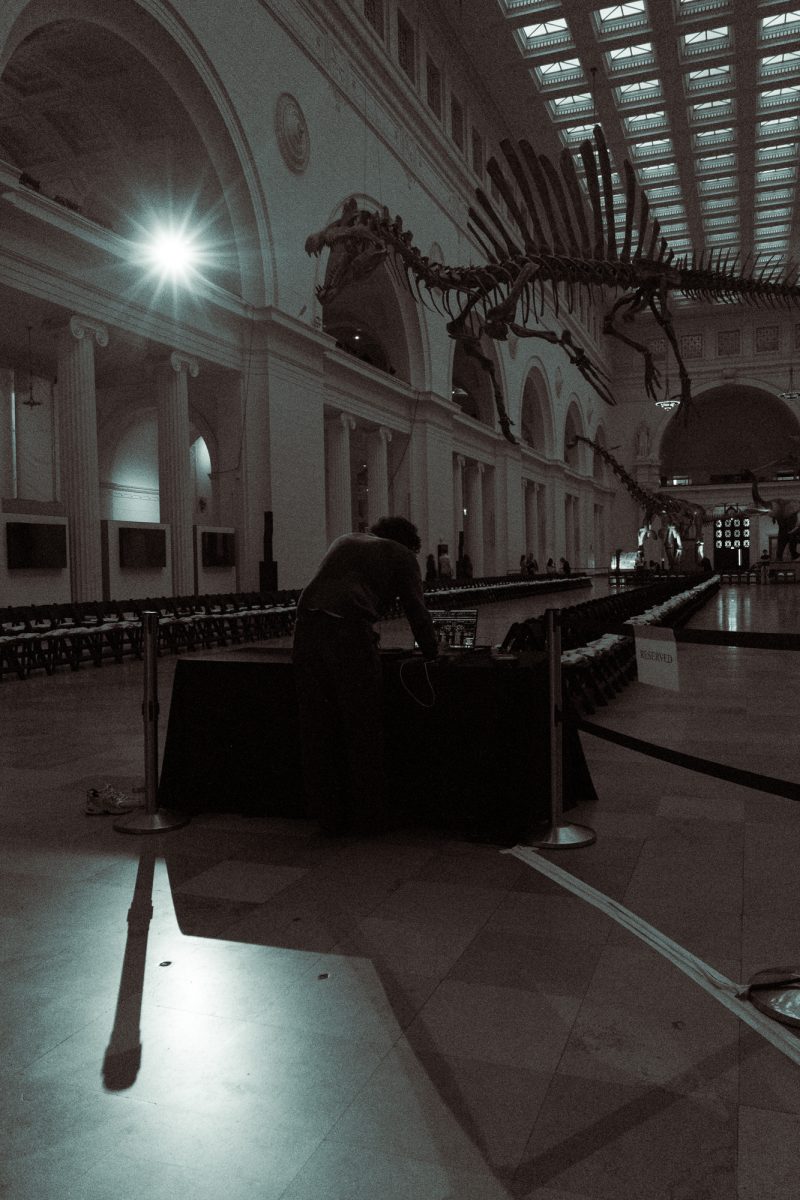
Both models and dancers alike voiced their excitement about having the Field Museum as their venue. At 46-feet long, Sobek the Spinosaurus hung from the ceiling and large, beautiful columns surrounded the runway, hidden exhibits were filled with a wide variety of animal specimens. It was the perfect runway for the theme.
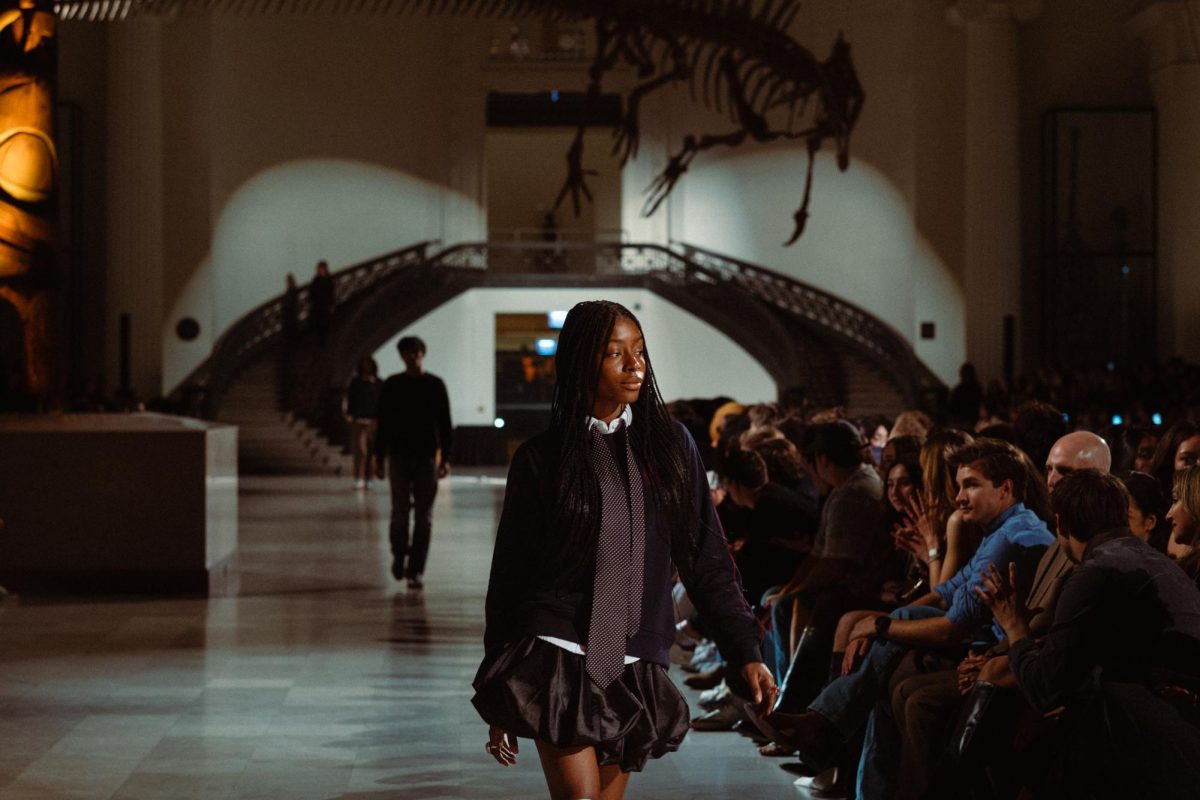
When the first model, recent graduate Elizabeth Desir, walked down the staircase, the audience held a collective breath. Although many models expressed anxiety prior to the show, Desir was unfazed by the long staircase, expansive runway, and packed audience. Dressed in a sleek all-black look designed by third-year Francesco Enserro, she commanded the room through her walk. The design featured a menswear-inspired appearance on top with an undone black tie, contrasting with a silk black bubble mini skirt. The outfit juxtaposed texture and formality, evoking a feeling of rebellion by pushing the boundaries of convention. After each model passed, the audience welcomed the next, cheering them on as they passed each corner, each striking a distinct pose.
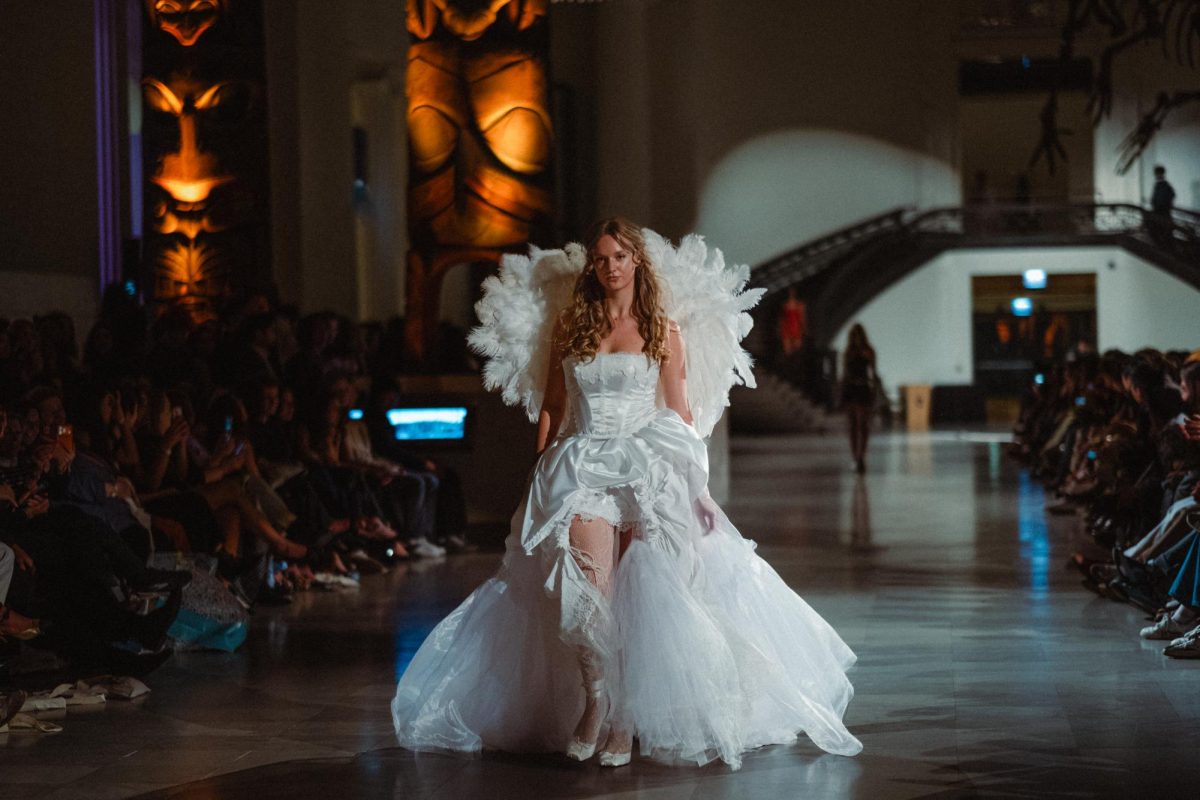
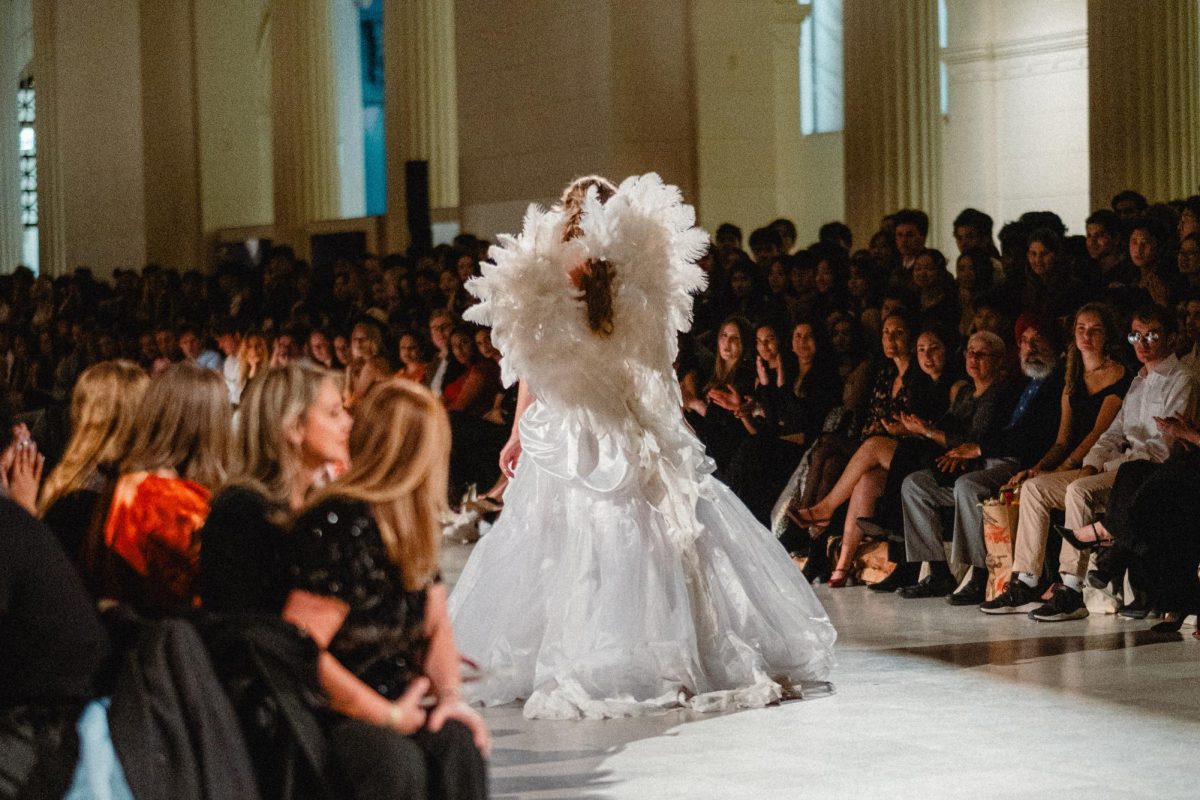
The show spanned a variety of fashion styles from everyday looks to more elaborate pieces for exhibition. Second-year Isabelle Lu, in a more casual outfit designed by second-year Madison Orlins, strutted down the runway in a coral lace mini skirt and tank top that could be worn in the height of summer. She was followed by third-year Anette Saenz, who wore a dress that looked like fire itself, designed by third-year Alberto Martinez. Fourth-year model Sohan Mulamalla walked with swagger, carrying a cowboy hat against a baggy all-denim look, designed by fourth-year Gavin Reid, featuring a zip-up denim jacket with a button-up underneath. But fourth-year model Tessa Brummel had a different take on the walk. She wore her own design of a Victorian-esque white gown with matching angel wings, her walk carefree and elegant. The theme of Specimen facilitated the diversity of these designs and model walks.
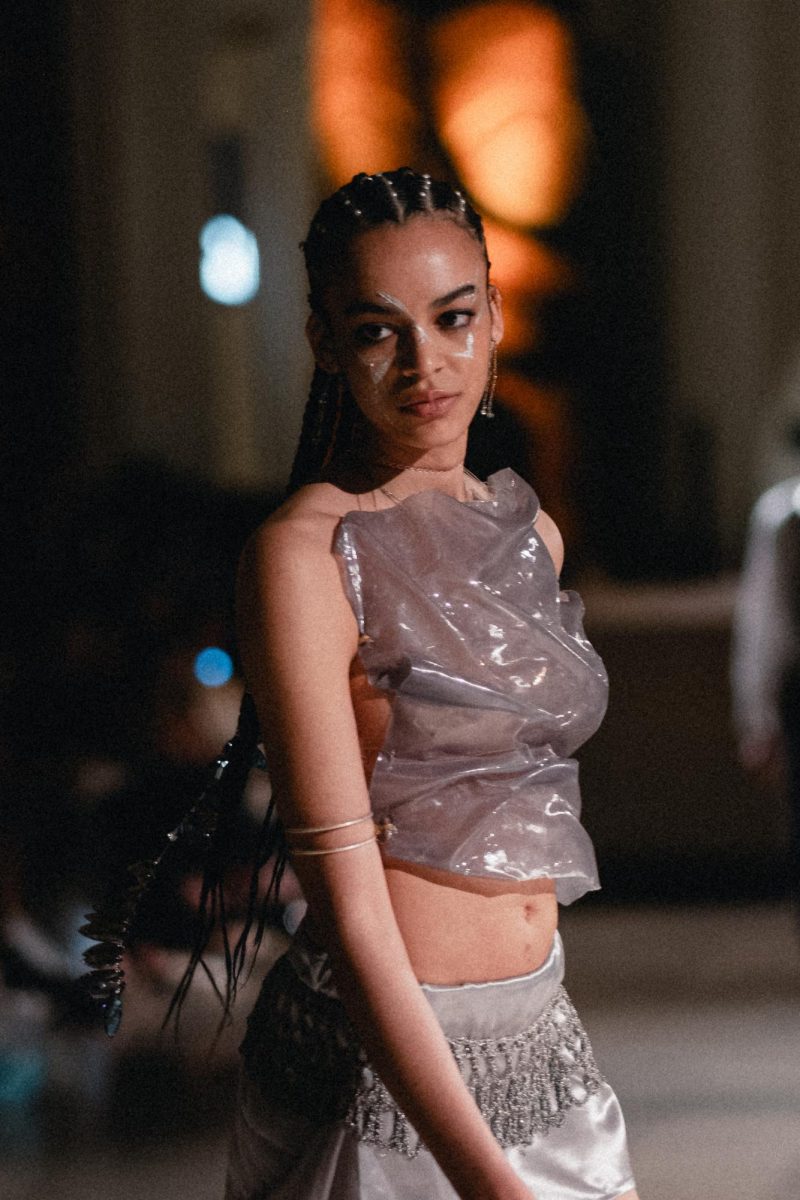
Two of the most striking designs came from third-years Carina Tarasenka and Shira Waxman, who focused on making typically hard materials like metals and plastics appear soft on the body. Third-year model Zoe Kalaw commanded attention through her focused gaze and slicked-back hair. Her top, made of plastic-like material, had a texture reminiscent of water. Her silver mini skirt was adorned with a metal belt, lending most of the attention to the top. Tarasenka and Waxman achieved their vision of paradoxically evoking softness using hard plastic. This contradiction created a dazzling effect, as the eye endeavored to make sense of the design.
Another one of their designs was worn by Ho. His face was extensively decorated with pearls in a way that emphasized his features. In our interview, he voiced reverence for the design process through his understanding of his designers’ vision and by highlighting how much work they’ve put into this show. He underscored that the relationship between model and designer is essential for success on the runway.
Third-year designer Gabriella Seiglie explained that competitiveness arises between designers over models during the auditioning process. She knew immediately upon seeing her models (master’s student Daphne Hoang and fourth-year Mella Bettag) that they fit her vision for the luxurious purple gown and coquette mini dress that she designed. The purple dress utilized a shiny flowing fabric that drew the eye to create a look to be envied at any formal event. The formality contrasted against her next look, a sheath-cut blue gingham dress with the touching detail of a large light pink heart patch on the chest. Although these looks served two different purposes, they united through Seiglie’s vision of spring. While it was Seiglie’s vision, her relationship with her models contributed to her designs, engaging with her talents’ feedback throughout the process.
Another strong relationship between model and designer was that between third-year student designer Shahmeer Bukhari and fellow third-year Matthew Lys. As Bukhari casually fitted Lys backstage before the show, he laughed and told me about how he was a few hours late to the call time during last year’s show, despite opening the show. This year, he was happy to be on time and, like the other designers, took advantage of the hours before the show to adjust his work. Lys’s outfit featured a faux fur hat and draping faux fur fabric in various hues of brown.
Lys explained that because he was abroad, he couldn’t go to many of the model practices. As a result, in his eyes, his rehearsal walk was “abhorrent.” Upon receiving feedback, however, he became more comfortable in his walk. As promised, he delivered a natural walk in the show, allowing the audience to appreciate the artistry behind Bukhari’s design without distraction.
Bukhari and Seiglie both expressed joy that the MODA community tightened this year. They agreed that the designer workshop in Harper Memorial Library, established this year, served the dual purpose of expanding accessibility in the club as well as providing a place for collaboration between designers. Leading up to the show, designers worked together nearly every night till the early hours of the morning, talking and listening to music in the Harper design studio.
Presidents Cecilia Merloni and Jacinta Lopez conveyed in the opening speech that MODA conceptualizes fashion as a mechanism to express individuality. Year after year, the MODA fashion show itself serves as an opportunity for students to be inspired by the creativity and passion of their peers.
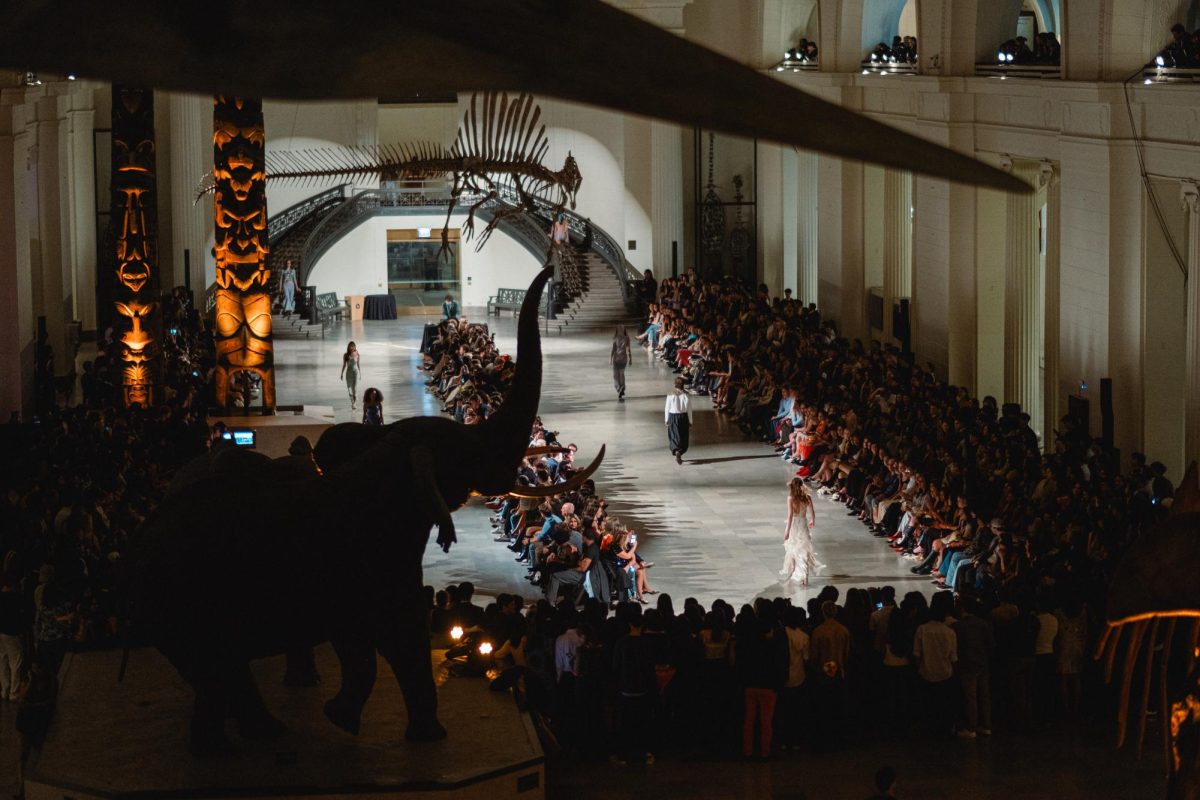
This year was no different: the designs were striking and well-displayed by their models. As a collective, they successfully embodied the grandeur of the Field Museum. The theme of Specimen was apparent in the act of having over 80 looks walk in sequence, representing a vast array of fashion styles, cultures, and student creativity. In turn, MODA reminded the UChicago community that each outfit we put on can be a celebration of our individual creativity and the collective inspiration we draw from others.