The University of Chicago’s Public Safety Advisory Council (PSAC), a volunteer body that advises the University on public safety, discussed sexual misconduct response, crime trends, and Halloween safety at its first public meeting of the academic year on Wednesday.
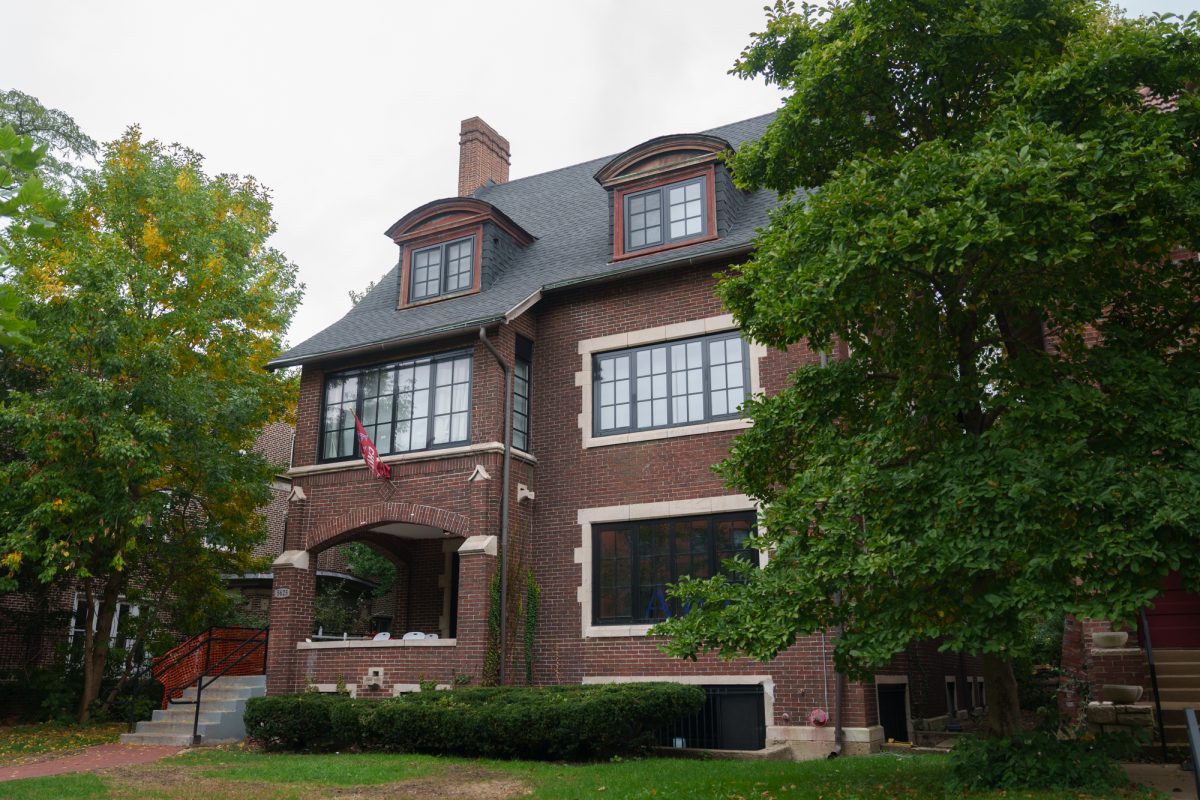
The discussion of sexual misconduct followed recent reports of sexual assault involving fraternity houses on campus, including an alleged assault at the Alpha Epsilon Pi fraternity house last week and a Monday lawsuit alleging an assault at Alpha Delta Phi in February.
“I’m just going to be blunt. The first thing that we need to do is tell men not to commit sexual assault, to respect the people that they’re with,” University of Chicago Police Department (UCPD) Chief Kyle Bowman said at the meeting.
Bowman said UCPD can take down initial information about sexual assault cases, contact the Chicago Police Department (CPD), and connect affected individuals with support services. He added that UCPD automatically refers cases to CPD when they involve incidents at non-University-owned buildings, saying, “Whatever [UCPD] can do within the scope of our authority and within our resources, that’s what we’re working towards.”
Both of the recent reported sexual assaults occurred at fraternity houses within UCPD’s jurisdiction, though neither building is University-owned, so UCPD deferred both cases to CPD.
When asked what administrators were doing to prevent further sexual assault and what safeguards students could expect, PSAC Chair Sharon Fairley said that the PSAC meeting agenda had been set before the recent reports and was not intended to address those specific incidents. “We’re not the administration, so we can’t speak to what the administration is working on,” she said.
Belinda Vazquez, associate dean of students for student affairs, directed students toward confidential support available through the sexual assault dean-on-call. She also noted that all University community members are required to complete annual training on sexual misconduct prevention, reporting, and available resources.
Attendees asked what additional safeguards University administrators planned to introduce, whether Greek life communities received specialized training, and how the effectiveness of existing training was measured.
Because fraternities are not formally recognized by the University, members only go through the required training for all students, which consists of a multi-module online course that must be completed yearly.
Vazquez said the training University community members received was “incredibly long and detailed,” but said she was not comfortable answering questions about how its effectiveness was evaluated nor future additional safeguards. She suggested directing questions to UChicago’s Center for Awareness, Resolution, Education, and Support (CARES), which is responsible for sexual misconduct prevention and response.
The council also reviewed recent crime data. Bowman said violent crime in UCPD’s extended patrol area had increased from 303 incidents at the same point last year to 315 this year. Robberies had declined by approximately 27 percent, while violent crime on campus had decreased by 50 percent. Bowman attributed much of the increase in the broader patrol area to reported domestic assault cases and said UCPD had adjusted patrol assignments and added overtime patrols in response.
To prepare for Halloween, Bowman said UCPD would increase its presence around campus and 53rd Street by reassigning officers and bringing in personnel who would otherwise be off duty. UCPD will focus on Harper Court and nearby blocks, while CPD will cover the rest of 53rd Street.
The plan comes amid concerns about “teen takeovers”—large youth gatherings that have sometimes involved violence and property damage. At the meeting, community organizer and founder of the nonprofit CollaBOOration Bennie Currie said that arrests during Halloween activities rose from three in 2024 to six in 2025, while arrests were down to zero in earlier years.
“Zero arrests is our goal,” Currie said, adding that organizers also aimed to eliminate vandalism and increase positive interactions between residents and young people.
Currie said volunteers will distribute treats and help de-escalate conflicts during a community event featuring musical performances on 53rd Street on October 31. He said the goal was to “flood the street with positive activity” and give young people something to do.
Representatives of Chicago’s Community Commission for Public Safety and Accountability, the city body responsible for police oversight and policy recommendations, also discussed community engagement and police accountability. Alexander Perez, the 2nd Police District Council’s community engagement officer, said the 66 elected district councilors—three for each of Chicago’s 22 police districts—gather community concerns and share local trends at quarterly meetings. The councilors can use that input to develop policy recommendations for the commission and the CPD.
Perez described the councilors as having “boots on the ground,” saying their role is to listen to residents and bring their concerns into policymaking. He cited the Crisis Assistance Response and Engagement program, which sends alternative responders to certain mental health calls, as an example of the commission’s work. Perez said councilors pushed the mayor’s office for additional funding and helped expand the program, which had previously operated on a more limited schedule.
The representatives said community members could help shape public safety policy by attending district meetings, contacting their elected councilors, and raising concerns about police practices. Perez said the system is still developing, adding that “there is an immense amount of power in having the community have the ability to speak on what they want to see.”