Since the Student Disability Services (SDS) office was established in 2012, demand for services and accommodations has increased substantially. The growth has coincided with concerns over the University not prioritizing students with disabilities, even as the SDS office increases its resources and available services.
Accommodations available to students include flexible deadlines, assistive technology, testing accommodations and communication support. SDS staff also determine student eligibility to receive accommodations by reviewing medical documentation.
During the 2017-18 school year roughly 600 students were registered with SDS for accommodations, while by the 2024-25 school year, more than 2,460 students—13 percent of the student population—were registered with SDS.
As demand for SDS services and disability awareness has increased, RSOs like UChicago Access, Belonging, Learning, & Empowerment (ABLE), an advocacy group for disabled and neurodivergent students, have called attention to variousissues with the University’s accommodations services. Simi Edeki, a member of ABLE, said “As a school, we don’t really prioritize disabilities.” Edeki raised concerns about staff training, saying many professors “don’t seem to understand how testing accommodations work,” which could discourage students from seeking them out.
Edeki also noted that information about some accommodations, such as priority registration for classes, was omitted from the SDS website, and other accommodation opportunities, such as the housing lottery, were difficult to navigate. “It’s hard to know what to ask for [if] you don’t know what can be done for you,” Edeki said. Despite this, Edeki urged students to take advantage of SDS resources and to seek help when they need it.
Francesca Henderson, another member of UChicago ABLE, argued that stigma among UChicago students about using accommodations can negatively impact students with disabilities. The UChicago “grind culture,” she said, can lead many students who might have disabilities to dismiss their needs or avoid the SDS office. “A lot of students don’t like coming to events that are labeled as for disabled students,” Henderson said. “It’s OK to ask for help, and that doesn’t make you weak.”
According to the SDS website, accommodation approval takes one to two weeks if the proper documentation is submitted. However, Henderson said that the process to attain the required medical documentation can be time consuming and expensive. This concern, which has been raised in the past, makes the process of receiving accommodations more difficult for students with health insurance that does not cover disability assessments. The University has noted previously that students can apply for emergency assistance programs to cover additional costs).
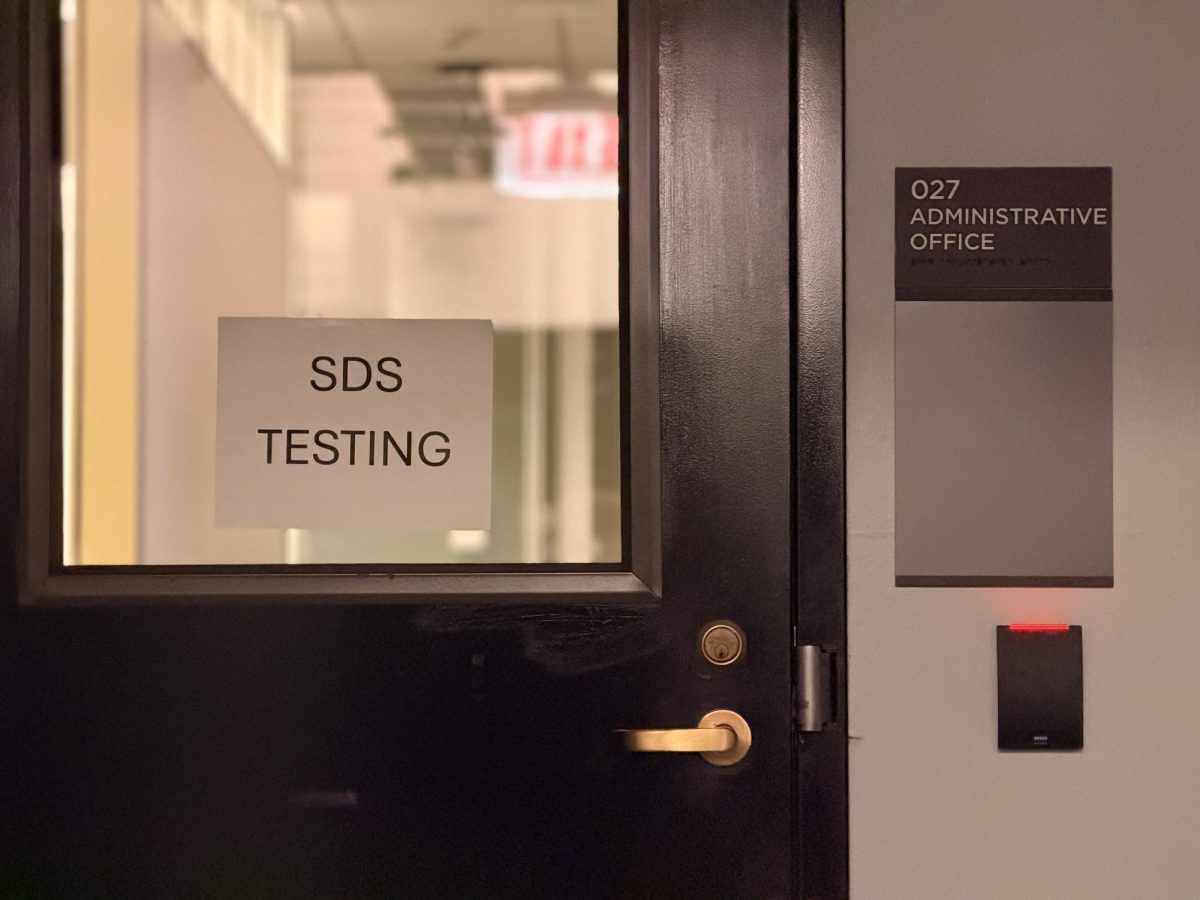
Additionally, Edeki said that the lack of a dedicated testing center had relegated students with disabilities to various alternative testing locations, including the Ida Noyes basement and hard-to-access buildings like the Toyota Technological Institute at 61st Street and South Kenwood Ave. “When you’re a disabled student sent to these random locations to take exams, you don’t feel very welcomed,” she said.
Charessa Warren, the director of SDS, said in an interview with the Maroon that SDS was working on opening a new testing center on the south side of campus. The new testing center, which Warren said she had been pursuing for a “long time,” will provide a dedicated location for accommodations testing.
SDS has worked to meet an increasing workload along with increased student registration. Warren said that SDS has expanded significantly over the past nine years, increasing from two to 13 full-time staff members since 2016. In addition, the office has worked to raise awareness about SDS services on campus by participating in orientation events and disseminating information about SDS services to newly admitted students.
This year, SDS added two new graduate interns to increase communication between the SDS and the student population about these issues. The interns, Warren said, will engage directly with students, and allow for increased communication between RSOs like UChicago ABLE and the SDS office.
The addition of interns to the SDS team, as well as SDS participation in orientation events and communications to newly admitted students, are all efforts from the SDS office to increase campus awareness about the resources SDS provides. Warren said that many resources and feedback opportunities—like the Access Chicago Now toolkit to determine the inclusivity of an RSO, and the feedback forms found at the end of each SDS email—are underutilized.