


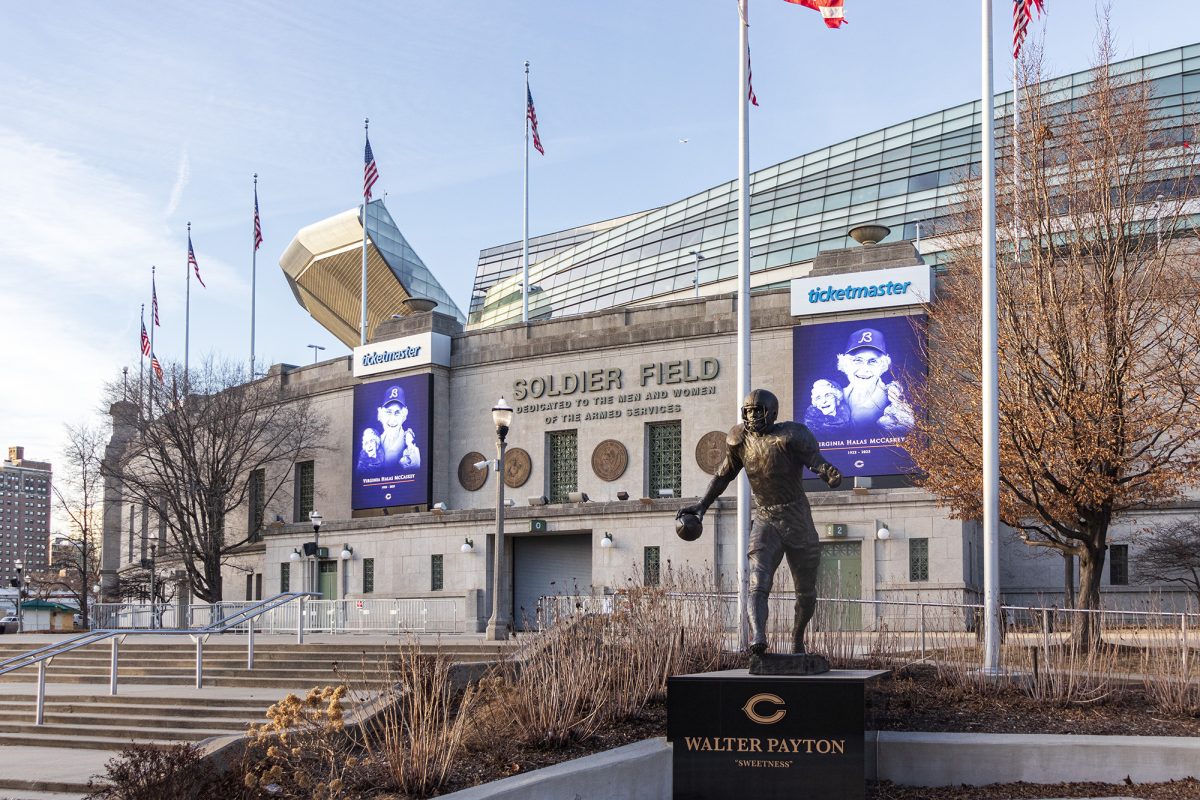
At Soldier Field on December 14, the scoreboard read 31–3, showing a dominant Bears win over Cleveland that briefly warmed a stadium otherwise defined by low-single-digit temperatures. The team followed it up six days later with an overtime win against Green Bay as the Saturday night hovered in the mid-30s, cooled by a lakefront breeze cutting through the stands. Together, the two games captured a Chicago winter at its extremes: one brutally frigid, the other deceptively mild. Yet, as fans filed out with frozen fingers, the Bears were already looking toward a future that may not resemble afternoons like these at all.
A New Stadium, Still on Paper
The Bears’ ambitions for a domed stadium in Arlington Heights have long been clear: the team has pursued a new stadium on the site of the former Arlington International Racecourse since purchasing the property in 2023, repeatedly returning to Arlington Heights as their preferred option throughout 2024 and 2025. The team envisions a climate-controlled venue surrounded by restaurants, housing, and entertainment. Some view the project as a step toward modernizing the franchise, with Bears President and CEO Kevin Warren highlighting the opportunity to host major events such as the 2031 Super Bowl.
But for all the planning and renderings, the project has stalled at a familiar obstacle: funding.
The team has committed to covering the stadium’s direct construction cost, estimated at well over $2 billion. Bears leadership has repeatedly emphasized that they are not asking for taxpayer dollars to build the stadium itself, framing the project as one of the largest private investments in Illinois sports history. However, the infrastructure around the stadium, including highway ramps, Metra adjustments, utility upgrades, and the transformation of a 326-acre site, comes with an additional price tag of $862 million. While the Bears argued that the state should help cover those infrastructure costs, the fall legislative session in Springfield closed without granting that support. For now, the stadium remains a vision.
A Public Still Carrying Past Frustrations
If the Bears were hoping for widespread enthusiasm, the response across the city has been more complicated. A recent Mansueto Institute for Urban Innovation survey reported that 65.2 percent of residents oppose using taxpayer money for a stadium of any kind, whether in the city or the suburbs.
Chicagoans have a long history with publicly subsidized stadiums, and the results have not always matched the promises. The 2003 Soldier Field renovation left many fans and taxpayers feeling burned after a costly, publicly funded overhaul that continues to carry unresolved debt. Additionally, the financing of Guaranteed Rate Field, the Chicago White Sox’s South Side home, remains a point of civic debate. For many, the idea of another publicly backed stadium project is less exciting than it is familiar.
Even supporters of the team are cautious. The Bears may be ready for a new era, but Chicagoans are not sure whether they want to help pay for it. Those concerns have been echoed by state leaders, including Governor J. B. Pritzker, who has publicly raised paying down the unresolved debt from the 2003 Soldier Field renovations as a prerequisite for further stadium negotiations.
Timing Adds Pressure
To submit a competitive bid for the 2031 Super Bowl, the Bears would need commitments soon, as hosting the league’s biggest event would bring global exposure and significant economic activity to the region.
Infrastructure plays a central role in that urgency. A new Metra station, modified ramps near Route 53, and redesigned traffic grids would be essential for the stadium’s operations and cannot be delayed indefinitely. The longer legislative approval takes, the narrower the construction window becomes.
On a separate front, rising property taxes on the Arlington Heights site create a deadline of their own. If construction does not begin by 2027, costs will escalate sharply. Bears officials have warned that continued delays risk derailing construction timelines altogether, with ripple effects for planned development around the proposed stadium site.
A Fanbase Caught Between Affection and Change
What makes all of this feel so consequential is that it touches on more than budgets and blueprints. It touches identity.
For generations, Chicago’s football experience has been shaped by the lake, the cold, and the stubborn pride of enduring it. Soldier Field is part of the team’s emotional landscape. The Bears are proposing something different. Comfort, efficiency, and predictability.
Some fans would welcome the change. Others feel the cold is the point. Many are somewhere in the middle, supportive of modernization yet unsure whether leaving the city and the wind also means leaving something harder to define.
The Road Ahead
The Bears’ December home wins over Cleveland and Green Bay were a reminder of what the team can look like on the field. Those victories were soon followed by a playoff berth and an NFC North title, clinched as division rivals fell out of contention. The stadium issue, however, is rooted in everything surrounding the field, and that conflict will not be resolved by a final score, regardless of its magnitude.
To move forward, the Bears need legislative partners. To win over the public, they need trust. To meet their Super Bowl aspirations, they need speed.
That urgency sharpened in mid-December when Warren’s open letter announced it was expanding its stadium search beyond Illinois to include Northwest Indiana, signaling growing frustration with the lack of legislative movement in Springfield.
In the meantime, the team will continue playing on the lakefront, where winter asserts itself and fans still bundle up for something that feels uniquely Chicago. The future may be indoors, but, for now, Chicago Bears football is still played in the cold.



James Wallace / Jan 13, 2026 at 6:49 pm
The Bears played at Wrigley Field from 192o until 1970.