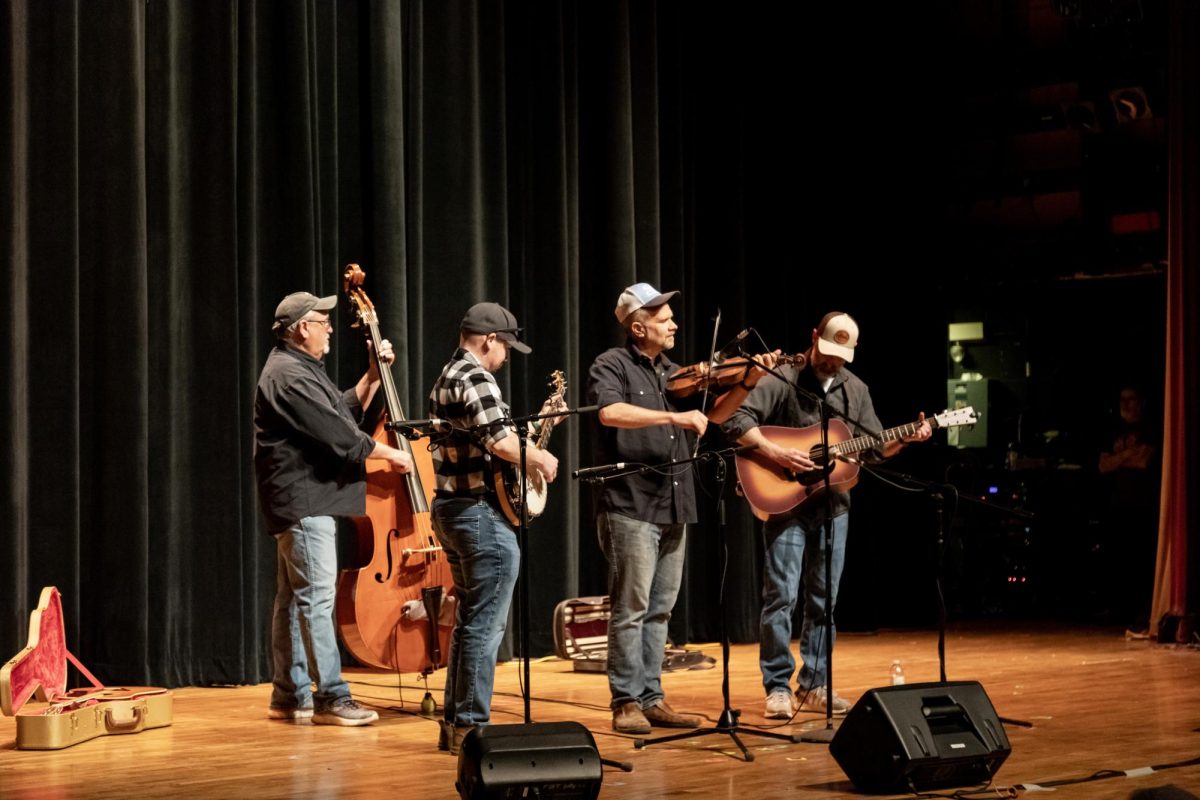
An angel came from heaven earlier than the appointed time. On their I Can See The Future Tour, Leith Ross illuminated a realm beyond earthly experience. Ross is known for their introspective lyrics that center death and lost love while maintaining a sense of optimism. Their performance was equal parts uplifting and comforting, leaving the audience with a sense of transcendental love.
The concert opened in the midst of a romantic scene with “Point of View,” a serenade of a lover working through challenges. Ross sang, “It’s in love from any other point of view,” and made the audience feel included as if engaged in an intimate conversation. Ross’s natural charisma earned spectators’ immediate admiration, and a cathartic experience guided by a voice that seemed endowed with a divine grace began.
Still, Ross humanized themselves with chatter between their songs. After the first song, they greeted the audience with a soft laugh. “What the hell, you guys!” It seemed like they were pleasantly surprised by the support they were receiving on their fifth day of the tour. As they transitioned to “Treasure,” Ross barely touched earth as they awed the audience with their airy vocals. “Oh… mother of pearl,” they exclaimed as they tuned their guitar. They were not sure if they were allowed to swear, they told the audience innocently. When receiving a resounding yes, they let out a “What the fuck!”
When criticizing the current political climate, Ross did not mince words. When they broke into an impromptu speech about the current state of affairs, they centered the injustice facing immigrants and Indigenous peoples. They maintained a positive perspective, exclaiming, “I am so happy to be in the fight with you.” Rather than being performative, Ross directly funds the causes they call attention to. Before performing, Ross introduced a representative for The Harbour, an organization that helps marginalized youth in Chicago experiencing homelessness. Ross has made an effort to partner with local organizations on every tour stop to center activists in the community.
The epitome of Ross’s evocative power was “Home,” which reminisces about an idyllic childhood that will never again be experienced. In the chorus, a cyclical repetition of questioning what and where home is, an air of nostalgia permeated Thalia Hall. It wouldn’t be a Ross performance without the spirit of love, and the affirmation of finding home touched the eyes and hearts of the crowd. An audience member passed around paper cut-outs of a house they crafted. These became illuminated by phone flashlights, like the warm glow of “Home.” The atmosphere of the room shifted as each person became absorbed in their personal longing. Even Ross began to tear up.
Ross directly confronted loss as they shared the story of their grandfather’s death. “Grieving” is a tribute to him, but also about the process of losing oneself to the past. Rather than pausing to reflect, Ross reprised the song at a faster pace and with a Celtic tune as a cultural homage. Once again, Ross turned pain into hope for recovery.
Ross extended this care to their interpersonal relations. When performing “I Love Watching You Eat Dinner,” Ross embraced love as a reward for small acts of generosity, like making one’s friends dinner. It was intimately genuine—you could really feel Ross experience the joy of feeding “someone who may not have eaten dinner.” The concert felt like a parallel experience: Ross gave the audience the spiritual sustenance of benevolent lyricism.
This led perfectly to the titular song of the album “(I Can See) The Future,” which is about being able to see the external world with more clarity because of optimism. Ross repeated, “Flowers, flowers, flowers grow.” For a moment it really felt like the earth was being endowed with a bountiful harvest on each crescendo.
After “(You) On My Arm,” which jokingly mocks a lover, Ross extended their playfulness to the audience. They warned they were not going to do an encore “where people demand that we come back on stage or demand a refund.” But how could someone so agreeable not relent to the roading applause and chants from the crowd? They quickly capitulated with “We’ll Never Have Sex.” Like a lullaby to the crowd, they murmured, “Gentle angel… I’ll feel the sickness less and less.” Perhaps radical love is the only cure we need.