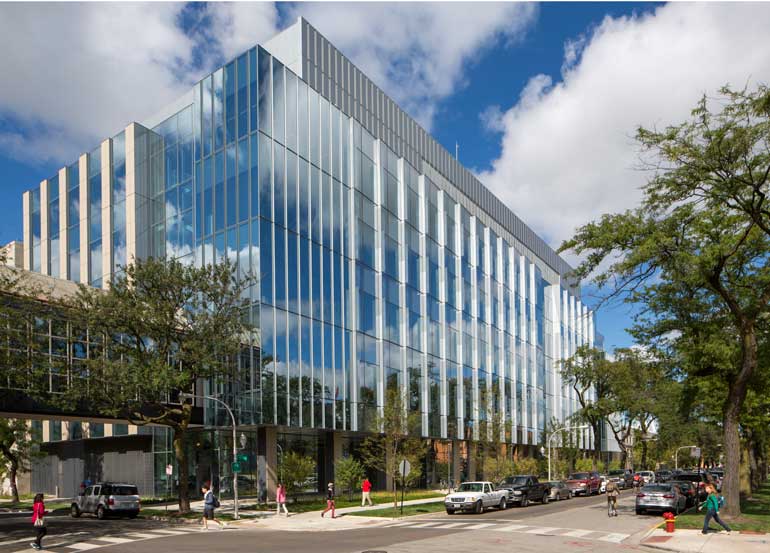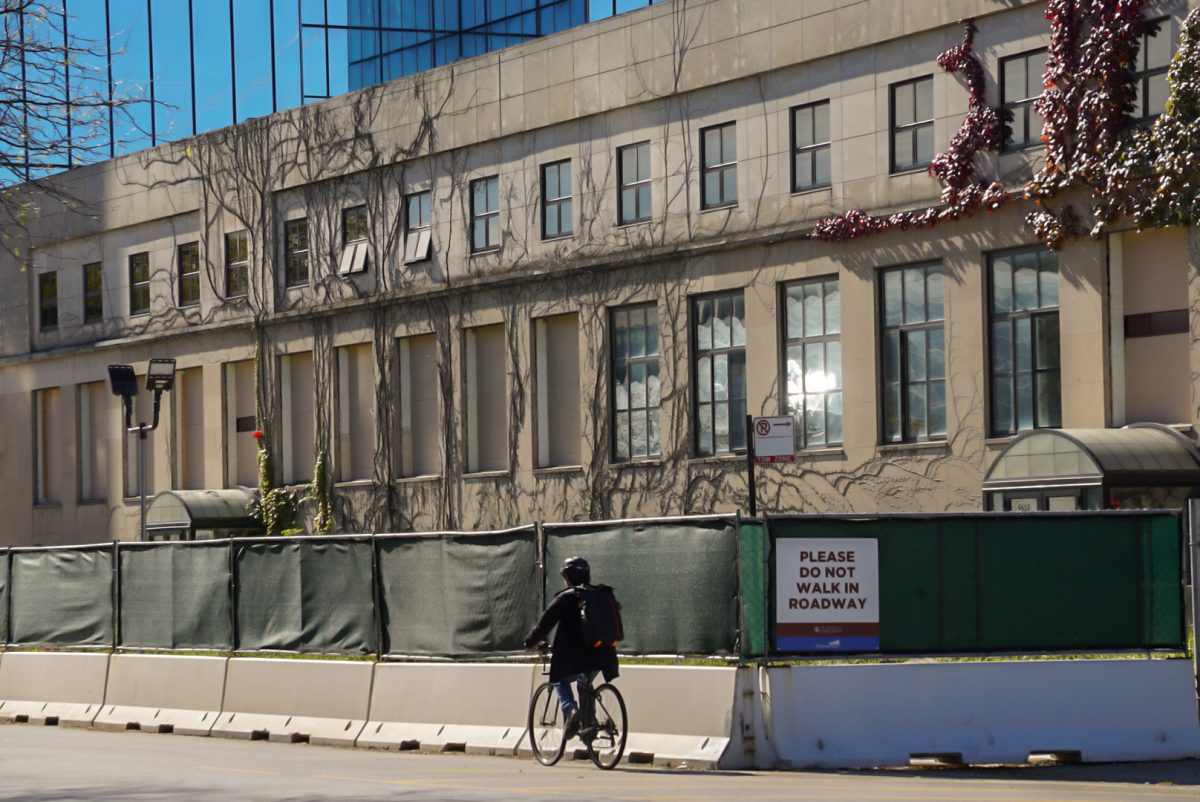
The previously stalled project to build a new science and engineering building has been revived as the IonQ Center for Engineering and Science, thanks to funding from quantum hardware and software firm IonQ.
The partnership between IonQ and the University, announced in November 2025, will create a dedicated home for the Pritzker School of Molecular Engineering. It will host a new quantum computer and an entanglement distribution quantum network, a system that distributes entanglement across multiple devices for end-user applications, similar to those located at the University of Illinois Urbana-Champaign and Argonne National Laboratory. UChicago’s quantum network will connect to and transmit data between the University, Fermi National Accelerator Laboratory, and Argonne National Laboratory.
In a press release, IonQ said that its partnership with UChicago will mark the first time a quantum computer and a quantum network will be on a single university campus. These tools will add to the larger ecosystem of the Chicago Quantum Exchange, including tools at the Argonne and Fermi laboratories, the University of Illinois, Purdue University, and Northwestern University.
The agreement with IonQ is one of several between the University and corporate partners in recent months. Others include an agreement to fund the newly named AbbVie Foundation Cancer Pavilion and the recently announced UChicago Medicine Ralph Lauren Center.
The University had previously slowed down internally funded capital projects in response to the ongoing budget crisis, which led to the pause on the IonQ Center’s construction. In an August 2025 update, Provost Katherine Baicker said that “great uncertainty about future infrastructure support” led to the plan getting “significantly reduced in scale… with limited space for future expansion and a substantially smaller structure.”
In September 2025, Baicker said that the reductions aimed to reduce spending by $100 million and decrease the operating-expenses-to-debt ratio from 82 percent in financial year 2024.
Nadya Mason, dean of the Pritzker School of Molecular Engineering, said in an interview with the Maroon that designs for the building are expected to be completed in 2026 and construction will extend into 2030. The quantum computer will likely be set up on campus well before that date, Mason said.
By 2026, Mason expects that the building design will be finished and that the site’s old buildings will be in the process of teardown. The full construction process is expected to take about four years. The timeline for the building’s completion is tentative, as weather concerns and ability to get permits in time are unpredictable.
She said that “a small but really selective team at different levels at the University” was involved in UChicago–IonQ negotiation meetings but did not clarify whether researchers were directly represented.
“Now we’re organizing a conference between IonQ researchers and our researchers to talk about their mutual areas of interest,” she said.
IonQ will also have the opportunity to tap into UChicago’s molecular engineering and physics expertise.
“We’re combining our commercial-grade quantum computers with some of the world’s leading academic talent to generate innovations with valuable real-world applications. That research will directly benefit IonQ’s product roadmap and strengthen our competitive advantage in enterprise and government markets,” IonQ CEO Niccolo De Masi said in a public statement.
The IonQ center and the increased computing capacities provided by new quantum tools could support over 140 research and technology development projects at UChicago, according to UChicago News.
IonQ is only one new source of quantum funding at UChicago. IonQ’s investment will supplement the state of Illinois’ $175 million investment into quantum computation and materials research at UChicago.
According to Mason, immunoengineering and materials science will receive a large amount of the newly built space. “They’re actively supporting research funds to fund graduate students, undergraduates, postdocs, and more to work in areas of mutual interest,” Mason said.
Mason said that the agreement made for the IonQ Center mirrored many others the University has made in previous years.