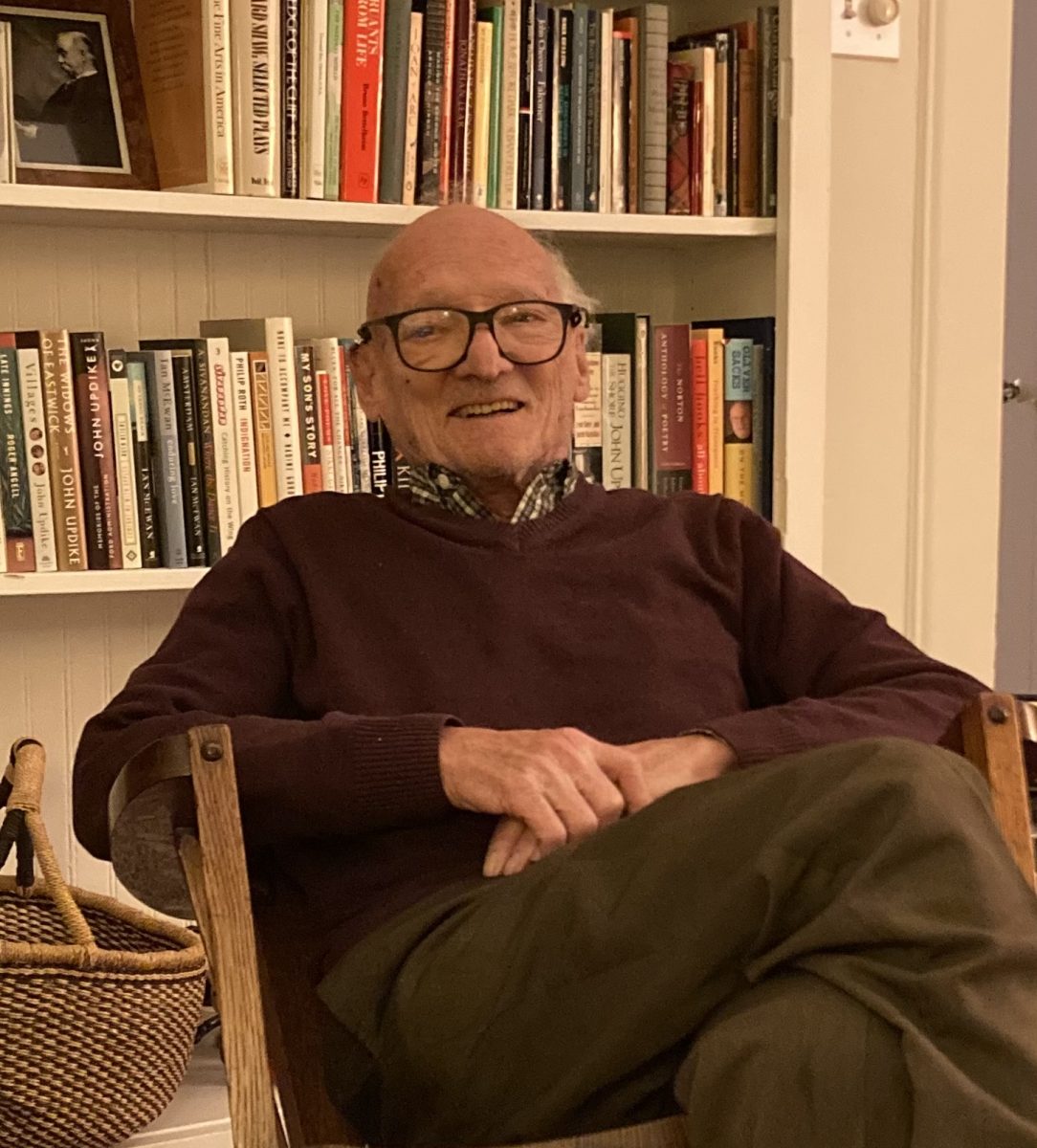
Wolfgang Epstein, professor emeritus of molecular genetics and cell biology and a frontier researcher in molecular genetics, passed away on December 25, 2025. He was 94 years old.
With appointments in multiple departments including biochemistry, biophysics, theoretical biology (now defunct), and the Committee on Genetics, Epstein spent much of his research career studying how bacteria take up potassium ions, which support crucial functions like nerve regulation and muscle contraction.
The emergence of molecular genetics with the discovery of DNA’s double-helix structure in the 1950s allowed biophysicists like Epstein to study how gene expression affected the physiology of the cell. “He was part of this frontier of using genetic mechanisms,” Theodore Steck, professor emeritus of biochemistry and molecular biology, told the Maroon in an interview. “He was a world authority on using genetic tools to understand the transport of potassium into E. coli as a model.”
Wolfgang Epstein was born on May 7, 1931, in Breslau, Germany (now Wrocław, Poland). After the Nazi Party came to power, Epstein’s family moved to Marshfield, Wisconsin, in 1936.
After earning his M.D., Epstein joined the U.S. Army Medical Corps in 1957 and was stationed in Frankfurt, Germany. After his service ended in 1959, he began postdoctoral work at Harvard University and the Pasteur Institute in Paris before arriving at the University of Chicago, where he was appointed assistant professor of biochemistry in 1967. As was common at the time, Epstein did not obtain a Ph.D. before his faculty appointment.
Steck, who co-taught courses with Epstein and also did not have a Ph.D. when hired, remarked that medical scientist training programs had not yet been established, and that it was difficult for researchers to enroll in both M.D. and Ph.D. programs.
“It was sort of a frontier time, and so an M.D. could sort of wander into basic science,” Steck said. He quipped that his colleagues likened holding M.D.s in specialized research—as opposed to Ph.D.s —to “practic[ing] biochemistry without a license.”
Epstein became Chair of the Committee on Genetics in the 1970s, an appointment he maintained until his retirement in 2015.
Epstein is survived by his wife, Edna; their three children, Matthew, Ezra, and Tanya; and seven grandchildren.