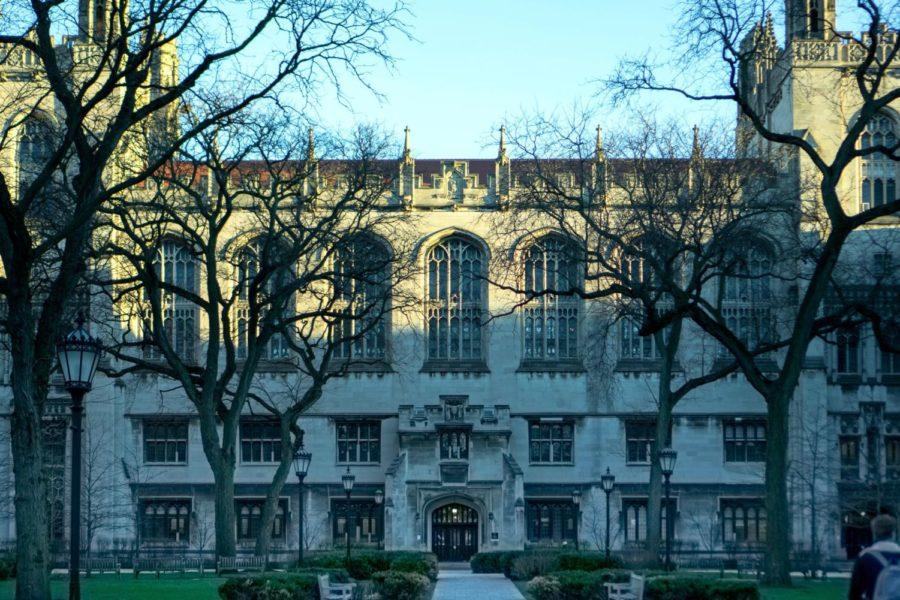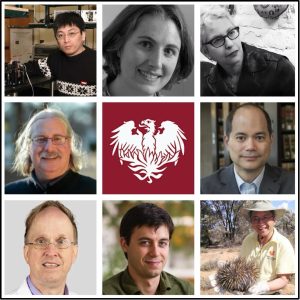
32 UChicago faculty received named or distinguished service professorships effective January 1. These professorships highlight and support professors who have made extraordinary contributions to the University, academia, and the nourishment of the life of the mind on campus.
The Maroon sat down with eight of the professors—whose disciplines span the physical and biological sciences, the humanities, and law—to understand why they came to UChicago, how their work here has changed over time, and how they spend their lives outside of academia.
Cheng Chin, Horace B. Horton Professor in the Department of Physics and the College
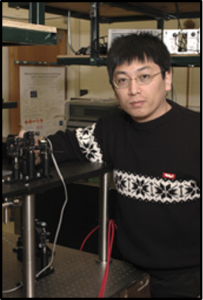
When Cheng Chin came to the University of Chicago in 2005, he had no colleagues in his field. “I was the first one working on experimental atomic physics here,” he told the Maroon. Interest has since developed, and Chin now leads a 22-researcher lab—the Chin Lab—dedicated to the study of ultracold atoms and molecules.
Chin’s work is focused on “exploring novel quantum phenomena,” both by trying to find experimental evidence for theoretical conjectures and by “trying to link different complex phenomena” observed across different fields. This work is often unpredictable: in 2017, the Chin Lab unexpectedly discovered Bose “fireworks,” the spontaneous emission of star-patterned jets of atoms from a Bose-Einstein condensate. But expected or not, Chin says his projects expand humanity’s fundamental understanding of the world and can help develop practical applications for abstract science.
According to Chin, UChicago is well-positioned to “push for interdisciplinary research.” Recently, he has worked with the Department of Molecular Engineering to advance quantum networking technology that could be crucial to the future of quantum computing.
Chin also works to bring in more young people to physics, such as by organizing exchange programs to bring UChicago students to Taiwan and vice versa.
When he’s not working, Chin likes to play the piano to relax, go to the lakefront trail, or explore Chicago’s downtown.
Margaret Gardel, Edward L. Ryerson Distinguished Service Professor in the Departments of Physics and Molecular Genetics and Cell Biology, the Pritzker School of Molecular Engineering, and the College
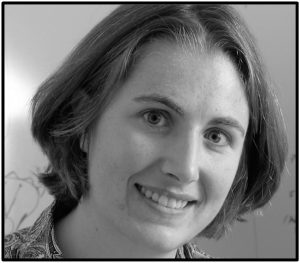
Biological cells have no a priori design, and yet they have emerged to form incredibly complex systems, according to Margaret Gardel, whose work attempts to demystify these developments. Gardel takes an interdisciplinary approach, aiming to “take principles of emergent phenomena from physics to understand biological processes,” she said.
She is known for her work on a project that reconstructed two key phases of cell division using proteins outside of a cell. This year, she plans to collaborate with the Data Science Institute to find new ways to utilize AI and machine learning to aid the investigation of cellular-scale phenomena.
Not unlike Chen, Gardel said that “the discipline I came here [for] did not exist 20 years ago.” As a founding member of the field, she chose UChicago for the open-mindedness of its Department of Physics to interdisciplinary study. Through her time here, Gardel said, “the University has been really good about keeping its core values intact,” protecting academic freedom and innovation by supporting junior faculty and the development of new disciplines.
Outside of her work as an academic, Gardel is raising two children, eight- and 13-years old, with her wife. She enjoys finding ways to stay connected with nature, whether that’s gardening, hiking, or going down to the Chicago River.
Judith Zeitlin, William R. Kenan Jr. Distinguished Service Professor in the Department of East Asian Languages and Civilizations and the College
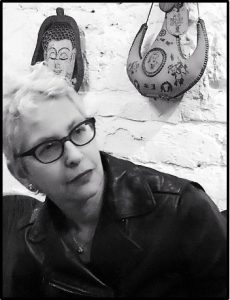
How often do you think about ghosts? Judith Zeitlin would say not enough.
Zeitlin came to the University in 1994, also drawn in by its support of interdisciplinary research. She specializes in early modern Chinese literature. Her most well-known research centers on literary interpretations of the depictions of ghosts in popular Chinese stories, particularly how these depictions reflect ideas about religion, death, and gender. “I often joke that I’m a ‘ghostologist,’ even though I don’t believe in ghosts in the slightest,” she said.
This year, she plans to continue this work: “I’m translating one of the most famous collections of Chinese ghost stories, which is from the 17th century; it’s called Liaozhai’s Strange Tales from a Chinese Studio.” She hopes to make the work more accessible for modern readers with her new translation, paired with her own scholarly commentary.
Zeitlin also serves on the faculty committee for Theater and Performance Studies and teaches Core classes for the program. She is currently extending her previous research on music to an investigation of the relationship between gender and voice in the 17th and 18th centuries.
When not studying the paranormal or immersing herself in visual and musical culture, Zeitlin can be found swimming, going for walks, enjoying Chicago’s theater and opera scenes, cooking, reading all kinds of books, or teaching herself new languages (currently, Italian).
James Conant, Chester D. Tripp Distinguished Service Professor in the Department of Philosophy and the College
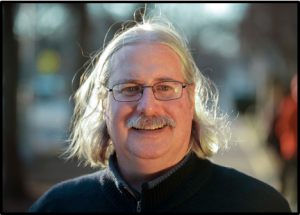
James Conant has been teaching at the University since 1999, with his interests spanning thinkers from Immanuel Kant to Stanley Cavell and topics from logic and epistemology to aesthetics. But Conant’s work cannot be carved at its joints so neatly. For him, philosophy is a unified yet diverse field, and he tries to cover ground throughout.
He is most well-known for his work in the New Wittgenstein School, focused on interpreting the philosopher Ludwig Wittgenstein. “There was a period when I first came into graduate school [when] it was very fashionable to speak of two Wittgensteins,” Conant said, speaking of the tendency to view Wittgenstein’s earlier work as incompatible with his later. The New Wittgenstein School works against this approach, building a more developmentalist reading that emphasizes continuity instead.
Conant, however, is most excited about his upcoming work in collaboration with fellow UChicago philosopher Matthias Haase on the logical form of the second person. According to Conant, there is a different “fundamental logical form” in interactions between the self and the other that cannot be merely reduced to reciprocity, as thinkers as varied as Erving Goffman and Georg Hegel have argued. Rather, the mutual acts of action, speech, intention, and recognition in these contexts are two sides of the same coin, forming what Conant calls a “joint act of consciousness.”
In his daily life, Conant is never not philosophizing, whether that involves analyzing music, learning a new language, working his way through a novel, or traveling.
William H. J. Hubbard, Clifton R. Musser Professor of Law and Economics at the Law School
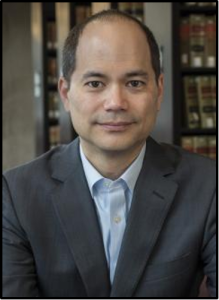
Almost 30 years ago, William H. J. Hubbard wandered into the Law School for the first time. There, he quipped, he saw something he hadn’t seen anywhere else: students with bags under their eyes, focused on their studies, and genuinely excited to learn. After finishing his J.D. at UChicago in 2000, he spent a few years practicing law but came back in 2006 for a Ph.D. in economics and went on to become a professor in 2011.
Hubbard’s research centers on the economic analysis of litigation and civil procedure. His forthcoming research with professor Ronen Avraham is based on data from millions of federal court cases from the past few decades, and asks, “What changes in the law of civil procedure over the past several decades have had the biggest effect on what’s happening in court?” Hubbard plans to bring in his background in economics to study how incentives have changed with new precedents, and how these incentives have motivated lawyers to change their practice.
His work also involves a recurring theme of reconsidering how we frame our understanding of seemingly contradictory systems of economic analysis, such as the Chicago School and behavioral economics. He draws an analogy to Newtonian and quantum mechanics: although the frameworks are technically incompatible, he thinks they are both useful. When one fails or is inapplicable, the other can step in. It is “an ‘and’ rather than an ‘or,’” Hubbard said.
If you cannot find Hubbard at the Law School, you might see him playing cards, or maybe pickleball. If you go to Jimmy’s at the right time, you can even find him doing amateur improv comedy.
Jon Grant, Ellen C. Manning Professor in the Department of Psychiatry and Behavioral Neuroscience
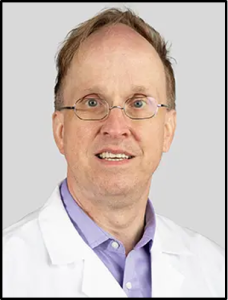
Psychiatrist and behavioral neuroscientist Jon Grant has accumulated five degrees over the course of his career, published over 500 articles and 15 books, and his research continues to stand at the cutting edge of his field.
Grant admires UChicago as a “place where people are interested in asking questions, even if those questions don’t have answers.” His work on understanding and developing treatments for impulsive and compulsive disorders, however, focuses more on the practical. From 2009 to 2016, Grant helped develop and test the first effective treatment for trichotillomania, using a medicine called N-acetylcysteine that reduces compulsive behavior like hair-pulling, skin-picking, and nail-biting.
Now, Grant is working on developing new treatment approaches to obsessive-compulsive disorder. He aims to investigate the efficacy of catechol-O-methyltransferase inhibitors, which interact indirectly with dopamine in the prefrontal cortex to enhance cognitive flexibility, which could potentially mitigate obsessive-compulsive thinking patterns.
Grant also characterizes himself as an “avid exercise person” with a special love for tennis. His other passion is 19th-century British novels. He hypothesizes that “most of life’s questions can be answered by Charles Dickens.”
Christopher Walters, Daniel Gressel Professor of Economics in the Wallman Society of Fellows, the Kenneth C. Griffin Department of Economics and the College
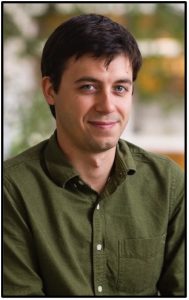
Over the past decade, Christopher Walters found himself always returning to Chicago. This time, he is here to stay. In 2015, he was a visiting lecturer; in 2017, he was a visiting assistant professor; and in 2025 he became a full professor in the Department of Economics. Walters finds UChicago intellectually exciting and says that people’s commitment to their work here inspires him.
Walters specializes in labor economics and the economics of education. He is interested in why people choose the schools they attend and how these choices impact outcomes for different groups. He is well known for his research on Knowledge is Power Program (KIPP) schools, a set of charter schools focused on providing opportunities for underserved populations and instilling character development. These schools utilize a “no excuses” model which emphasizes structure, discipline, and high expectations. Although the pedagogical assumptions that support such models have fallen out of favor, Walters’s research suggests these schools still have a place. “For kids who are really far behind, it seems to be quite effective,” he said.
This year, Walters wants to study how school districts respond to declining enrollment, which he says “necessitates hard choices about what to do with the excess capacity.” Districts across the U.S. are closing, consolidating, and merging schools, and Walters wants to understand how they can most effectively maintain local accessibility, consider community opinion, and maximize student outcomes when making these difficult decisions.
Walters has two daughters and spends his spare time dabbling in playing covers of his favorite ’90s bands like Third Eye Blind, Weezer, and Stone Temple Pilots.
Zhe-Xi Luo, Mila Pierce-Rhoads Professor in the Department of Organismal Biology and Anatomy and the College
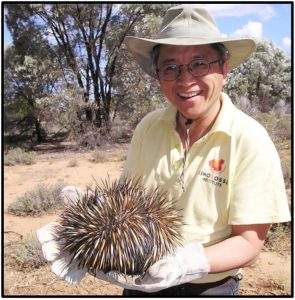
“Our history is our reason [for] being,” Zhe-Xi Luo told the Maroon. To understand ourselves, we need to understand where we come from. Luo’s work is essential to this quest, studying the emergence, survival, and evolution of humanity’s earliest mammalian ancestors.
His office is filled with 3D-printed models of jaws, bones, and ancient critters. His PaleoCT scanner allows him and his team to scale up tiny fossils and examine them at an incredibly detailed level. From there, they use modern knowledge of biological traits to ascertain why and how certain features of early mammals developed. Luo’s work has shown that mammals underwent a massive period of evolution, with new adaptations pushing them to diversify into a multitude of ecological niches. This consequent variability helped mammals persist even through the Cretaceous-Paleogene extinction event that eradicated 75 percent of life on earth, including the dinosaurs.
This year, Luo hopes to study how mammals developed some of their most strategic and defining features, including enlarged brains, and strong olfactory capacities. According to Luo, “in the time of dinosaurs, we essentially took advantage of our better sensory capacity,” allowing mammals to “survive the age of dinosaurs and actually come out on the winning end.”
Luo enjoys reading about the history and theories of science, especially from authors like Stephen Jay Gould and Edward Wilson. He also finds time to jog on the lakefront trail and travel with his family.