At its meeting on Monday, Undergraduate Student Government’s (USG) College Council (CC) discussed proposed revisions to the Student Government Funding Committee (SGFC) appeals procedure that would allow appeals to be heard outside CC’s regular meeting time.
Members also debated instituting ranked-choice voting in future CC elections and discussed bylaw changes concerning election recalls, proposed amendments to CC bylaws, and a proposal by Class of 2029 Representative Aaron Horowitz for CC to call for Thomas Pritzker’s removal from the Board of Trustees.
CC Vice Chair Kevin Guo introduced proposed revisions to Article VI, which governs elections, appointments, vacancies, and removals in CC’s bylaws. Guo called a new clause that would make Election & Rules Committee (E&R) members’ individual votes public a “particularly controversial” part of the resolution.
Fred Lee, the vice president of student organizations, cited a spring 2023 vote as an example of potential difficulties that could result from public votes. Lee referenced his choice to call for deducting votes from now-USG President Elijah Jenkins’ ticket as an example of why CC privatizes E&R decisions. He warned that publishing E&R’s nullification votes could dissuade future members from joining E&R for fear of backlash over their votes.
Guo also proposed a resolution to allow ranked-choice voting in next year’s USG elections for cabinet positions. Last year, CC briefly discussed a similar proposition brought by Guo, but it didn’t progress “due to personnel issues,” Guo said.
Class of 2028 Representative Destiney Samare suggested that the choice to switch to ranked-choice voting be left up to a referendum voted upon by the student body during the next election cycle. E&R Chair Jay Love said that CC would have to enact Guo’s resolution by next week’s meeting for E&R to implement it for spring elections, as election code changes become difficult during election seasons.
Guo separately noted that there was no process for changing RSOs’ assigned finance committee to better suit their needs. He told members he would reach out to RSOs and ask if they wanted to move to other committees for the coming academic year, but said he hoped to make the process more formalized in the future.
In light of a recent influx of SGFC appeals, Lee proposed the creation of a subcommittee which could hear SGFC funding appeals outside of the regular CC meeting and calculate an appropriate allocation to be reviewed at the next CC meeting. CC has spent significant shares of several meetings this quarter hearing and deliberating on SGFC appeals.
Class of 2029 Representative Gavin Wynn questioned CC’s ability to find a representative group to staff the subcommittee and asked that members have more time to consider the proposal. The creation of the subcommittee will be discussed further at next week’s meeting, Guo said.
CC also reviewed allocations to RSOs set at the previous week’s SGFC meeting.
Wynn and Guo debated whether funds given to the Latino Medical Students Association by that the Pritzker Medical School qualified as fundraising under SGFC’s guidelines. CC ultimately sent the request back to SGFC for reconsideration.
Horowitz presented a resolution for CC to publicly call for Thomas Pritzker’s removal from UChicago’s Board of Trustees. The Maroon has reported that Pritzker had a close relationship with convicted sex offender Jeffrey Epstein.
Class of 2028 Representative Grace Beatty said she supported the “spirit of the resolution” but wanted to hear more “in terms of practice,” given that Pritzker will turn 75 on June 6 of this year. The Board of Trustees Articles of Incorporation mandate that trustees will no longer be eligible to serve following the annual meeting after their seventy-fifth birthday. Horowitz said that the “symbolic weight” of a statement by CC would give the student body a voice, even though CC lacks the power to remove Pritzker.
Because a resolution cannot be passed at the same meeting as it is introduced, none of the resolutions introduced on Monday will be approved until at least next week.
Love also proposed several technical changes to the language of the election code, including specifying “campaign staff” as people who worked on electoral activities for more than one hour per week. Wynn questioned Love’s proposed definition, noting that social media management would not qualify as campaign staffers, but CC approved the changes.
E&R also presented changes it had made to the House Rules, many of which revoked provisions written by former E&R Chair Nevin Hall in February 2025, according to an email Guo sent to CC members last week. Hall was impeached last spring for attempting to change USG bylaws to consolidate his own power, among other charges.
The eliminated sections included several provisions that protected the E&R secretary from removal and conditioned the committee’s motions and decisions on the approval of the secretary. Hall appointed himself E&R secretary before his impeachment. CC does not have to approve House Rules changes.
CC ran out of meeting time to address the rest of their agenda items, such as members’ individual projects, and adjourned.
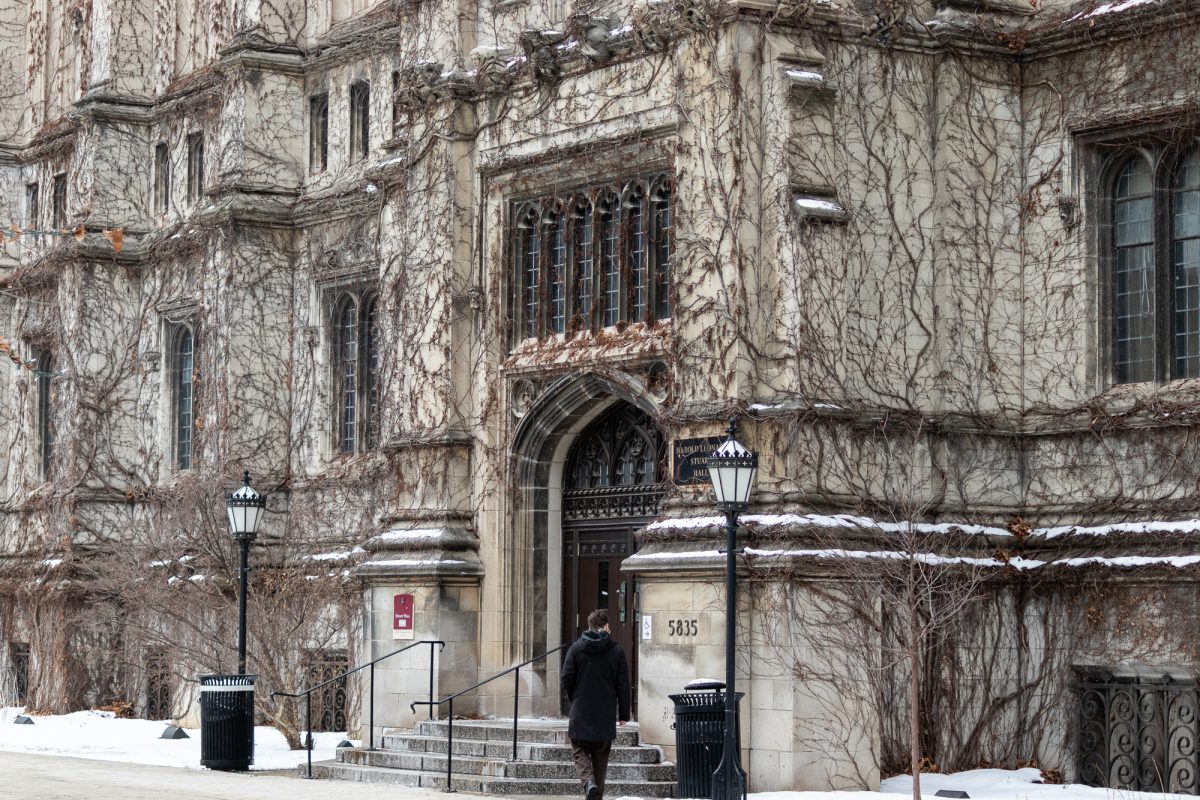
College Council holds weekly public meetings in Stuart Hall 104 on Mondays at 7 p.m.
Editor’s note: CC representatives Aaron Horowitz and Grace Beatty are current staff members of the Maroon. They had no involvement in the reporting of this story.