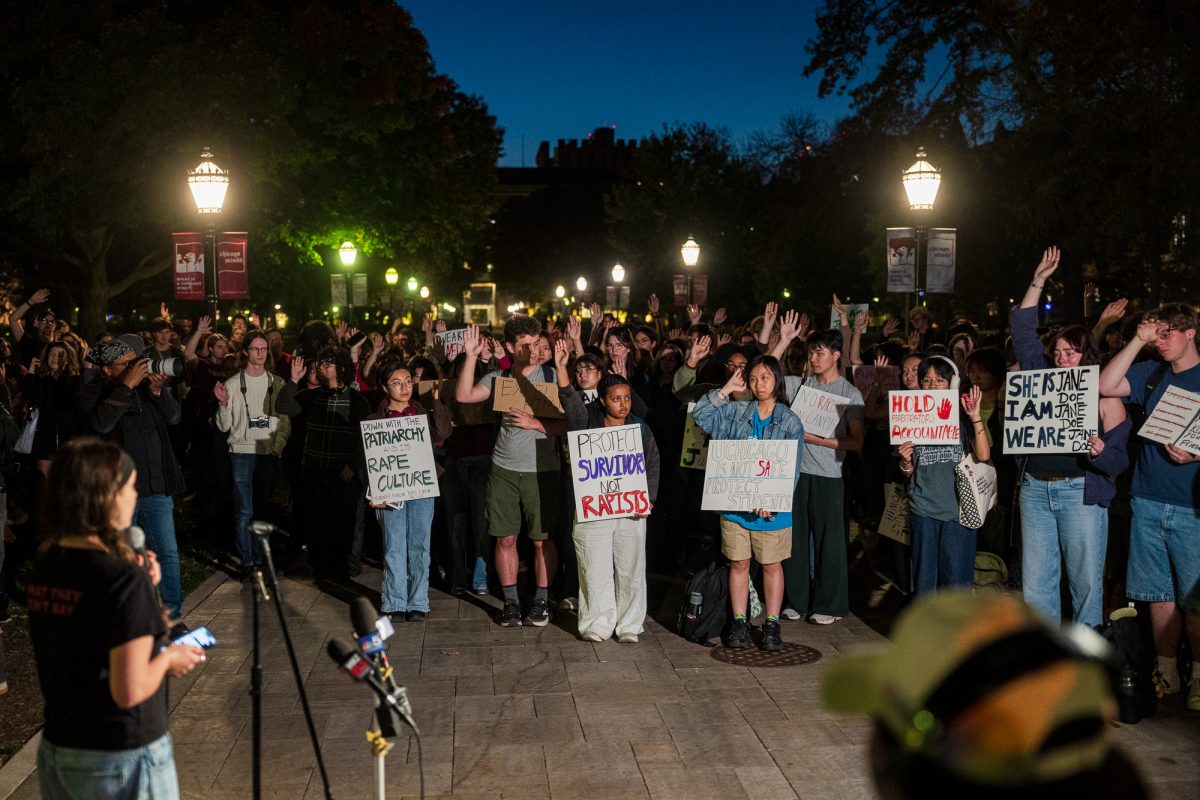
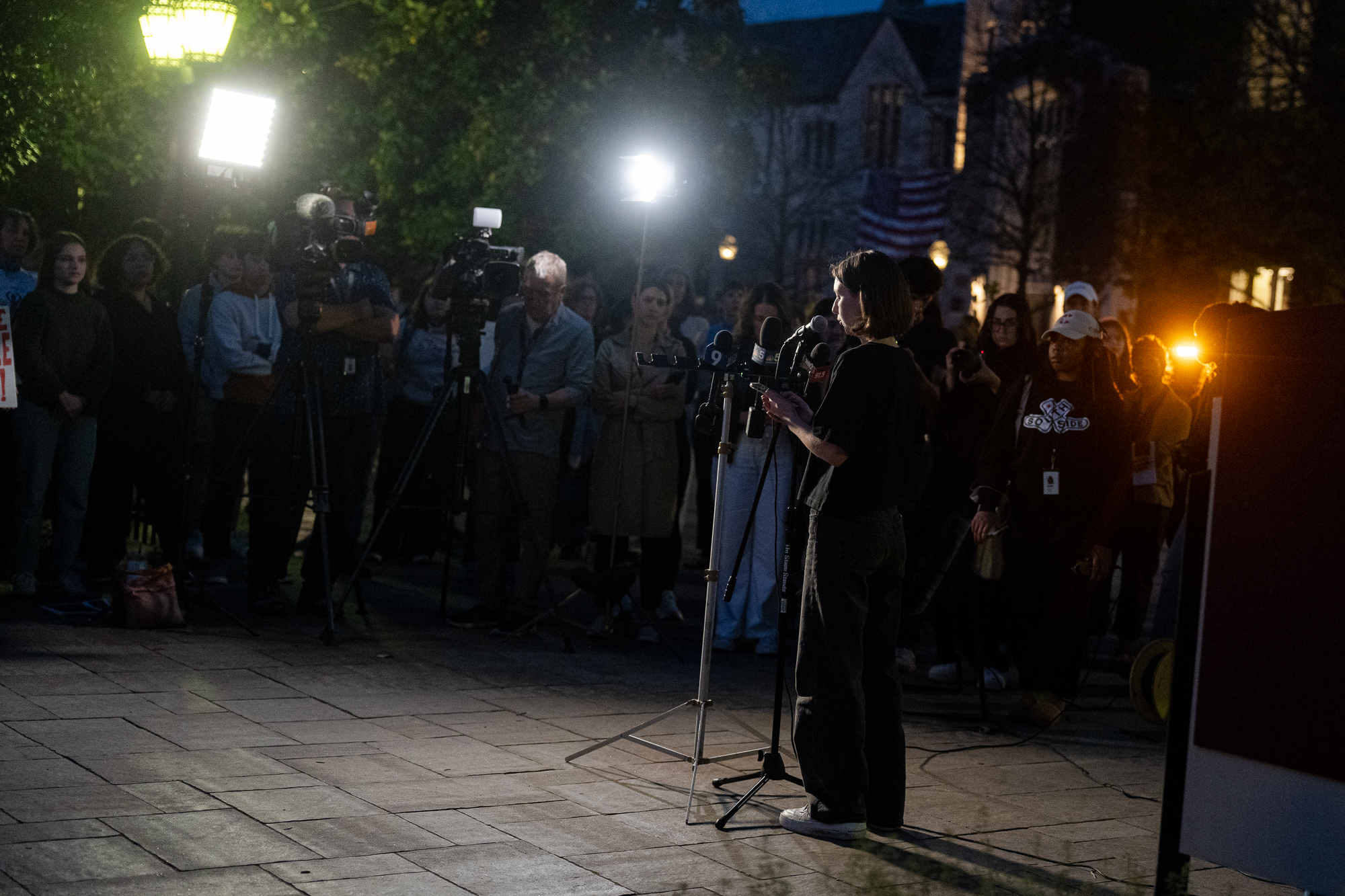
More than 100 University of Chicago students and community members gathered on the quad Wednesday evening to express solidarity with victims of sexual assault and call on the University to strengthen its responses to sexual violence.
Organizers demanded that the University institute mandatory disciplinary consequences for students found responsible for sexual violence, improve its mandatory sexual education and sexual assault awareness courses for first-year and transfer students, and conduct an independent audit of the University’s sexual violence prevention and response procedures. They also called on University President Paul Alivisatos and the Board of Trustees to respond to their demands by November 20.
The rally followed a 4 p.m. teach-in at the Center for the Study of Gender and Sexuality, where nearly 50 undergraduate and graduate students, faculty, and staff developed demands for the administration.
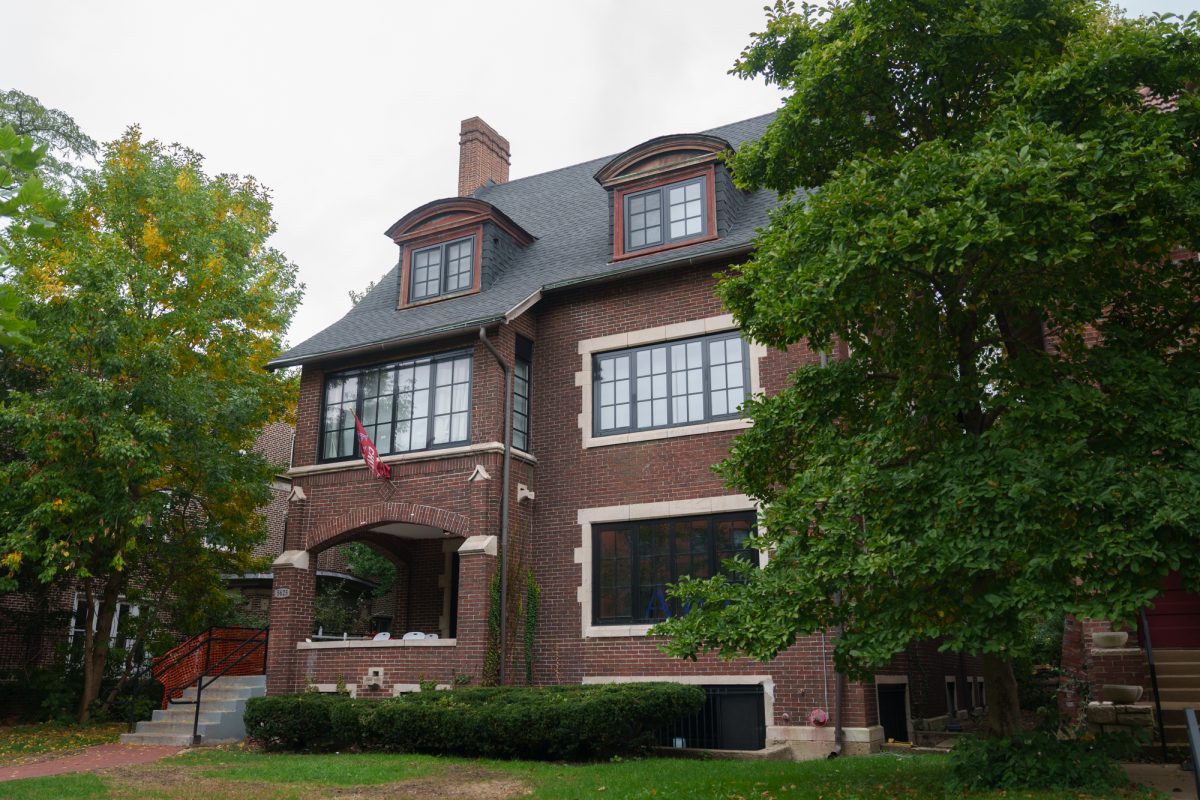
The demonstration came amid renewed scrutiny of the University’s treatment of sexual violence following a reported assault at the Alpha Epsilon Pi (AEPi) fraternity house on October 11 and a lawsuit filed against Alpha Delta Phi alleging that the fraternity failed to take precautions that could have prevented an assault at its house in February. Although the University does not formally recognize fraternities and has no oversight of their operations, all fraternity members are students who the University has previously said are “subject to University policies and disciplinary procedures” in an October 11 community alert email.


Jadyn Lewis, a fourth-year in the College and one of the rally’s organizers, criticized the University’s response to student concerns. “I’m angry because the University would rather placate student concerns than make actionable change to ensure that its students are safe,” she said.

“Rapists steal their victims’ futures. Disciplining rapists does not steal anything,” Lewis said.
The independent audit proposed by the students would examine the University of Chicago Police Department’s protocols and prior investigations related to sexual assault, corresponding practices of the University’s Title IX office, and student conduct procedures related to sexual misconduct.
Organizers called for a student-approved team of outside specialists to conduct the audit, recommending former U.S. Deputy Attorney General Sally Yates to lead the investigation.
Cornell University, which has faced scrutiny after a former student alleged that seven students sexually assaulted her at a fraternity house in 2024, recently appointed Yates to independently review its handling of the case, along with broader sexual misconduct prevention and disciplinary policies.


Ray Epstein, a sexual violence prevention educator, criticized the University’s reliance on general assurances that they take sexual violence seriously without specifying concrete steps to prevent future assaults.
In a community alert sent following the AEPi assault, University officials said, “The University remains committed to addressing sexual misconduct cases that occur, to imposing disciplinary consequences as warranted, and to continually improving efforts to prevent sexual misconduct.”
“When we take something seriously, we put our money where our mouths are,” Epstein said. “We invest in it. We measure progress. We identify where we’re failing, and we make changes.”
Ella Fast, a fourth-year and one of the organizers, called for greater institutional accountability, saying that the University places too much responsibility on students to protect themselves rather than taking steps itself to prevent sexual violence.
“UChicago is complicit in sexual assault, so we must stand with Jane Doe and demand change,” Fast said, referring to the alias often used to protect the identity of sexual assault victims in court cases.
“This happened on [UChicago’s] campus…. All these students, this is their community,” first-year Rio Johnson told the Maroon after the rally. “They’re a massive institution. They can do something about this.”
Fourth-year Shelby Noel expressed frustration at the lack of University action against sexual assault on campus in the past, saying, “It’s great that [the University is] talking about [sexual assault] right now. But where were you four years ago? Where were you 10 years ago?”
Tracy DeTomasi, who is CEO of sexual violence prevention organization Callisto, spoke to the crowd about the increased media coverage of sexual assault advocacy in recent years.
“[Sexual assault] is not new,” DeTomasi said, “What is new are these cameras and the people giving me a microphone because the media is finally listening.”
Speakers also emphasized advocating for all sexual assault victims, not just those who have received news coverage.
“I want everyone here to remember that for every survivor whose story makes the headlines, there are countless others whose experiences never will,” said Shannon Porter, a rally speaker and the of the What They Don’t Say podcast.
Speakers highlighted the rally’s strong turnout, saying it brought them hope for change.
“The sheer number of people who have rallied around Jane Doe at Cornell, on this university campus, around women at Chicago represents something that I never predicted I would see in my lifetime, let alone in my 20s,” Epstein said.
Students in attendance noted that addressing sexual violence requires examining the broader culture that enables it.
“We have to be expansive in what we are doing to stop [sexual assault], and I think that it would be a misidentification to stop it just at fraternities,” said first-year graduate student Max Coté.