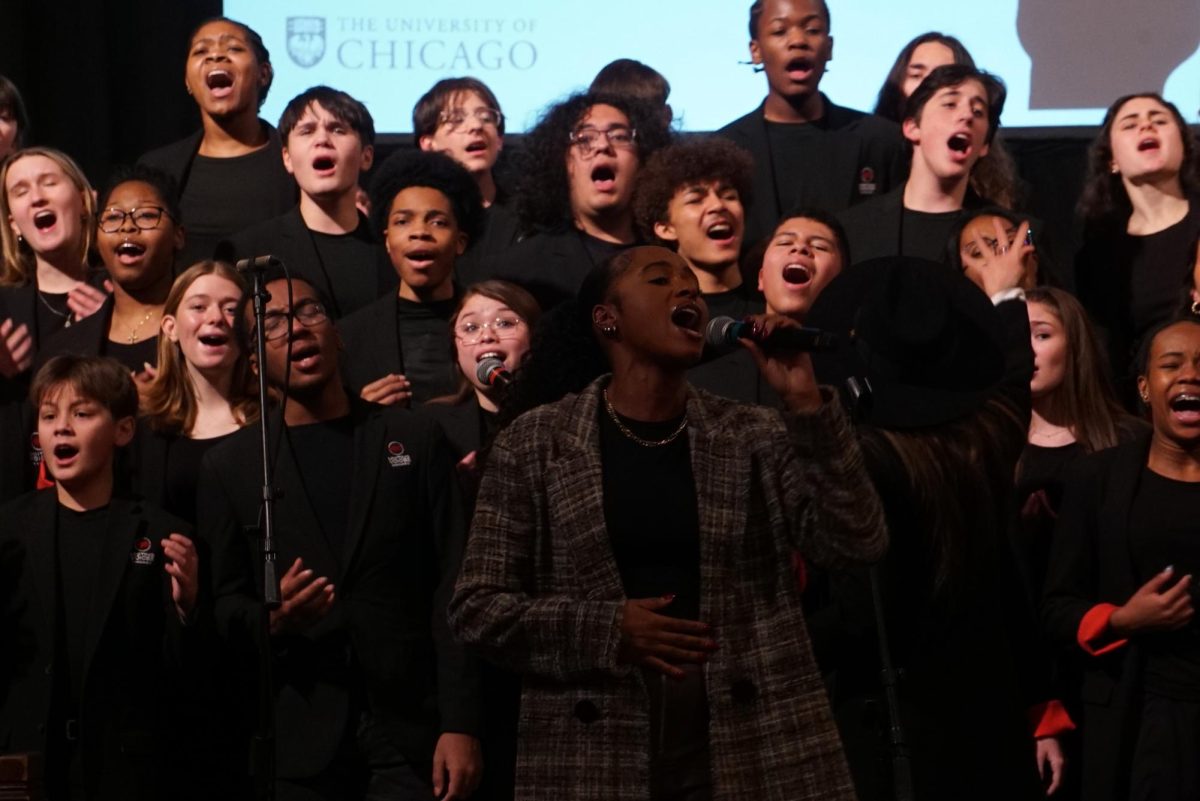
Jacqueline Stewart, the Edward Carson Waller Distinguished Service Professor in the Department of Cinema and Media Studies at UChicago, delivered the keynote address at the University’s 36th annual Martin Luther King, Jr. Commemoration Celebration last Wednesday in Rockefeller Chapel.
Stewart is the former director and president of the Academy Museum of Motion Pictures in Los Angeles and founder of the South Side Home Movie Project at UChicago. She spoke about King’s media prowess during her speech, projecting and analyzing clips of King’s appearances in popular media, interviews, and speeches.
Maurice Charles, dean of Rockefeller Chapel, opened the event, recalling King’s visit to the chapel 70 years ago, when he delivered a speech from the same pulpit at the height of the Montgomery bus boycotts.
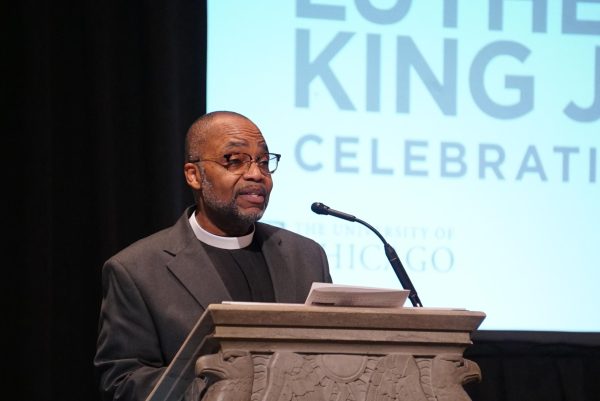
University President Paul Alivisatos introduced the night’s theme—the power of “indelible images of courage played in the face of brutality”—pointing to Birmingham in 1963, where film and photography served to expose the police violence against peaceful protestors fighting for social justice.
Following Alivisatos, Stewart began her keynote speech by describing how King raised awareness among “hostile” white audiences and spoke directly to Black audiences using the “moment and medium” of a then-growing cable news industry. Often, he would ensure his speeches were recorded and that the protests he and others attended were photographed extensively.
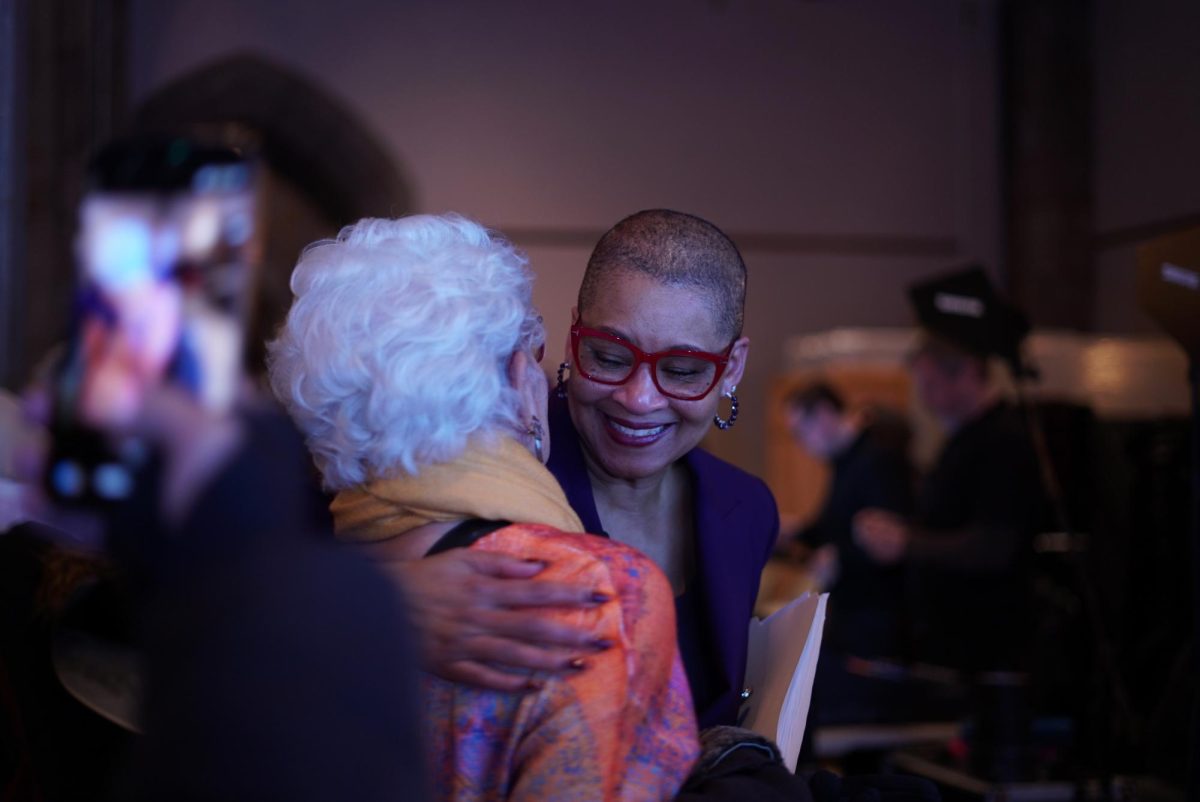
Stewart pointed to 1963, when Birmingham’s commissioner of public safety directed the use of firehoses against peaceful protesters. King made sure as many protests as possible were recorded for the world to see the systematic mistreatment of Black Americans.
“We are here to say to the white men that we no longer will let them use clubs on us in the dark corners. We’re going to make them do it in the glaring light of television,” King said about the protests.
Stewart explained how, following King’s assassination in 1968, his wife, Coretta Scott King, pushed for a “living memorial” with an emphasis on archival video footage to make sure her husband could send their message across generations.
Harnessing the power of film and television, King “[built] hope and faith, courage and community,” Stewart said.
After the celebration, Stewart told the Maroon that citizen journalism is critical to the fight against injustice at large—particularly during a time when citizens like Alex Pretti are being “brazenly” struck down by law enforcement, even with phones in their hands to film the violence.
Nonetheless, Stewart emphasized the importance of lightheartedness—even “irreverence”—in the fight for justice for all, remarking that King was not solely known for his work, but also his good sense of humor.