School had come a day early, in the best way possible. It was a night of openness, and Indigo De Souza was teaching a lesson in the elegance of emotional vulnerability.
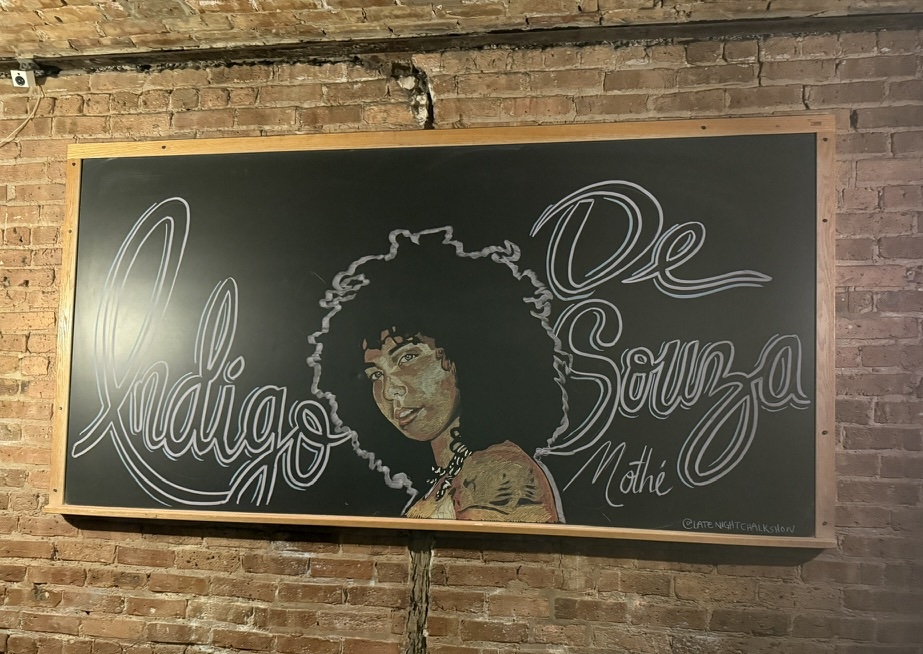
De Souza’s sound is best described as comforting rock. When she and her band members took the stage, they looked like a friend group of gentle kindergarten teachers who took quirky side jobs on the weekends. The space emanated this support, too. A welcoming chalk portrait of De Souza by Anna-Michal Paul greeted concertgoers as they walked in. The surroundings of Thalia Hall recalled a warm embrace with just the right amount of room to chat with your neighbor while still feeling the crowd’s energy.

To open, De Souza sang “Always,” which narrates how she forged a new identity for herself. After ending with a soft, airy melody, De Souza chatted singsong-ily with her fans. She warned that the set was new, but it hardly seemed to matter. The band had an observable chemistry, and De Souza covered up awkward mistakes with charm and serendipity. When she broke in too early for “Smog,” she laughed and politely asked her guitarist to restart. When the mood struck her, she reordered the set list. Any first-day jitters that were being sorted out disappeared as the night wore on, and De Souza quickly hit her stride.
De Souza’s performance was an act of fluidity in both movement and style. In “Be Like the Water,” De Souza channeled her inner Bruce Lee with flowy hand movements. She sang the refrain “I’m temporary/ I am an island,” drawing on the duality of feeling separated from and surrendering to the ocean. Throughout her songs, De Souza’s lyricism fixates on the waves of her moods. She transitioned smoothly from “Crush”—a flirty song about developing feelings—to “Crying Over Nothing,” which is about the strain of a relationship that has an imminent end. All the while, she danced across an emotional spectrum, telling a nonlinear story of the curvatures of love.
De Souza’s new album Precipice was released July 25. With Chicago as her first stop, the tour will travel to several major cities in the U.S., including Ashville, where she used to live.
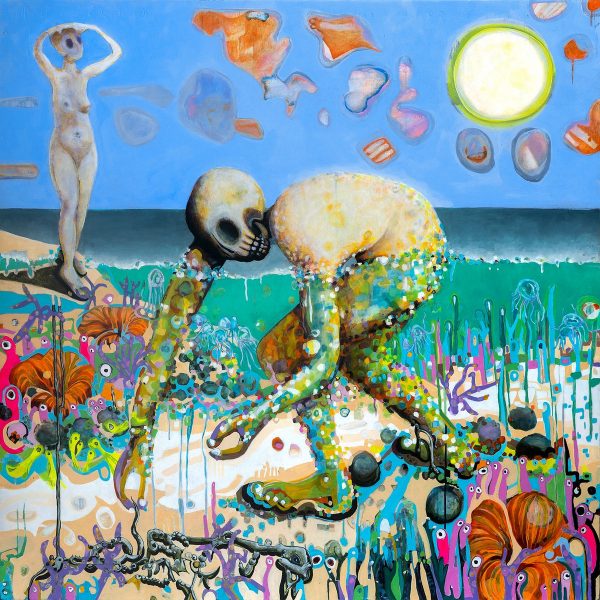
Art has always been an outlet for De Souza. She was encouraged by her mother, a visual artist whose work De Souza uses on her album covers. The mother–daughter duo is driven by a similar artistic impulse to juxtapose the mundanity of the everyday with a surrealist landscape. In the painting for the album All of This Will End, a red car is placed in a desert at sunset. In Precipice, the same skull-headed bodies are placed in the landscape. These friendly figures elicit an undertone of death pertaining to De Souza’s embrace of grief.
De Souza was diagnosed with borderline personality disorder in 2023. She is upfront about her struggles and sings about them in many of her songs. She explores the complications of overthinking in her song “Darker Than Death” and overcoming fear in “Not Afraid.” She sings, “I’m not afraid of dyin’ anymore/ I’m not afraid of livin’ either,” and expresses how she worked to become open-hearted. The concert was surprisingly healing; it was an opportunity for everyone to return to the vulnerability of childhood.
De Souza offered a generous ear for the crowd to let out their emotions without inhibitions in a kind of emotional share-and-tell. In “Real Pain,” De Souza reacquainted the audience with “I Statements.” She focused on how one cannot run away from pain but can only deeply reckon with the feeling. Although she sung about succumbing to her gloomy feelings, she always came back to center. “You Can Be Mean” was a powerful song about the disappointment of having an absent father. In the chorus she let out a cathartic scream. At the end of the song, she thanked the audience in her quintessential soft voice.
It was as if the stage was a therapy session for De Souza in the most raw and intimate way. The album’s finale, “Precipice,” lulled the audience with a poetic painting of a scene before giving way to a determined emotional crescendo that was both vulnerable and inspiring.
As the night drew to a close, De Souza ended on a less serious note. In the encore song “Take Off Ur Pants,” De Souza kept it real, singing, “I don’t love you, I like you.” De Souza’s honesty felt oddly comforting, even if blunt. Her embrace of youthfulness created a space for people to bring out their inner child and be honest with themselves. Precipice was like a big hug at the end of a long day.