January 24, 2026. Winter quarter. Cruel conditions. The University warns that “[i]n these conditions, frostbite can occur on exposed skin within 5–10 minutes.”
Yet the arctic weather was no deterrent to Rainbow Dash (from My Little Pony), Makima (from Chainsaw Man), and Yuki Tsukumo (from Jujutsu Kaisen), who stood huddled around each other outside of Ida Noyes, taking quick drags of their cigarettes and stamping their feet to keep warm in the subzero winds with the minimal layers with which their cosplays provided them. It was the day of UChi-Con, an anime convention hosted by the University of Chicago Japanese Animation Society.
This was the best initiation I could have had to the inherent humor of an anime convention, where extraordinary figures are brought down to the banalities of everyday life. It was the first convention of this type that I’d been to. I had a vague image of cosplayers and booths, but, aside from that, I had no real expectations.
After entering the convention, my breath still fogging even after closing the door behind me, my first impression was that it was sparse. In all honesty, there really wasn’t all that much to do. There was a maid café, a game room with about eight consoles that never really filled, an escape room only noticeable because it was near the coat check, and a cafeteria that saw two musical performances. But nobody came to this con for any of that. It was the community that brought people here, and after milling about for an hour or two I began to understand that this meandering was the whole point.
The most special part of UChi-Con was the cosplayers themselves. There was an astonishing number and variety of cosplayers. These cosplays varied in every way from fandom to quality, with ones that rivaled movie costumes to ones that were lovingly cobbled together from everyday clothes. The passion these cosplayers put into their costumes and the recognition that they showed for others’ was testament to the community, one that they loved enough to brave the Chicago tundra.
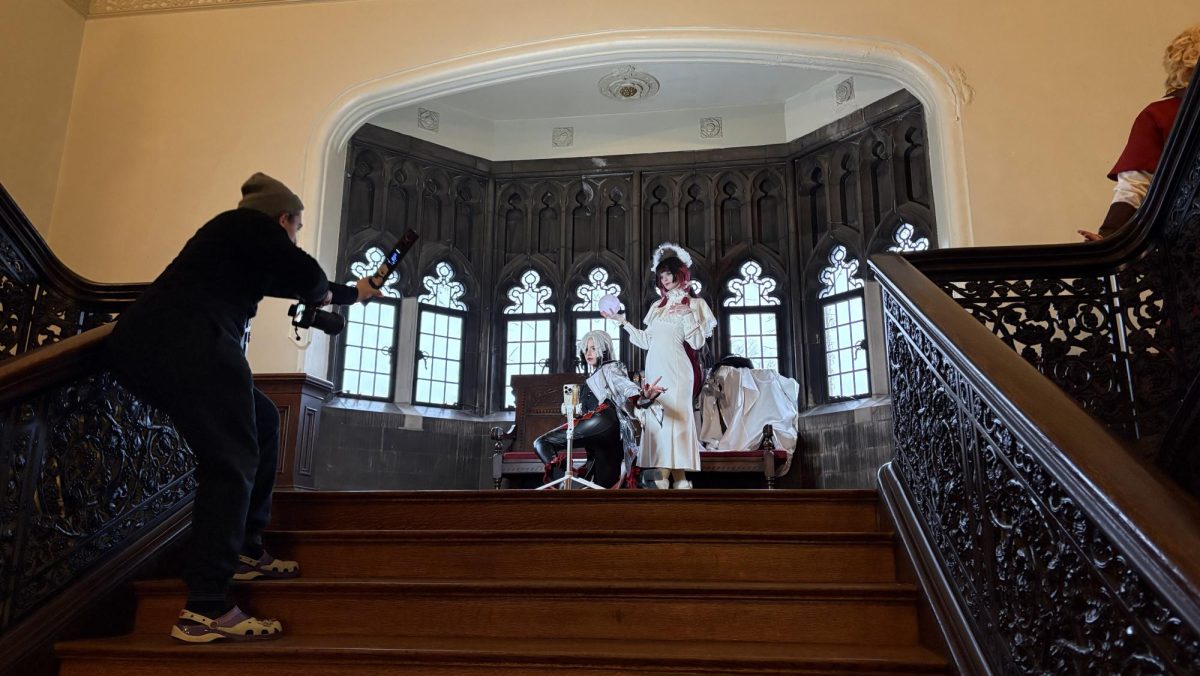
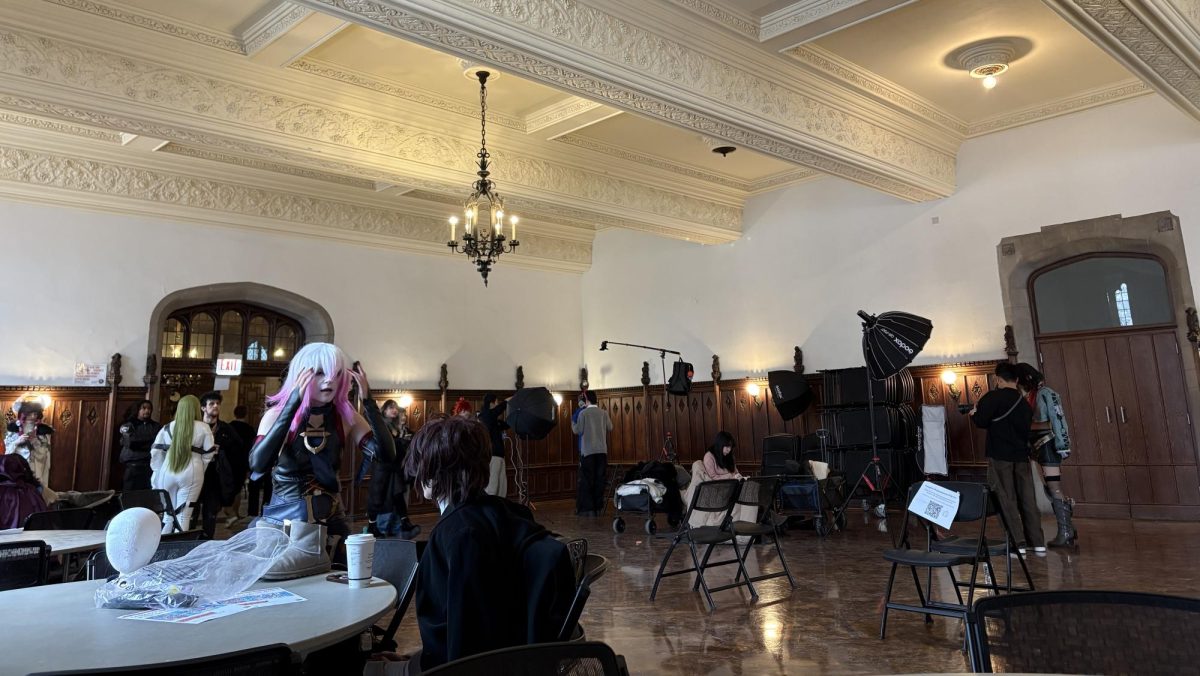
The cold wasn’t enough to dissuade cosplayers from trying to get the perfect shot in the courtyard of Ida Noyes. While the lighting must have been nicer outside, I can’t imagine the shoot would be any easier with the shivering cosplayers trying to hold that pose, get that shot, then run back to the warm refuge inside. UChi-Con, understanding photography to be one of its main attractions, had also set up official photographers in the lounge and the entry to Max Palevsky Cinema. There were umbrella lights and white laminate backdrops, and the whole thing reminded me too much of school picture day.
The con was split up between Ida Noyes and the David Rubenstein Forum, which held the artist alley and some seminars. This choice meant the attendees were forced to cross the Midway, an uncovered stretch which acts as a veritable wind tunnel channeling the gusts in a famously windy city. The brave attendees were not daunted by this challenge. Throughout the day, there was a sparse yet steady trickle of cosplayers sprinting across the Midway.
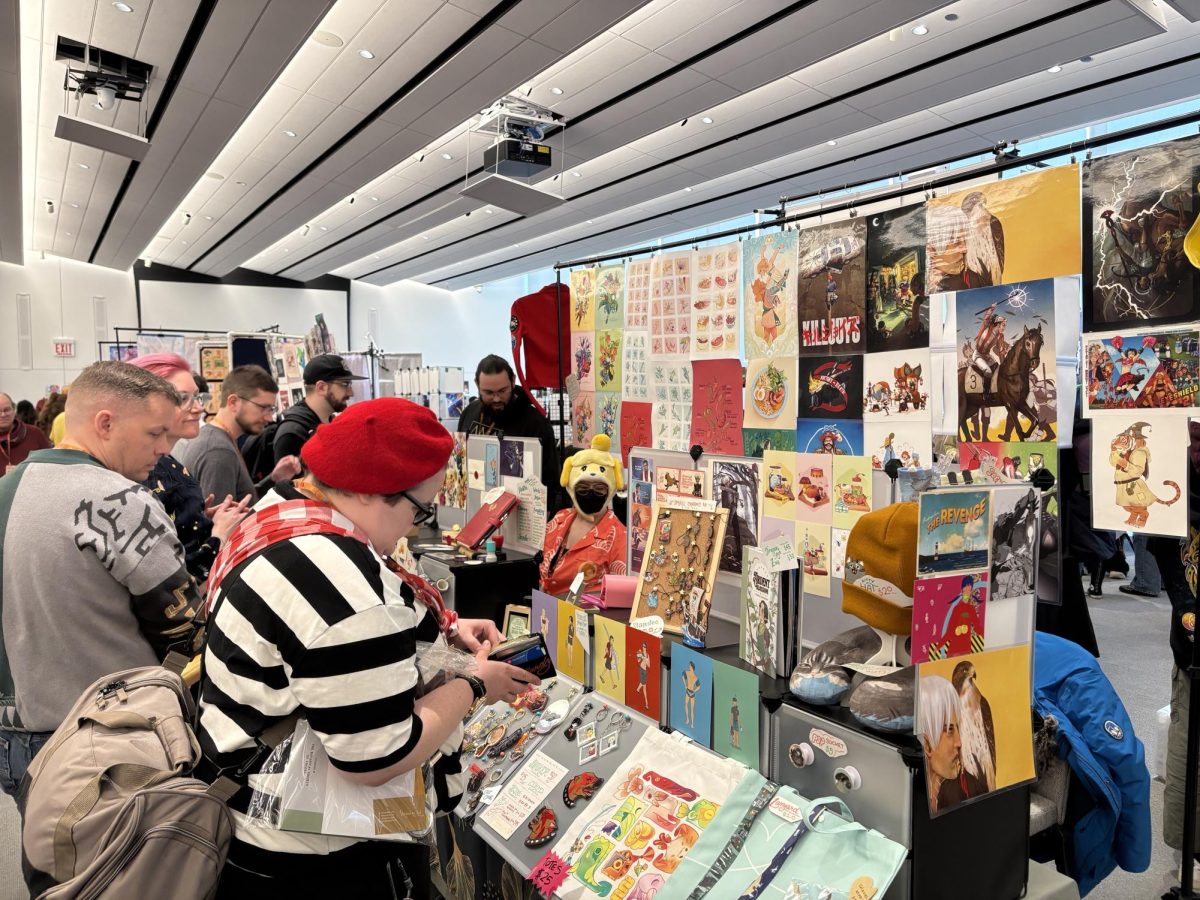
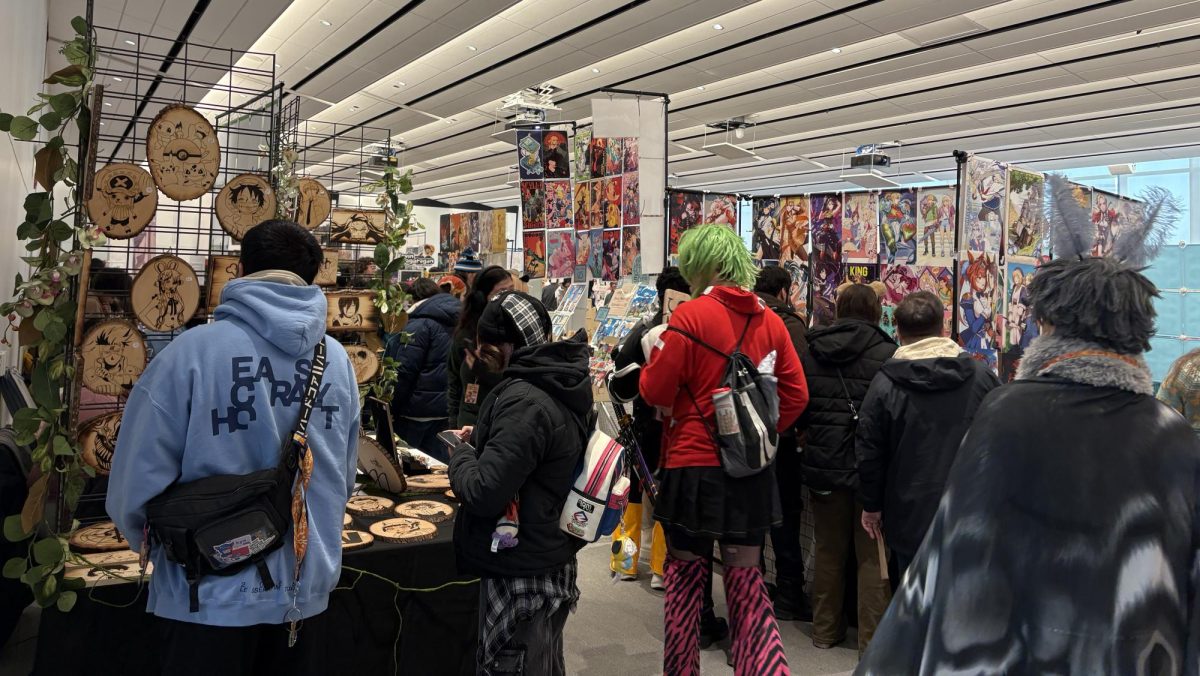
The journey was well worth it. Walking around, I could hardly believe the number of talented artists who were concentrated here. Artists displayed their posters, keychains, and stickers making use of their beloved characters and stories. The community gave its love back to the artists by showing up and supporting them in numbers that would make official galleries blush.
Patronage of the arts may yet have a future in the anime convention. It seems entirely possible that the next Michelangelo will start their career drawing fanart before they paint the Sistine Chapel. While that might sound insane, seeing the talent at this event made me think that the only difference between the biblical scenes of the Renaissance and IzuOcha ship art is 500 years.
Voyaging back across the Midway and seeing more frigid cosplayers sprinting with their multicolored wigs flapping in the wind, I knew it was time for one final venture which had piqued my interest when I’d first heard about the con: the maid café. I’d gotten there just in time for the last shift of the day, and the maids were standing out front trying to pack in as many people as possible.
I took my seat at a table with a maid hosting a game of Chinese checkers and got the full hospitality experience while we communally tried to figure out—and eventually abandoned—the rules of the game. As time went on, though, it became apparent that I was alone in my dedication, especially as a patron standing at the table behind me was getting tied up with rope.
While the maids were passionately peddling their services, the crowd seemed almost reluctant as they shuffled in, like they were trying to delay this overtly Hegelian dialectical relationship between maid and master, one requiring the recognition of the other. In this sense though, just like the con itself, the nominal activities were simply secondary. As our time with the maids began to run out, we were increasingly encouraged to demand “fan service” from the maids.
Originating in anime and manga communities, “fan service” refers to the creators “giving the fans what they want”: often overtly self-indulgent, gratuitous, and often risqué images. For the maids at this convention, this meant stepping on and tying up patrons. This dynamic made it obvious that the games we had been distracting ourselves with were only there as a diversion. Just like in the rest of the con, the activities served as a pretext for direct human connection—even on terms that would be inexplicable anywhere outside of this subculture.
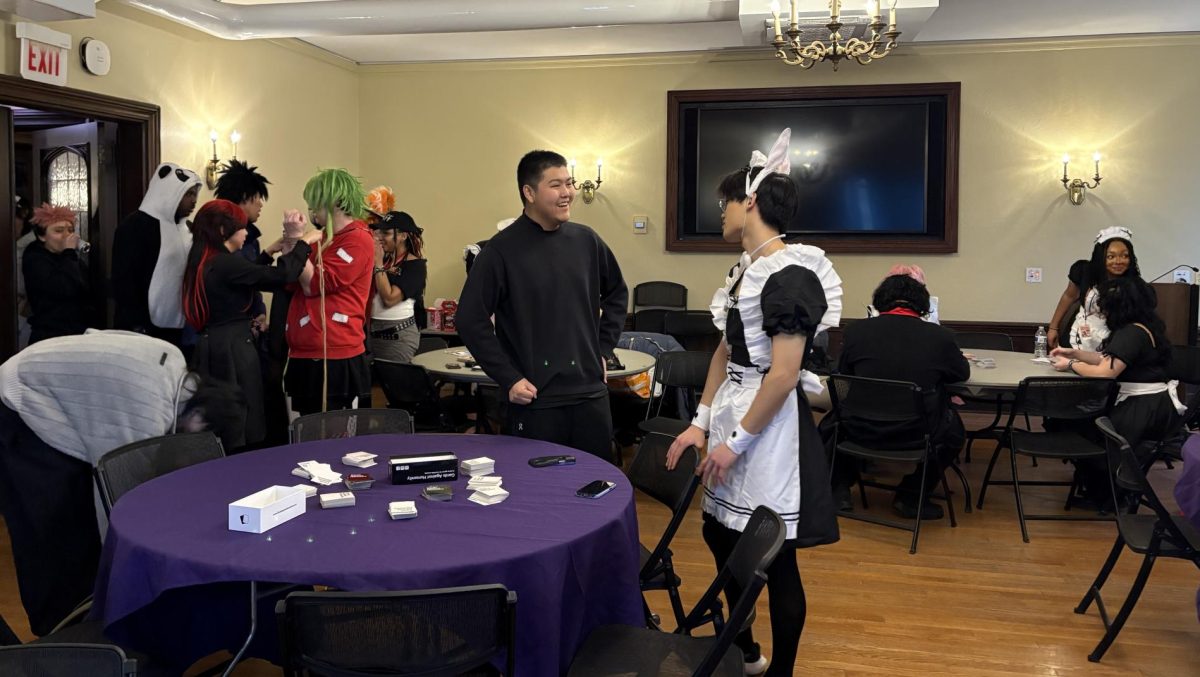
The maid café proved an apt note for the convention to end on. It celebrated this unique culture, with its own humor and language, that made the con what it was. There must have been countless references and inside jokes that flew over my head. Despite all that, how many places are there where one can be stepped on by maids and buy tapestries of their favorite anime characters, all in one day?