Coffee shops are an integral part of campus culture, with caffeine highs fueling students through all-nighters and grueling problem sets. This dynamic makes student-run coffee shops across campus vital at all points throughout the quarter.
Although the University touts on-campus coffee shops as a way for their student employees and managers to “expand their business practices and ethics by working on the development of their financial, marketing, and decision-making skills,” Student Centers controls most cafe operations, including pricing, inventory, and menu options.
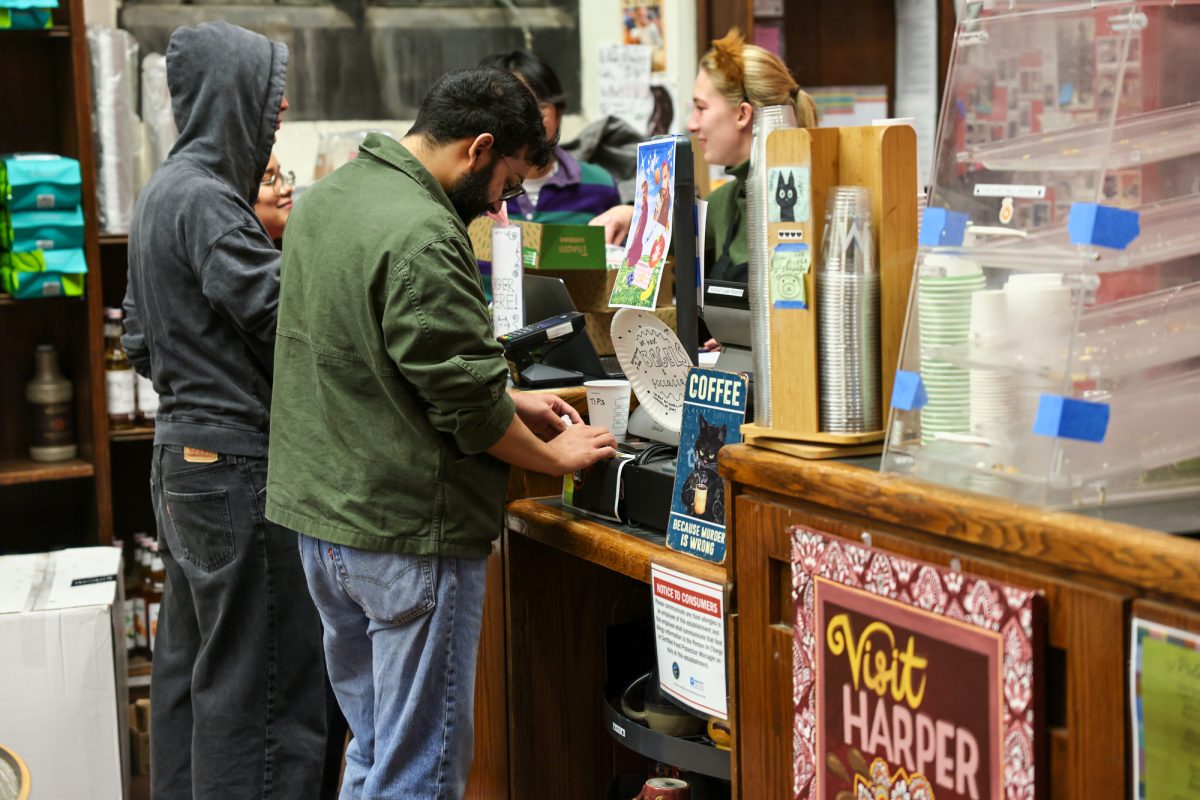
According to the Student Centers website, students manage “day-to-day operations,” including “hiring, scheduling, ordering of inventory, stocking and serving patrons,” at the four student-run coffee shops on campus managed by Students Centers: Ex Libris Café, Harper Café, Cobb Coffee Shop, and Hallowed Grounds. (Grounds of Being, though student-run, is managed by the Divinity Students Organization as a nonprofit independent from Student Centers.)
These employment opportunities aim “to provide campus employment but also skill development and workplace experience for students,” according to the Student Centers website. However, the student-run coffee shop program oversight team—composed of full-time University Student Centers employees—is heavily involved with many of the tasks delegated to students, cafe student staff members said in interviews with the Maroon. Managerial positions often come with significant oversight and intense guidance in decision-making, such as the ability to manage the hiring of students or determine when and what inventory should be bought.
Student Centers Assistant Director for Business Operations and Student Parker McWatters did not respond to the Maroon’s request for comment regarding the extent to which student-run coffee shops are managed by Student Centers.
Student Centers chooses most of the goods sold at the shops, ordering coffee from Metropolis Coffee and pastries from West Town Bakery, Troubadour Bakery, and Somethin’ Sweet Donuts.
“Four years ago, the Student [Centers] team was at Coffee Fest, where Metropolis had a booth,” Cara Shelly, a communications manager at Metropolis, told the Maroon in an interview. “They were impressed with our setup and what we had going on and then decided to introduce Metropolis as the local provider for the student-run shops.” After that, Shelly said, Student Centers started a deal between the University and Metropolis that has continued until now.
According to her, the University buys “the coffee from us at a specific price, and then they do their own math to figure out what works best for them,” determining prices for all campus coffee shops as a whole.
While inventory managers oversee stock management and profit margins, Student Centers standardize coffee pricing across locations, removing student input from another part of small business decision-making.
Students do not “have a lot of input on how prices are determined because Student Centers manually input new prices or adjustments themselves,” third-year Margaret Blomstrom, Cobb Coffee Shop’s general manager, told the Maroon.
In interviews, employees at the coffee shops repeatedly mentioned Student Centers as a barrier to their decision-making abilities. Multiple students said tasks that could be managed by students were ultimately conducted by Student Centers employees, who guided or finalized the decisions themselves.
Rajeev Sharma, who has worked as a barista at Harper Café for four years, said Student Centers’ oversight has limited shops’ ability to offer new and customized drinks in the past.
“The inventory manager has a budget set by the University, and we work within that,” Sharma said. “If someone submits green tea and toffee nut syrup, we might switch that to peppermint instead, because they can’t prudently get toffee nut” while maintaining the budget.
Similarly, the coffee shops standardize the types of drinks served, pastries sold, as well as the concentrates and syrups used. Sharma said that the inventory bought is determined by a combination of “customer demand, what drinks of the week sell, [and] what other shops have in common.”
Ethan Taylor, a former employee at Hallowed Grounds, told the Maroon that although he enjoyed working at Hallowed Grounds and felt employees did have a decent amount of responsibility, the cafe felt more “like a chain coffee shop because [of things like having] to go to other coffee shops if we’re running low on stock.”
In the past, Student Centers also changed hours and hiring plans with little notice to employees, according to emails reviewed by the Maroon. In fall 2024, Harper Café’s opening hours were significantly decreased within three weeks of the shop opening, and managers had to decrease the number of student employees they could hire and figure out how employees would get the number of hours they wanted to work.
While Student Centers may claim to oversee student work to ensure students stay within Chicago and University standards, their help frequently supersedes the decision-making power of students and limits employees’ abilities to make decisions independent of the University.
But Taylor said that the oversight didn’t have a major impact on his experience working at Hallowed Grounds, describing it as a job he “really enjoyed.” “You could just focus on making drinks with a really good community,” he said.