


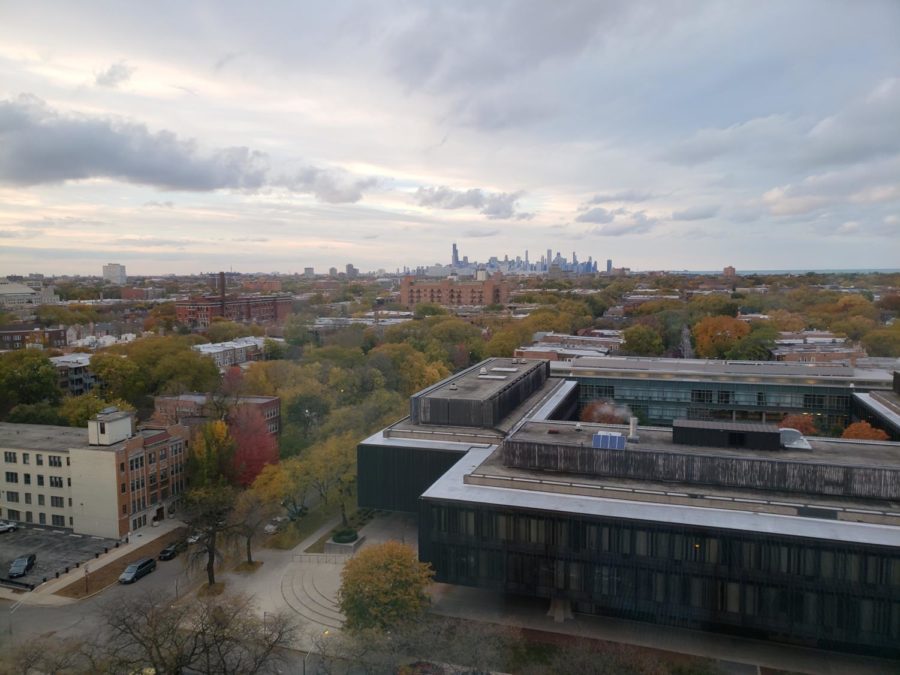
I volunteer at the South Side Free Clinic at New Beginnings Church on Dr. Martin Luther King Jr. Drive on the first and third Sundays of each month. Alongside Pritzker medical students, I help provide primary care services to uninsured patients, primarily Black adults, on Chicago’s South Side. It feels rewarding to watch patients who haven’t seen a doctor or had their blood pressure or glucose checked in years leave feeling seen, heard, and cared for, and with a better understanding of their health.
But I almost didn’t go. Other students repeatedly warned me about the neighborhood’s reputation for gang violence. As students new to Hyde Park, it’s easy to form our understandings of Chicago’s South Side through headlines about violent crime rather than through the people who actually live here.
I remember driving to the clinic for the first time feeling afraid. I kept my head down and avoided eye contact with people on the street. But from the very first moment I walked into the church, I was greeted with big smiles, handshakes, and a sincere “Thank you. You are doing God’s work, and we are so grateful.” The community I had subconsciously been taught to fear welcomed me with a warm disposition.
What I’m uncomfortable admitting now is how little of my fear came from experience. I let the neighborhood’s reputation decide my expectations, assuming I should be guarded before I’d spoken to anyone. I thought keeping my distance and avoiding eye contact was simply a way of being careful about my safety, which is what other students and the news seemed to advise. But in doing so, I was treating individuals as if they were a threat before I knew anything about them, while they welcomed me with more trust than I had offered. I still believe in being careful anywhere in a city this size, but I’ve learned to ask whether my caution comes from what’s in front of me or from headlines I never truly examined.
My behavior, though, took longer to catch up. At first, I kept my conversations with patients narrow and remained fearful of someone walking into the church with a weapon. I charted vitals, but rarely initiated conversations beyond what was necessary for their care. It was easier to recognize my assumptions than to stop them from shaping how I interacted with the patients.
What changed was returning to the clinic every few weeks and slowly starting to ask questions. While wrapping a blood pressure cuff around a patient’s arm, I asked her something I would have shied away from a few weeks earlier: what she did for work. She told me she had spent years in UChicago Dining, where she cared about her recipes and made everything from scratch so that students were well-fed and taken care of. Other patients told me about their families and the huge Sunday potlucks they hosted after church, with kids running around while parents barbecued outside.
Those conversations were deeply humanizing and relatable, and they changed what I once imagined the patients and communities near King Drive would be like. I slowly began to enter the clinic with an open mind, asking questions and listening to each person on their own terms. But what unsettles me is that it took stories like these to change my mind. I needed to picture lives as just as rich and complex as my own before I let my guard down and felt comfortable with patients, when their humanity never depended on being relatable to me.
As I got to know the patients, I began to understand that their stories were shaped by more than individual choices. Volunteering at the clinic showed me that the barriers many patients face have a history. Many struggle to access medications and preventive care, which reflects decades of housing discrimination and disinvestment in South Side neighborhoods. It is easy to assume that people ended up in these circumstances through poor choices, but we cannot understand another person’s choices without understanding the opportunities and past that shaped them.
I have come to believe that meaningful engagement begins with curiosity. It means asking where our assumptions came from, listening before judging, and recognizing that our own lives have been shaped by opportunities that others may never have had. Curiosity will not solve every problem facing Chicago, but it is where understanding begins. Before I judge a community, I remind myself that I owe the community the humility to question my assumptions and the willingness to know people firsthand. This starts with admitting what I don’t know about a place and asking the people who belong to it.


Dez / Oct 30, 2026 at 9:11 pm
This was phenomenal op-ed piece. All people are human, no matter the neighborhood. Thank you for your courage. Thank you for volunteering and saving lives! #HelpingOthers