Family drama can come in more forms than your daily dose of Jerry Springer. Broken hearts, shattered dreams, and money troubles are all fairly represented in Anton Chekhov’s The Cherry Orchard, now playing at Steppenwolf Theatre. The first act opens with two huddled figures in the dark, one strumming the guitar and the other reading/sleeping by gaslight. The lone strain of the guitar will be a constant theme throughout the performance. In a moment, the stillness of the scene is disturbed by the chaos of an arriving train, a ticking clock, and a dog barking. The characters alternately welcome each other with either loving embraces or graceful remoteness. They react to one another as they do the audience: with a respectful distance.
The squeak of shoes greets us as the audience meets Semyon Yepihodov, the young bookkeeper desperately in love with Dunyasha, the maid of the household. He is quirky and accidentally funny. Bumbling and often idiotic, Semyon is the highlight of an otherwise static and frankly boring cast. Guy Adkins, the actor who plays Semyon, takes Chekhov’s odd turns of phrase and makes them lovably incoherent. Semyon remarks that he often does not know what to do with his life and carries a revolver just in case he decides to end it. As he reaches for the revolver, it gets stuck in his pants. He is hapless, falling all over himself and the furniture around him. Semyon is an earnest lover who is alternately foolish and endearing.
I immediately spotted the most U. of C. character in the play. Peter Trofimov, played by Ned Noyes, is a perennial student who has been kicked out of university twice. He refuses to do actual work, but philosophizes about love and truth until he is blue in the face. Peter tells Anya, his lover, that they are beyond falling in love, and that they can simply be with each other without the social construction of “love.” Just add a comment about St. Augustine’s Confessions and you pretty much describe any Hum asshole from freshman year. However, don’t get me wrong: Peter is a fascinating scamp.
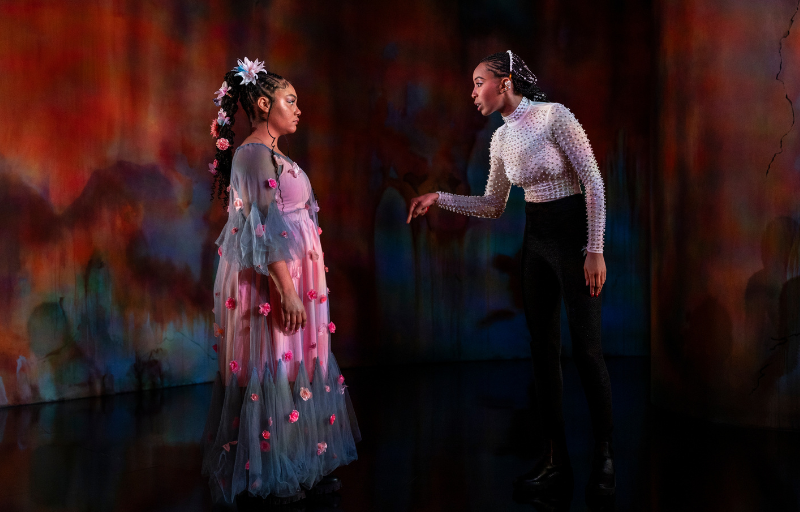
The rest of the cast seem to know they are on display and do not reveal much strong emotion. They do not let us into their inner monologue or multiple dimensions of their character. Lovey Ranevskaya, portrayed by Amy Morton, does not show us the true anguish of a woman scorned and robbed by her lover. She is simply the matriarch of a broken family, but we are never sure why her family looks to her for guidance. Lovey wanders numbly around the cherry orchard, seeing apparitions and mumbling phrases such as, “Happiness awoke next to me oh my orchard.” She seems the worst of all the aristocracy, a woman not able to live within her means, to accept her growing poverty, or to take care of her family.
Likewise, her daughter Anya, who is portrayed by the hauntingly beautiful Chaon Cross, is caught in a fantasy world that never seems to be shattered by the horrible events that unfold around her. A man named Yermolai (Yasen Peyankov) leads on her sister, Varya (Elizabeth Rich), for years. Their relationship gives us some of the most emotional scenes in the play. Her longing and his disdain are palpable. They noticeably ignore each other, and we see Varya’s slow and painful realization that Yermolai has never loved her and will never propose.
This production has a few standout performances, mostly by the minor male characters. The women, however, seem too caricatured and are not accessible. The play is slow and rambling without much direction or surprises. The cherry orchard, which everyone is fighting to maintain, does not end up seeming that important. I would basically suggest you Chek-hov this play from your list. Sorry, I couldn’t resist the pun.