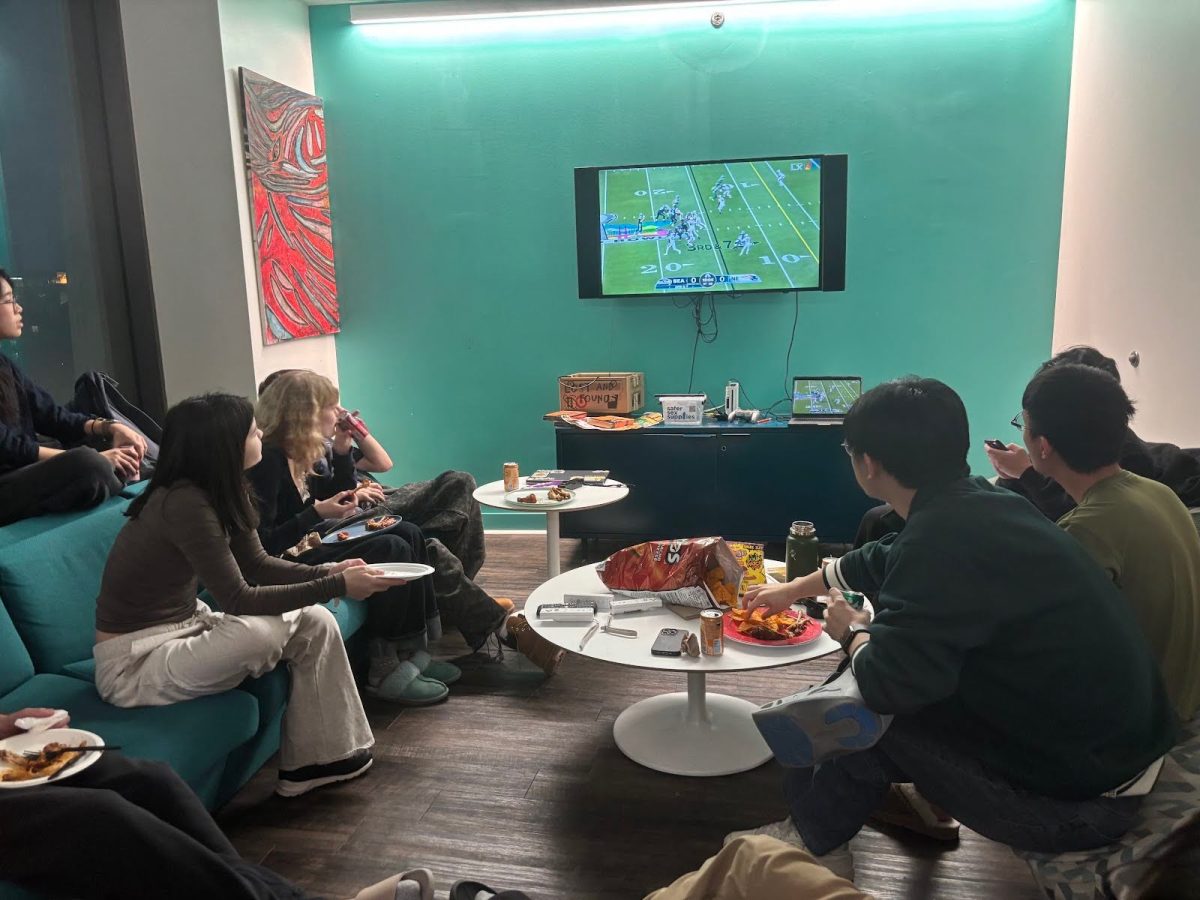
The Super Bowl is, to some, the pinnacle of the NFL season as the two best teams vie for the Vince Lombardi Trophy. Others avidly watch their favorite singers perform at the Super Bowl halftime show. Super Bowl advertisements, from a financial and cultural perspective, also carry significant weight in the conversations during and following the game. Super Bowl LX, which reported 125.6 million viewers, generated a rate of roughly $8 million per 30-second commercial. This prompted a high level of curation among creative and executive teams.
An advertisement’s worst fate is analogous to being benched: watching other commercials gain relevance in the public discourse. Although Super Bowl commercials have historically been made to appeal to a wide audience, advertisement creators had to consider trends of political polarization and resistance to artificial intelligence. If the information transmitted during these 30-second clips is indicative of larger cultural shifts, these choices preserve one of the last vestiges of our monoculture.
Monoculture is “a word that captures the historically unique power of American entertainment in the 20th century.” It describes a period when television shows and movies drove the cultural zeitgeist: celebrities became household names and Americans converged on a collective experience. Entertainment outlets have proclaimed the “death of monoculture” with the rise of personalized content but have considered the Super Bowl to be immune to its effect.
Given that even University RSOs are partnering with the prediction-market Polymarket, the ubiquity of sports gambling commercials with celebrity endorsements, including Kendall Jenner (Fanatics Sportsbook) and Saturday Night Live’s Michael Che & Colin Jost (DraftKings Sportsbook), is no surprise. When you have athletes like Giannis Antetokounmpo and Charles Barkley backing sports gambling too, it’s hard to ignore the betting incentives driving the future of sports. America’s monoculture and the cultlike following of sports seem to run concurrently, and sports gambling does not indicate a lapse in sports’ popularity anytime soon.
I interpret the ads using AI as celebrating human accomplishment, a victory lap of what can be made possible by the growth of technology this past year. Svedka’s 30 seconds emphasized liberally how it used AI to map a dancer’s moves onto a “fembot,” while only subliminally mentioning its flagship vodka.
Dunkin’ and Comcast leaned into touch-up, de-aging, and deepfakes to recapture nostalgic moments from Jurassic Park, Good Will Hunting, and Friends. I was initially awestruck to see Joey from Friends and George from Seinfeld interact with each other, dreaming up crossovers that fans have wanted to see for decades. These actors aged really well! Upon rewatch, the smooth contours of some characters became somewhat unsettling, and even if Dunkin’ did not use AI, it felt like it did.
NBC, which was granted exclusive national distribution and advertisement sales rights for the streaming simulcast of the Super Bowl, alternatively chose to highlight their upcoming entertainment lineup. Some ads attempted to revive legacy shows like The Voice and Law & Order back into the mainstream.
More intriguing, however, was that the network fully leaned into its investment in sports coverage, proudly advertising the Winter Olympics and the NBA All Star Game. Framing the All-Star Game’s 30-second commercial as USA vs World, in combination with the nature of the Olympics game, showed how much the nation’s identity overlaps with sports.
Cadillac’s Formula 1 (F1) announcement evoked similar themes. As Cadillac’s F1 car overlooked the American frontier and President John F. Kennedy’s speech of going to the moon permeated in the background, the ad undisputedly made homages to distinct moments in American history. F1 continues to skyrocket into the American sports stratosphere, and like the space race, it’s becoming a bedrock for international competition.
Another recurring pattern from the Super Bowl commercials was the resurgence of homey, feel-good commercials. Novartis’s prostate cancer PSA, Pokémon’s 30-year anniversary, and Sabrina Carpenter’s Pringle ad all fit that category. What is more unifying and harmlessly funny than joking about Sabrina Carpenter’s latest flame being made of edible hyperbolic paraboloids?
Moving on to my favorite ad. Did you get “Coinbased”? Rickrolled? Raise your hand if you sang Backstreet Boys’ anthem “Everybody (Backstreet’s Back)” with your watch party only to sputter “Coinbase” halfheartedly at the end. It’s certainly my pick for most creative advertisement, even at the expense of our vocal cords.
The Super Bowl carries the burden of one of the last remaining mass-viewership experiences. Much can be said about why American excellence dominated this year’s discourse. While some may argue that these commercials were clearly campaigns concentrated on “good vibes” and jaw-dropping technology, the series of optimistic, feel-good commercials and celebrations of American and human excellence should encourage any viewer that the monoculture, albeit different from decades prior, is strong and alive.
Time will tell if any of these commercials will eventually make their way into the Super Bowl commercial hall of fame. In the meantime, all commercials are available online for review.