A vote deciding whether to establish a Division of Computational and Mathematical Sciences will not take place until next academic year, according to several people familiar with the proceedings.
Provost Katherine Baicker said at a June 2 Council of the University Senate meeting that the vote would be delayed amid concerns that Council members lacked the necessary information to make an informed decision, Council member Richard Shrewder told the Maroon. In the interim, Shweder said, the Committee on Computational and Data Sciences, which published a report proposing the new division in October, will reconvene to expand its proposal and address faculty feedback.
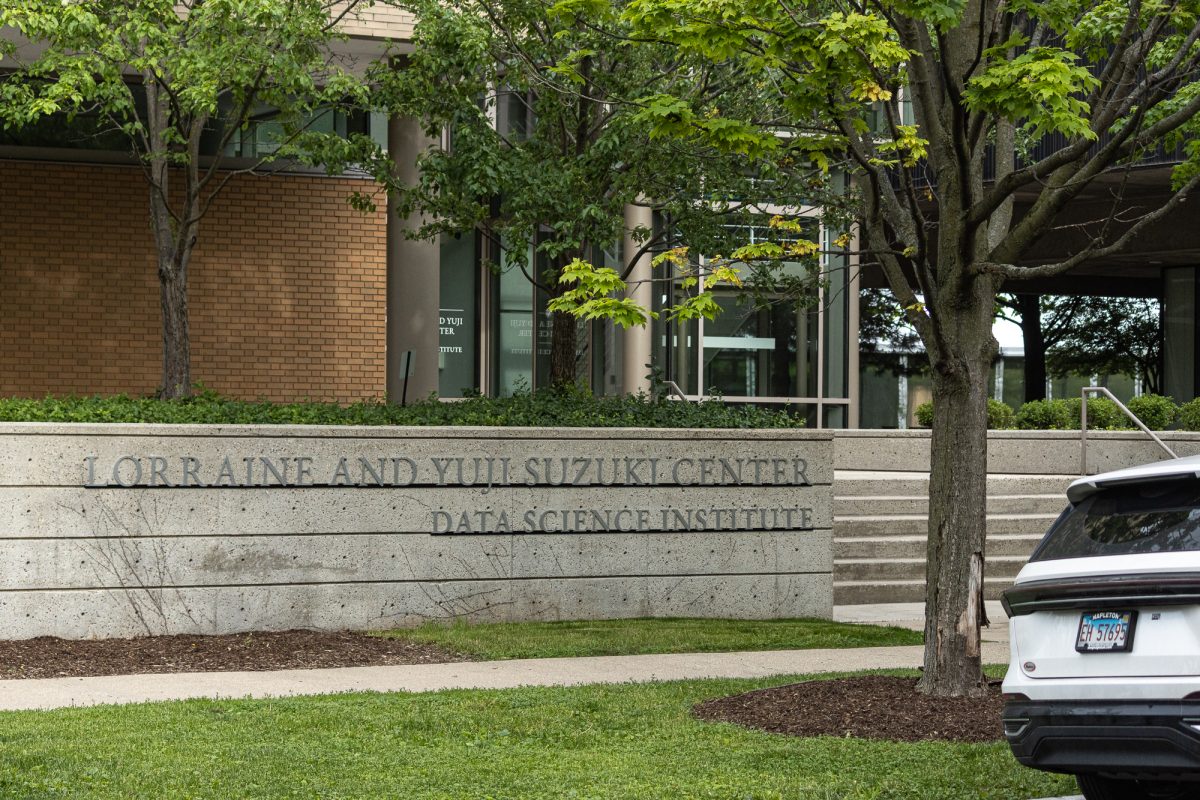
The new division would include the departments of statistics, mathematics, and computer science, as well as the Committee on Computational and Applied Mathematics, the Committee on Data Science, the Data Science Institute, and the Institute for Mathematical and Statistical Innovation—all of which are currently housed in the Physical Sciences Division. There have been four academic divisions in the University since 1930.
The decision to wait before holding a vote was ultimately made by Baicker and University President Paul Alivisatos, Shweder told the Maroon.
Many faculty members—primarily from outside the departments that would constitute the new division—have argued the proposal would be a significant change to the structure of the University and could divert resources from other physical science departments, saying they needed additional time and information to make a decision.
“The process that we were seeming to follow was disproportionate in its relationship to the importance and potential significance of a positive decision,” Shweder said.
During a May 15 Council meeting, Shweder said, administrators told members that faculty in the would-be division had voted “strongly in favor” of its creation.
He added that it was atypical for that vote to have excluded the rest of the Physical Sciences Division. Several Council members were turned off “by the lack of information about faculty and departmental views in departments that are not scheduled to be part of the new division, including the lack of votes and the departmental and divisional level,” according to one Council member.
“[There] is largely a consensus in the [computer science] department that [the new division] would be beneficial to us, but it’s also beneficial to a lot of stakeholders across the campus, not the least of which are many of our collaborators, but the University as a whole,” Ben Zhao, a computer science professor, told the Maroon.
A new computational sciences division was first proposed as early as May 2024, when a committee recommended that departments “central to AI [and machine learning] foundations” split off to form a “new decanal unit.” The Committee on Computational and Data Sciences presented its own report outlining a case for the creation of the new division to the Council of the University Senate on December 9, 2025.
There was a “fair amount of critical response” following the December 9 presentation, according to Shweder. “I’ve been on the Council maybe three times over my career, and I don’t remember a forthright discussion of the type that took place when that proposal came up,” he said. After the December 9 meeting, members of the faculty committee reached out to individual council members to discuss concerns, according to Shweder and fellow Council member Victoria Saramago, but no revisions have been made to the report since its initial presentation.
Rebecca Willet, who chaired the committee that authored the 2024 report, said the University told the Committee on Computational and Data Sciences “to not focus on the financial implications, but to rather focus on the intellectual case of a new division.” Much of the concern preceding the delay focused on the fact that the original report didn’t include a fiscal analysis of a new division, according to multiple faculty members on the Council.
“I think the Office of the Provost cares deeply about making sure that this is fiscally responsible,” Willet added.
A revised version of the report will be presented as soon as autumn quarter. A second presentation and a vote would follow, per standard Council procedure.