UChicago’s Laboratory Schools are facing backlash from community members after news that it will no longer raise a Pride flag on a flagpole in the school’s courtyard during Pride Month, a decision that Lab Schools Interim Director Ethan Bueno de Mesquita said was made to better align the school with the University’s position on institutional neutrality.
The U-High Midway, the Lab Schools’ student paper, first reported the change on May 28.
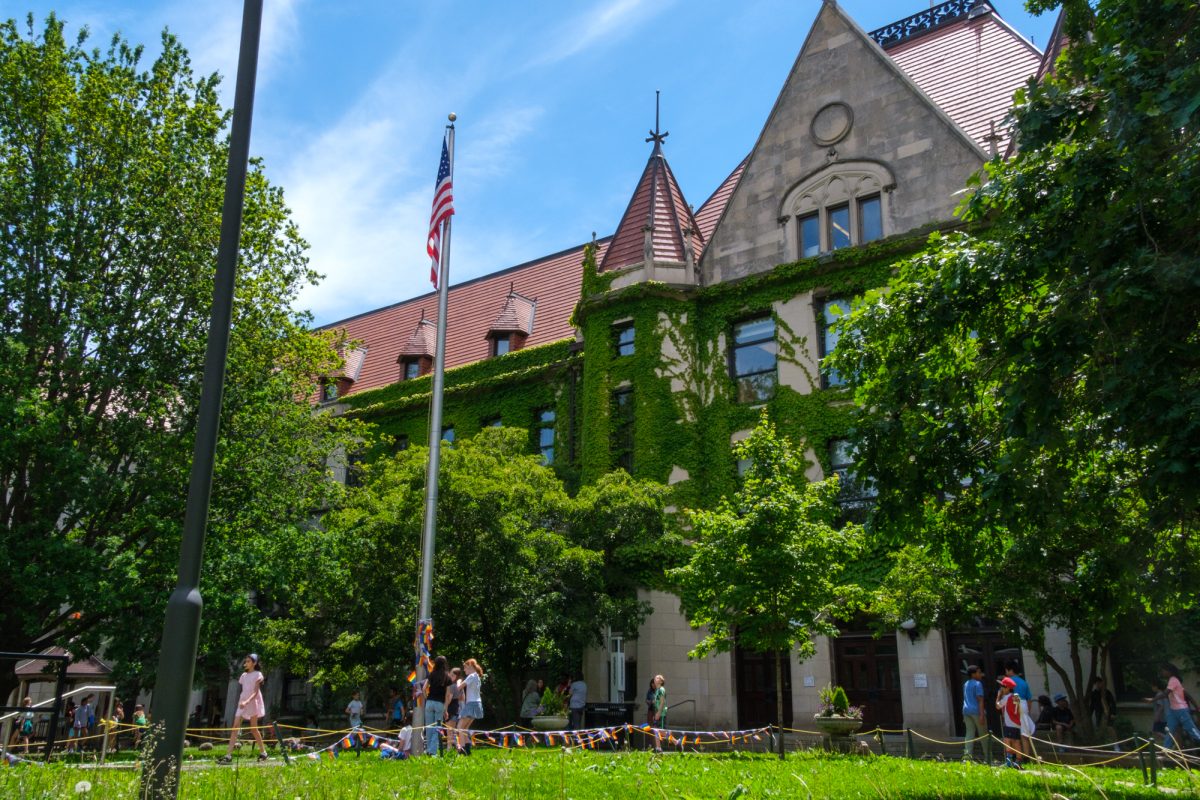
The Lab Schools first raised a Pride flag in its courtyard in June 2022 following a petition by two fifth grade students, and the school has flown the flag alongside the American flag every year since. According to Lower School counselor Keren Faling, the flag raising had been widely attended by students in the past, and there was no formal announcement from administrators that the tradition would not continue this year.
The Pride flag was first mentioned to Bueno de Mesquita by Lab administrators during conversations about institutional neutrality and whether the flag would fall under the University’s guidelines for institutional expression, he told the U-High Midway in an interview. Bueno de Mesquita then contacted University administrators, who determined that raising the flag—or any banner other than the American flag—did not follow University guidelines for institutional neutrality as outlined in the Kalven Report, a 1967 policy document created by a faculty committee in response to Vietnam War protests that outlines the “University’s role in social and political action.”
Following news that the Pride flag would not be raised, multiple groups of Lower School students decorated the flagpole and the surrounding area of the courtyard with miniature Pride flags. A group of high school students, upset with the decision, raised a Pride flag in the courtyard on Wednesday morning, which was removed by administration later that morning. The smaller Pride flags were not removed.
Faling said that the event of raising the Pride flag had become a tradition for Lower School students and noted that younger students would not be able to remember a time without it.
“It’s hard, in my opinion, to recreate the feeling of joy, belonging, and tradition that had developed around the flag raising without having had more time to come together across constituencies to plan,” Faling told the Maroon.
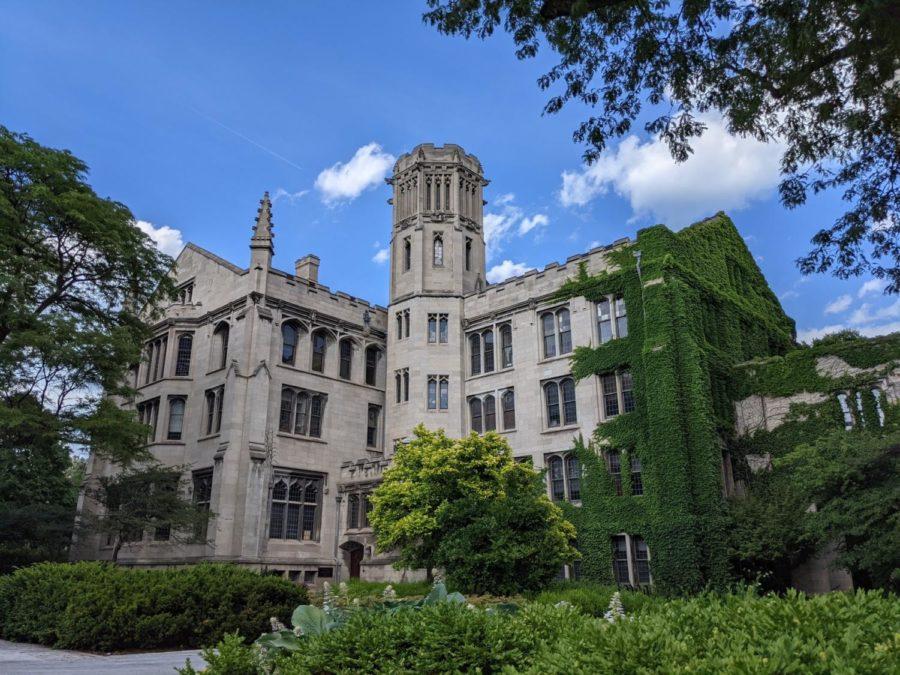
The change was also met with backlash from several parent and teacher groups, which held Pride celebrations outside Earl Shapiro Hall and Blaine Hall on Monday.
Bueno de Mesquita sent an email to Lab students, parents, and faculty members on June 1 in response to community pushback, stating that the decision applied only to the flagpole and did not extend to other methods of expression.
“To be clear, the full membership of LGBTQ+ people in the Lab community is not a contested issue,” he wrote. “It is a core value.”
He cited a “longstanding University practice” of only raising American flags on University flagpoles, following the Kalven Report’s position on institutional neutrality, and emphasized that the decision was not related to the viewpoint-neutrality standards. The Maroon was unable to find documentation of a University policy limiting which flags may be raised.
In response to a request for comment, a University spokesperson reaffirmed Bueno de Mesquita’s statement that “this does not indicate a change in Lab’s recognition of Pride Month,” and that “the full membership of LBGTQ+ people in the Lab community is a core value.”
Debra Stulberg, a member of the parent affinity group Gender Affirming Families, helped organize both Pride celebrations on Monday in response to the news.
“We wanted there to be extra support from the parent community so that LGBTQ kids know that they are loved and supported, and that we’re really proud of them,” she said in an interview with the Maroon.
According to Stulberg, the announcement came at the end of a year of changes regarding administrative support for the LGBTQ+ community at Lab.
“This has been a rough year for LGBTQ families at Lab,” Stulberg said. “We’ve tried to express some things to [the] administration that have frustrated us, and we don’t feel like there’s been much movement on those.”
She cited changes to admissions documents that required parents to report their child’s sex assigned at birth as well as the assigned sleeping arrangements of trans students during overnight trips as issues that had been brought to Lab administration by Gender Affirming Families, but said that the group’s efforts had not swayed administrators.
The change comes amid a year of tensions surrounding institutional neutrality at Lab. Following a months-long review of educational practices at the school, Lab administrators released a policy in April calling for “viewpoint-neutral” educational practices at both an institutional and classroom level, including avoiding all signs, symbols, and slogans that could be interpreted as holding a political stance. The policy has divided community members; some have praised it for bringing the Lab Schools into alignment with the University’s position on institutional neutrality, while others have said that it limits what teachers are allowed to discuss in the classroom.
According to Ruthie Williams, a parent and teacher at Lab, teachers have not yet been given formal instruction on what constitutes viewpoint-neutral education, resulting in some instructors preemptively limiting the topics they discuss in class.
“I have talked to a lot of teachers who’ve asked, ‘Is it allowed for me to wear a Pride shirt? Is it allowed for me to go to a protest on my own time?’ A lot of teachers are nervous about what’s allowed or what’s not allowed, and they’re not sure, and they are worried about getting in trouble,” Williams said.
“I’ve heard our director say over and over, [the viewpoint-neutrality standards] are not meant to have a chilling effect on speech, but I think in practice, it has had a chilling effect,” Williams said. “Which is why a lot of teachers that I know and parents to our students and kids are trying to double down on our efforts, not just around pride, but also… all of the issues of diversity, equity, and inclusion. We want to do more.”