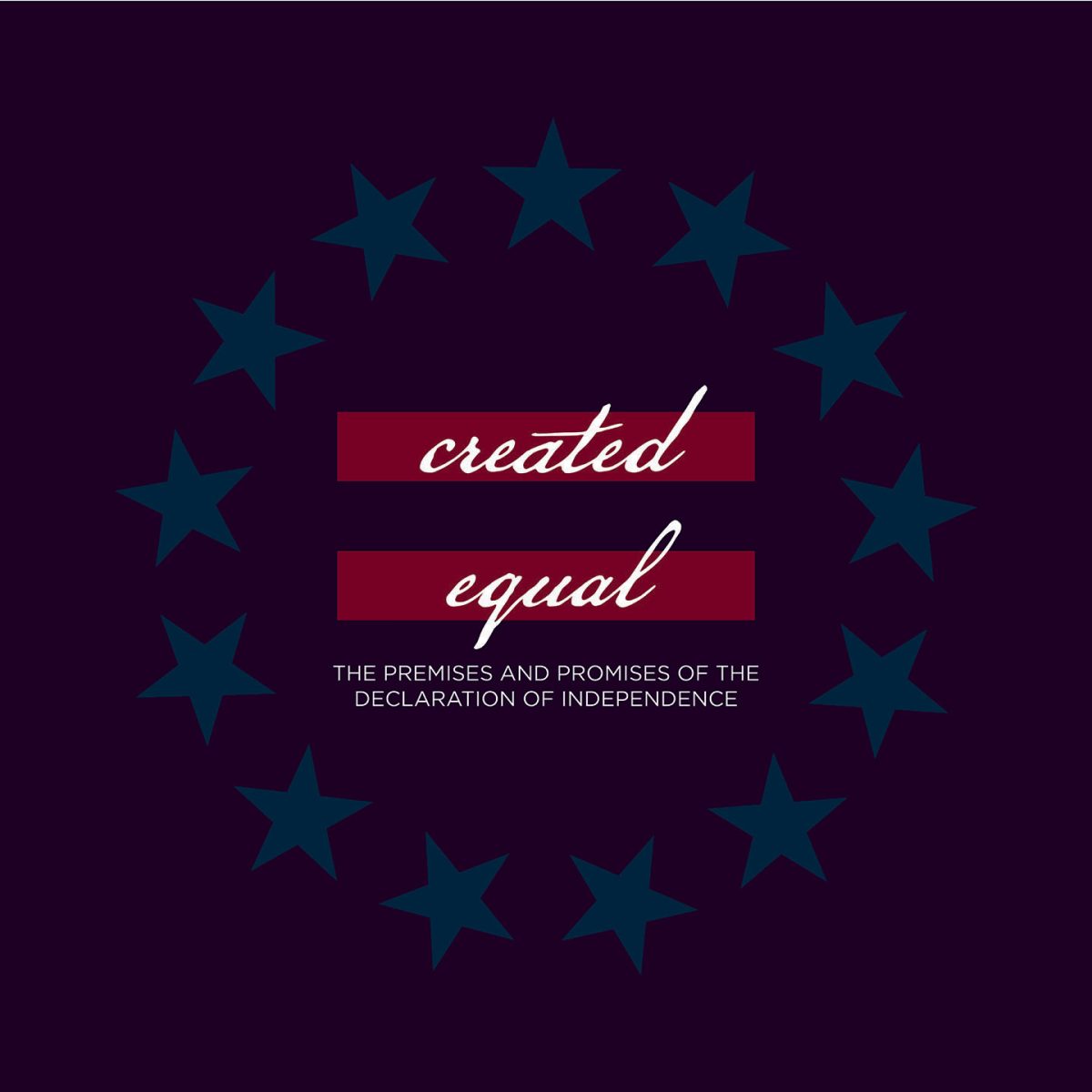
The Joseph Regenstein Library currently boasts Created Equal: The Premises and Promises of the Declaration of Independence which opened September 8 and can be viewed until December 11, 2026. The exhibit is located in the Hanna Holborn Gray Special Collections Research Center on the first floor. Each display case focuses on a different theme, like “Revolutionary Ideas” or “The Declaration and Civil Rights.” Some items in this exhibit include the original rough draft of the Declaration of Independence, a handbill from 1918 for a protest at the White House for women’s suffrage, and an earthenware sold to raise money for the abolition movement in commemoration of Elijah Lovejoy, who was killed by a pro-slavery mob.
As visitors walk through, they’ll see information about the Declaration of Independence and its modern implications displayed in many ways, including display cases with timeworn documents from the time of the American Revolution. The exhibit also features an interactive component, providing a guest book that invites people to “share their thoughts about the Declaration of Independence and the exhibition.”
The collection focuses on stretching the limits of the Declaration of Independence to today’s standard of liberty. It explores how this founding document can be applied to women’s suffrage, the Civil Rights Movement, and queer liberation.
One section, titled “The Declaration at Home and Abroad,” details how the Declaration of Independence inspired similar claims to sovereignty in Haiti and Indigenous communities in the U.S. The text in this section reads, “The Declaration inspired claims for indigenous sovereignty in territory claimed by the United States.” This presentation, which omits the nation’s long history of oppressing Indigenous people, presents U.S. patriots as white saviors.
“White saviors” is a term used to describe white people who help people of color in a patronizing and performative way. People of color are frequently and unrealistically perceived as needing the help of white saviors to be successful. Explaining the impact of our founding document in this way gives the impression that Indigenous people were only able to declare their own tribes—which had existed long before the original 13 colonies—as sovereign because our founding fathers did.
This ignores the agency and ability of Indigenous people to develop laws or democracies, which had already existed for many tribes as early as the 12th century. It implies that they were civilized into sovereignty by the same document that described them as “merciless Indian Savages.”
Native Americans are not inferior, wild people who must be guided by the very country that horrifically and brutally colonized them before they can declare self-governance. One cannot argue that the Declaration of Independence was meaningful for Indigenous people in the United States while failing to mention the violent, forced removal from tribal lands, hostile assimilation, and significant population collapse caused by colonization, all of which were perpetuated by our founding fathers.
Furthermore, it is unfair to argue that the American Revolution inspired the Haitian Revolution without mentioning that the U.S. failed to recognize Haiti’s sovereignty for almost 60 years out of fear that it would encourage their own enslaved people to revolt as well.
The exhibit also never genuinely confronts the hypocrisy of our founding fathers; the only mention of it is brief. The section titled “Defining and Debating Equality” presents more critical perspectives on the document. The sign reads, “British opponents of independence such as John Lind and Jeremy Bentham deprecated the Declaration’s political philosophy, finding the philosophy that ‘all men are created equal’ in a society with enslaved people to be hollow and misleading.” This claim presents a valid and significant question: How genuine is the Declaration’s ideal of equality when it was penned by slave owners?
The installation declares that “the document’s claims of equality and liberty” gave abolitionists hope but never addresses the fact that many of its authors owned hundreds of enslaved people themselves. Thomas Jefferson, the man credited with writing the line, “all Men are created Equal,” owned over 600 people as slaves throughout his life.
The website of Monticello, Jefferson’s main plantation, explains that he “forced people to labor for the wealth and luxury of his white family. This force was upheld through violence, the threat of violence, family separation, and emotional, psychological, and sexual abuse.” The same people who claimed that all men are born with “certain unalienable Rights” were also systematically removing Indigenous people from their land and heinously trading human beings. The exhibit forgoes mention of the oppressive underbelly of this country’s founding, making any claim of the Declaration of Independence being a champion of equality come off as disingenuous and vacant.
The exhibition also offers an account of the role of the Declaration of Independence in the women’s suffrage movement and even presents a digital version of “A Declaration of Gay Independence” by Tracy Baim for visitors to read. However, women’s suffrage was not won until 1920, almost 150 years after the Declaration of Independence was signed, and gay marriage was not legalized until 2015.
Even today, women’s and queer rights are actively being threatened in countless states. These delays and ongoing problems significantly erode the connection made between women’s suffrage and queer rights with the Declaration of Independence, and it is improper to liken these fights for equality to a document that falls so flat when applied to people who are not white, land-owning men.
The many historical documents displayed at Regenstein are stately but ultimately offer only a hollow analysis of the Declaration of Independence and its legacy. This exhibit cannot attempt to broaden the claims of freedom presented in the Declaration of Independence without first addressing the fact that the document was built on institutional oppression, inequality, and hypocrisy.
The most famous line of one of our country’s founding documents, the Declaration of Independence, asserts that “all men are created equal.” It’s a line that wasn’t reflected in the United States in the 1700s, nor is it today.
Admission is free for University of Chicago students and faculty, and the exhibit is open weekdays from 9 a.m. (10 a.m. on Wednesdays) to 4:45 p.m.