Outside Mandel Hall, the cold air surged down the streets along silent gusts of snow. Inside, a warmth had already begun to permeate, glowing from the golden stage to the far corners of the great wooden theater. On the evenings of February 20 and 21, the Folklore Society hosted their annual concert festival, and the campus venue took on the cozy atmosphere of a dance hall: snug and sheltered from the winter night, with the stirrings of fiddle and banjo guiding people to their places.
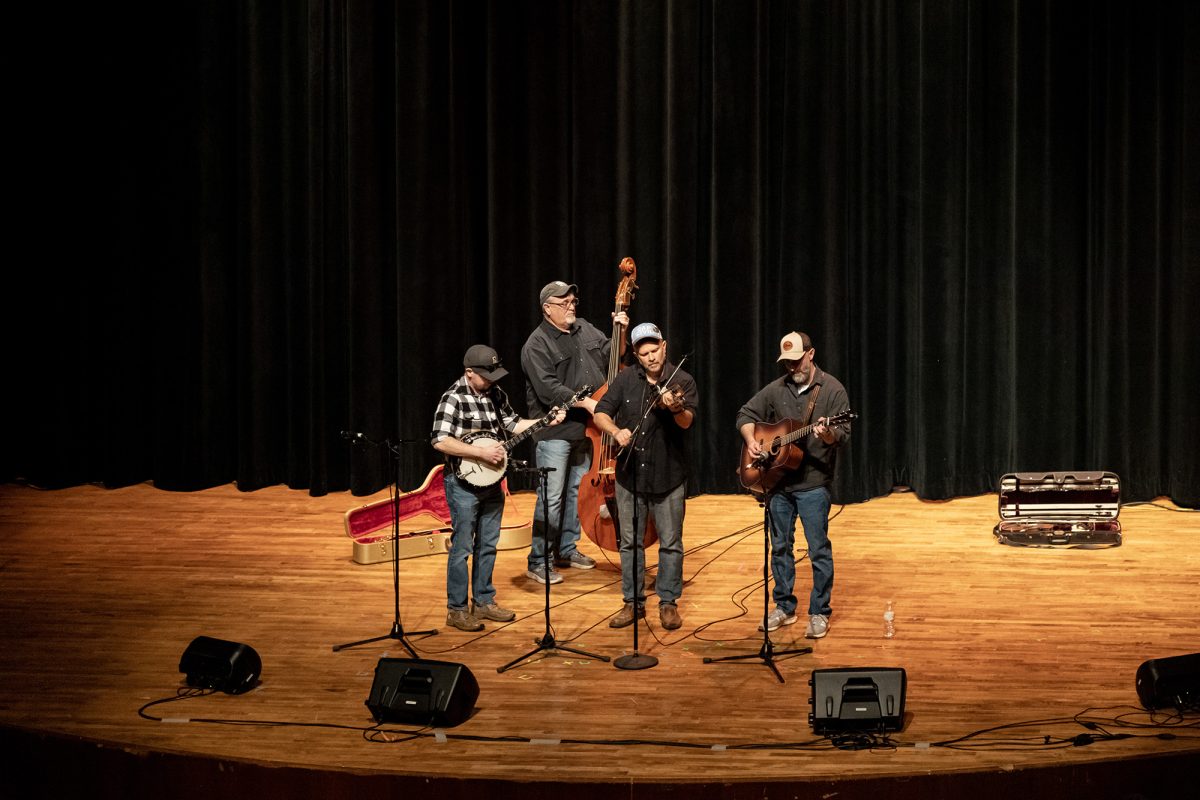
The bluegrass act of the night, High Fidelity, kicked off Friday’s show. Hailing from Nashville, Tennessee, the band’s first word on Chicago’s stage was a loud and merry “Howdy!” Then they launched into their first song, “The Old Home Place,” a rapid banjo melody.
High Fidelity’s use of two banjos, which rolled and worked off one another, created a signature background for their performance. Only in the verse did the continuous and colorful plucking subside, replaced by rhythmic guitar slaps from Daniel Amick, lively bass notes from Rina Rossi, and the harmonized vocals of Jeremy Stephens and Corinna Rose Logston Stephens. Fiddle followed, dipping high and low with skillful spirit interspersed by banjo licks. Their set continued down a jaunty path of bluegrass classics and Christian hymns with a constant exchange of instrumentals and vocals.
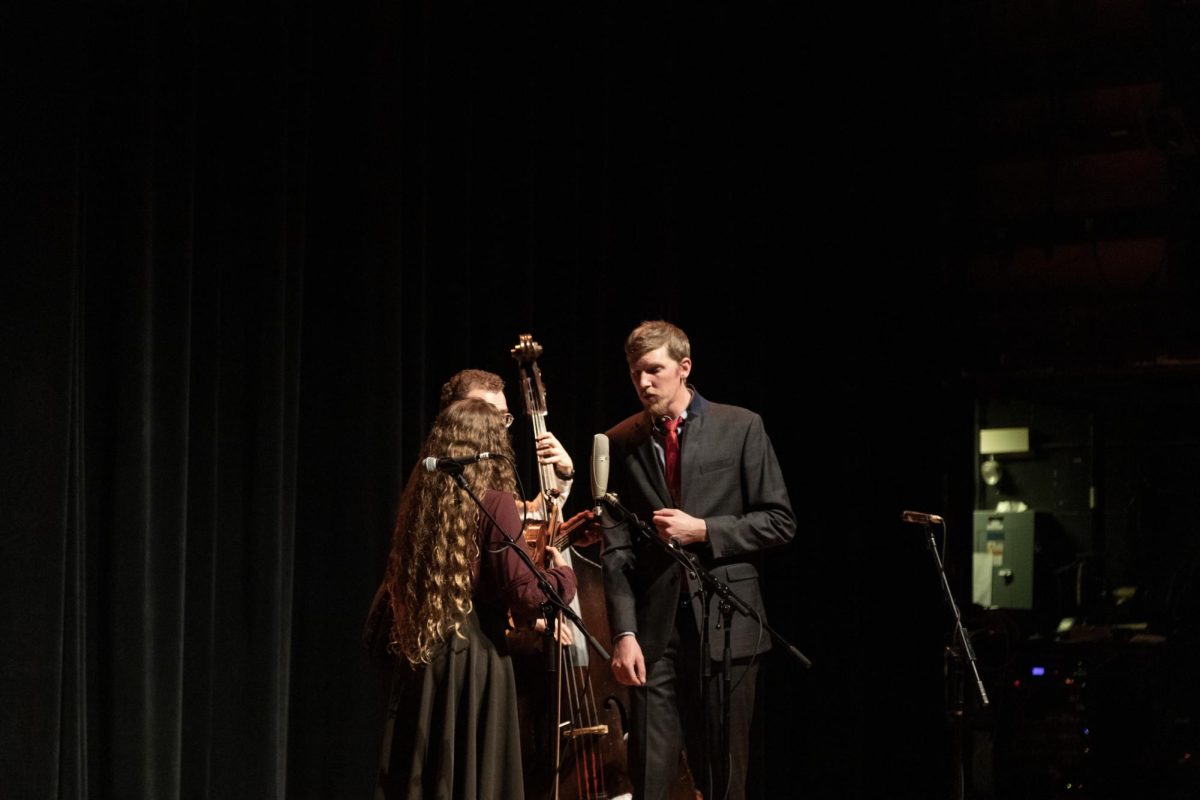
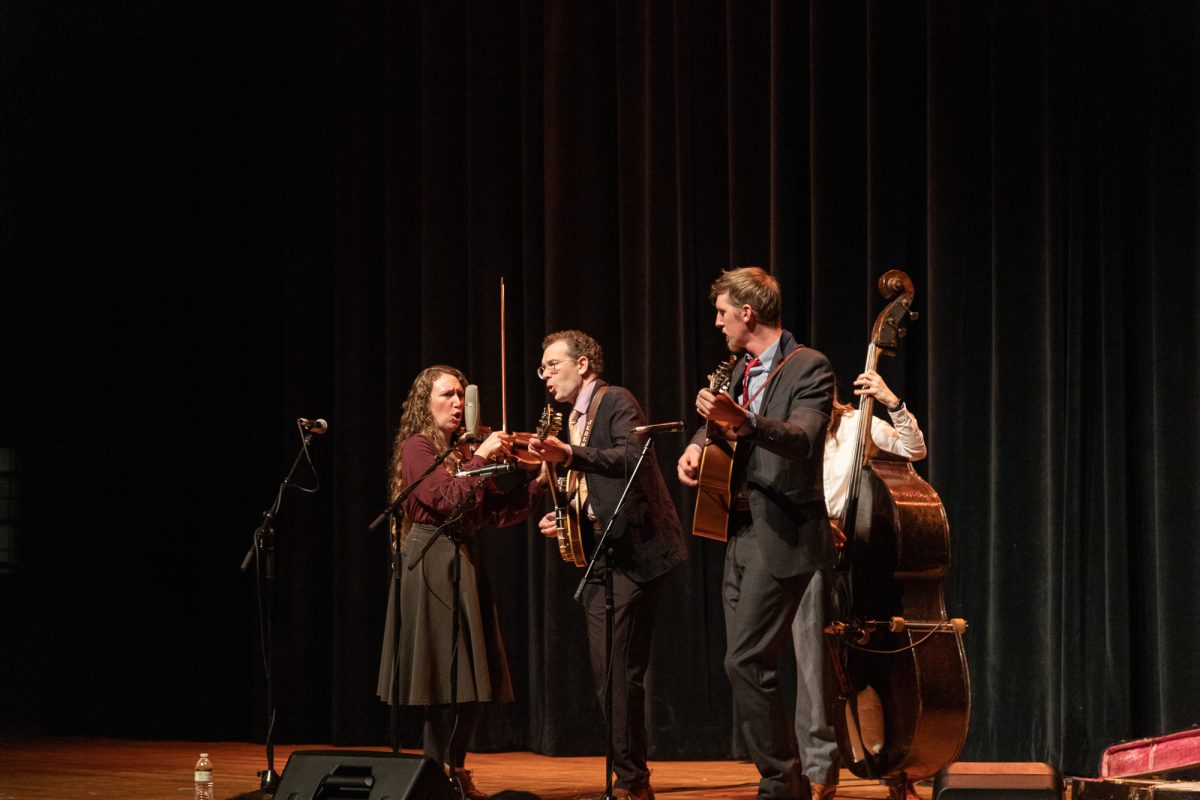
It was only halfway into High Fidelity’s set that I noticed the velvet curtains behind them were moving. They had been slowly rippling for some time, ostensibly from the commotion of setting up the stage, and were now swaying back and forth to the rhythm of the current song, “Kneel At the Cross.” The whole stage was alive with movement: Logston Stephens leaned toward the microphone with each phrase of her verse, Stephens stepped from side to side as he played the banjo, and the four members reshuffled during each harmonized chorus. Even the grand neck of Rossi’s bass danced as she tilted the instrument back and forth, matching the mood of each ditty.
In between sets, an announcer from the Folklore society told us about Nina Helstein, LAB ’60, A.B. ’64, A.M. ’75, Ph.D. ’95, a woman who had attended every single Folk Festival for the past 66 years. The theater applauded, and the room grew closer with the knowledge of her presence and its testament to the festival’s history.
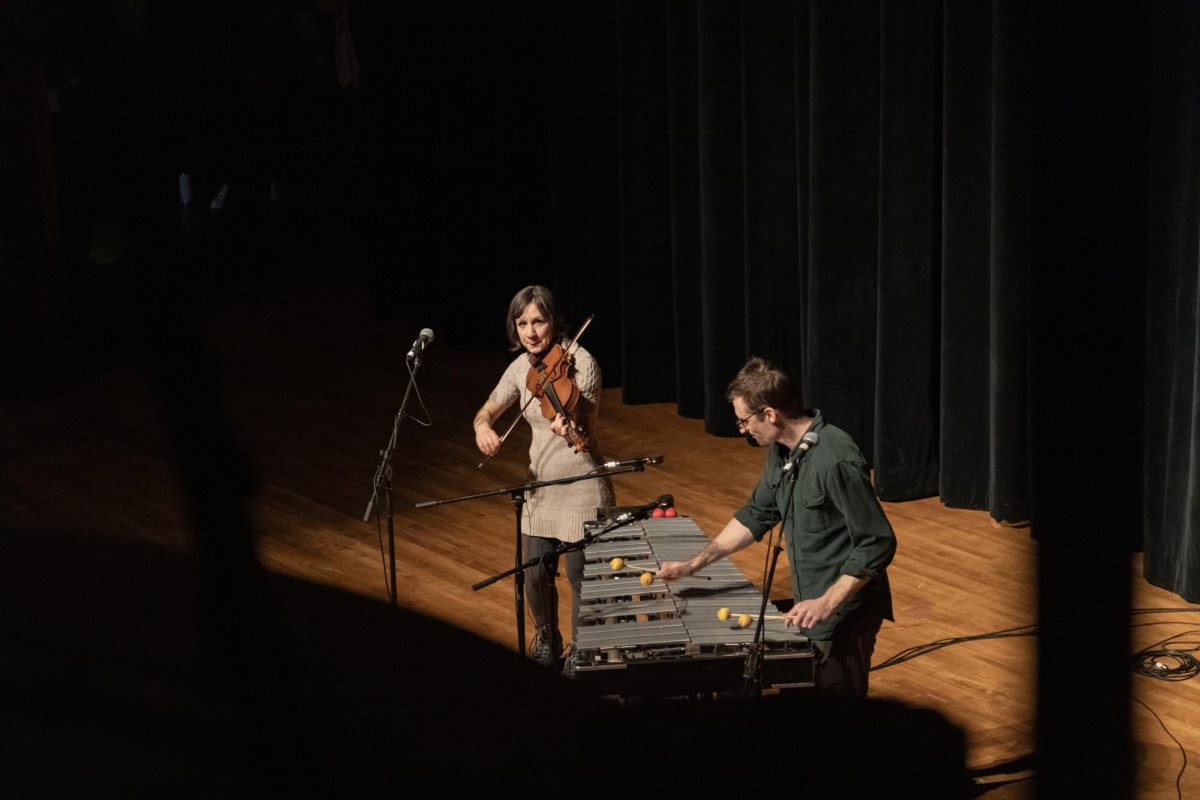
Next came vocalist and fiddler Lissa Schneckenburger and her accompanist Garrett Cameron, to represent New England folk. Cameron’s vibraphone delivered the first notes into the air, crystal clear and pulsing with a sound not typically associated with folk music. Schneckenburger’s fiddle quickly restored the sweetness of tradition, its melody spiraling upwards in patterns reminiscent of Celtic music and coastal song. Evoking the grey salt of sea spray and the green lushness of stately mountains, their performance transported the Midwestern theater to a pelagic and distant Americana.
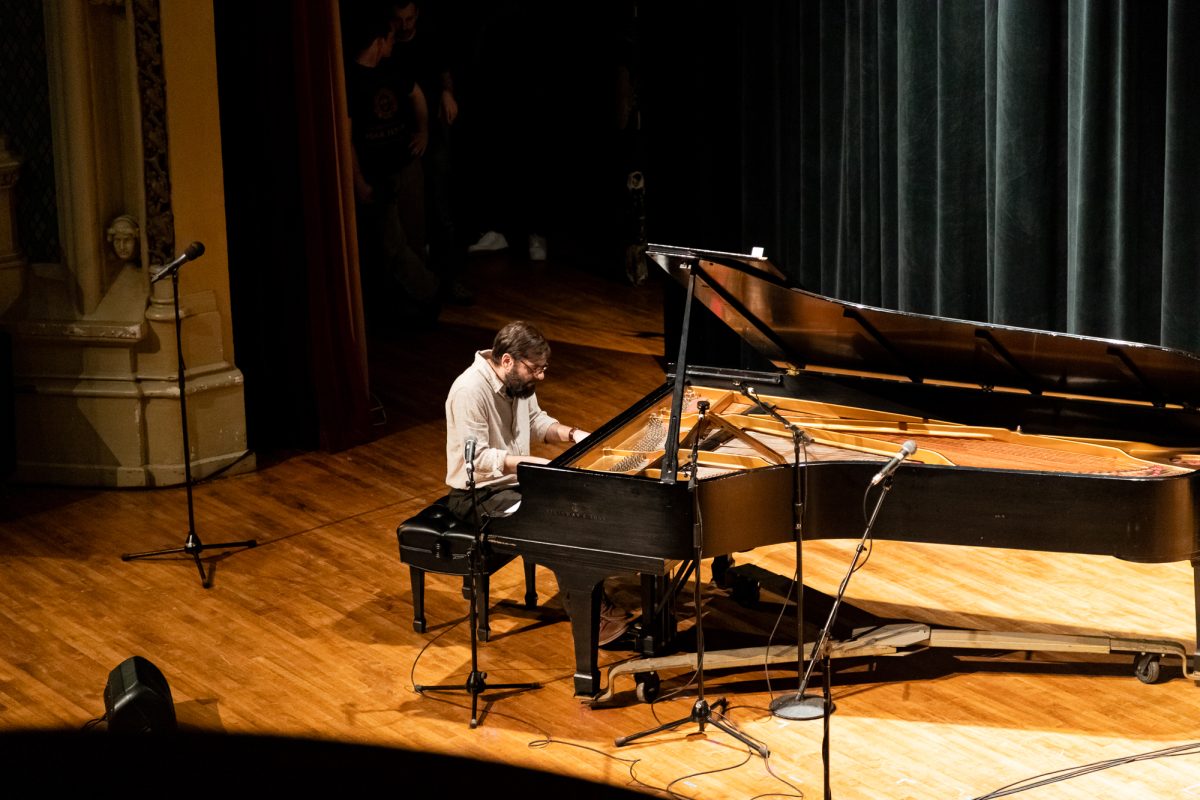
Ethan Leinwand took the stage next, performing barrelhouse blues on one of the largest pianos I’ve ever seen. Introduced by Folklore member Evgenia Anastasakos as a largely self-taught pianist, Leinwand commanded the magnificent instrument with great gusto. His first song, a 1929 piece titled “31 Blues,” roared down the keys with the unstoppable force of a steam engine. Together with the singer Jontavious Willis, another one of the night’s performers, Leinwand produced a haunting duet from America’s South, with the gravelly vibrato of Willis’s voice tangling with the low flourishes of the piano. And then ragtime’s delightful tempo twirled over the rest of the set as Leinwand played the “Good Gravy Rag” and the jolly Joplin classic, the “Maple Leaf Rag.”
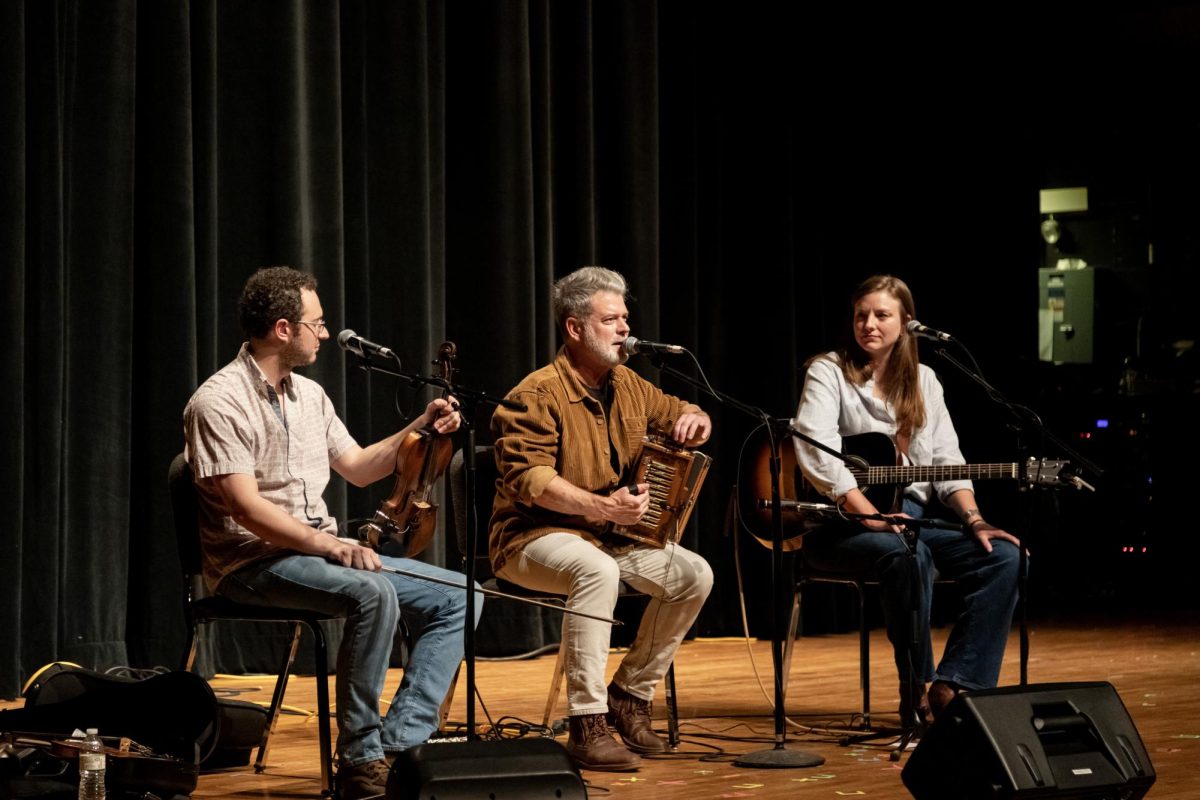
After a brief intermission of bagpipes by Scott McCawley, the University bagpiper, the Luke Huval band performed their Cajun blues with all the tenderness and companionship of an old friendship. The songs’ French lyrics, several of which were written by Huval himself, moved in harmony with the fiddle of Steve Riley, the guitar and vocals of Amelia Biere, and the accordion of Huval himself. Wistful heartbreak, the subject of many of the songs, stretched languorously along each whinnying pull of the accordion. Whenever the mood was getting too low, however, the music would pick up again with the strums of the good-natured guitar. At the back of the theater, a few people started to dance.
Each musician that night brought their own warmth to the stage, fueled by their particular brand of humor. High Fidelity, with their country cheer, told an anecdote about one of the band members winning a folk contest with a stolen instrument. Schneckenburger set a softer tone as she told the audience, “I like you guys.” Leinwand joked and quipped, playfully defending his rendition of the “Maple Leaf Rag”: “If it still swings, it’s a good tempo.… We can talk about it later.” Riley, the oldest member of the Luke Huval band, then wisecracked about his age to the delight of the audience.
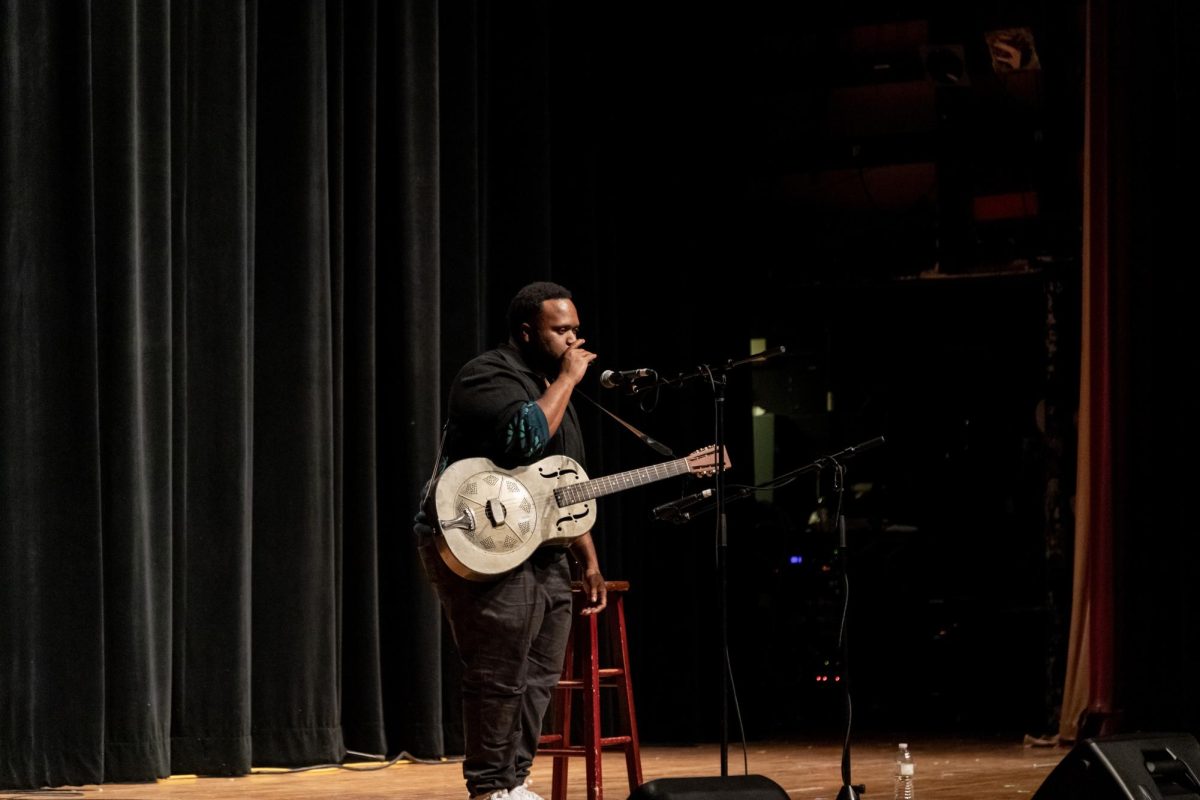
It was Willis, the blues act, who won over the theater completely. “How y’all feeling?” he asked us, following it up with “I love Chicago.” As soon as his steel-bodied guitar unleashed his soulful voice, the room was enchanted. Willis saturated every note with rich vibrato, crackling in the upper registers to create a raw expression unmatched by any of the other acts that night. Combining a reverence for the blues tradition of his Georgia heritage with his own creative impulse, he performed a diverse set of blues standards, original tunes, and even a song with only his stomping foot and wailing harmonica as accompaniment. With his eyes mostly closed, Willis seemed always able to draw on a deep well of emotion and bottomless musical intuition.
Gap Civil, the festival’s old-time folk act, closed the show on Friday night. Awash in the nonstop banjo, fiddle, bass, and guitar of Chris Johnson, Lucas Pasley, Kyle Dean Smith, and Todd Hiatt, respectively, their set roused more than one audience member to get up and dance. With occasional whoops and hollers from Pasley, the blue-jeaned, baseball-capped band heralded the audience through the late hours of the night and nearly into the next day.
Saturday night’s concert delivered many of the same performances as the previous show, with a few key differences. Notably, an international act called Mariachi Flor de Primavera replaced Leinwand’s piano blues, and Willis played a song on the guitar with his arm instead of his hand.
Still, much remained the same. Even on its 66th run, the Folk Festival concert stayed true to tradition, allowing the audience’s natural reactions to fill the room. Across seven acts, each hailing from a different region of the country, our engagement with the performances remained consistent, in thrall of the merriment onstage. In the warm light of Mandel Hall, everything moved to the music: the curtains swayed, the dancers spun, and a woman who had seen every show since its conception leaned in just a little bit closer.