Skip to content
Click here to take the Chicago Maroon's reader survey for a chance to win an iPad mini

Advertisement

News

University pulls fitness and swimming requirements for undergrads

Administrators have ended a decades-long practice of testing College students for fitness and swimming ability, while plans of a new vision for athletics is in the works.
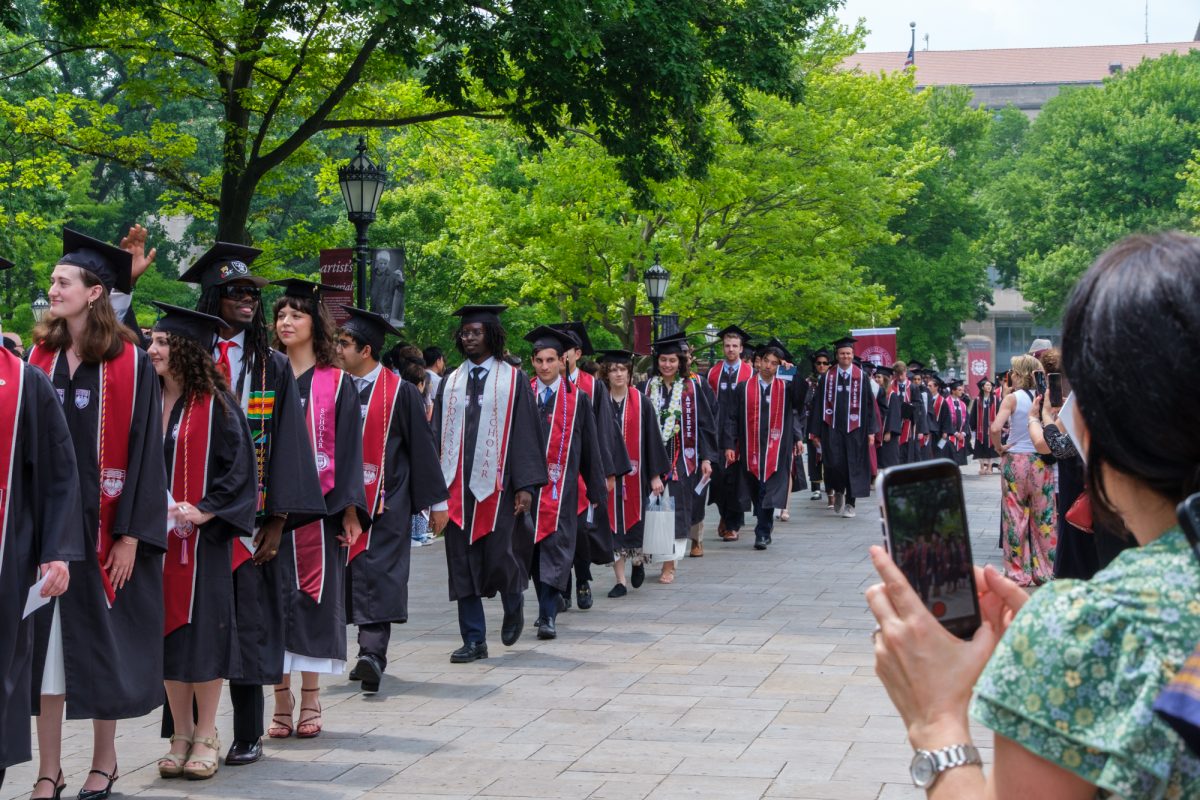
Photo: Harunobu Coryne/The Chicago Maroon

This article was updated on Oct. 4, 2012.

Undergraduates no longer need to take physical education classes or pass a swim test in order to graduate, administrators announced last month.

The policy shift marks the beginning of a new approach for the University as it re-examines the role of fitness and athletics in education and student life, especially for those outside the College.

Although details are premature, Vice President for Campus Life and Student Services Karen Warren Coleman has tapped two staff members—women’s soccer head coach Amy Reifert and Ann Harvilla, an associate dean at the Booth School—to spearhead the administration’s changing direction.

In the past, students who did not pass their swimming and fitness tests during their first year were required to take as many as three credits of physical education and a one-quarter swimming class, none of which counted academically toward graduation. Under this new policy, they have been freed from that obligation entirely.

Meanwhile, none of the 1,500 first-years in the class of 2016 have had to take a fitness or swim test.

“More than half of the University’s peer institutions do not have a physical education requirement for graduation,” said Karen Warren Coleman, vice president for campus and student life, in an emailed statement. “We believe that this change will create more opportunities for students to pursue all of the physical activities that they choose.”

The number and availability of P.E. courses have also diminished, now that enrollment is expected to drop off. Although the variety of courses is roughly the same, there are far fewer class sections overall: 13, down from 26 last fall. For example, where last year Weight Training was spread across five sections, this quarter there are only two. All other courses are limited to one section.

A few courses are not being offered at all this quarter, notably all three sections of Conditioning, which offered two credits toward students’ fitness requirements. Also gone are Archery and Aikido.

The names of classes have also been updated, apparently to attract students no longer compelled by a core requirement. Where there was once “Elementary Swimming,” there is now “Swimming Strokes for Not-So-Buoyant Folks.”

“We expect that there will be fewer students registering for [P.E.] classes this autumn quarter,” said Brian Baldea, who is head baseball coach and co-chair of the Department of Physical Education and Athletics. Still, he added in an e-mail, “We have made no final decisions and no commitments regarding future classes.”

The decision followed talks between Boyer, Warren Coleman, and faculty and staff in the athletics department. Warren Coleman and Boyer made the final call over the summer.

“There are constantly talks about the curriculum, and those conversations were ongoing,” said Thomas Weingartner, who chaired the department for 22 years before leaving in July for a position in alumni relations.

Warren Coleman, who entered her current position in July, said in the statement that the University is in the process of expanding its fitness program “to meet a growing demand and the diverse needs of our community.” She did not specify which needs she and Boyer had in mind, but noted that “flexibility” for students is a key consideration.

“Leaders from the College and Campus and Student Life concluded that the benefits of participation in Physical Education and Athletics could be achieved outside the P.E. requirement,” she said in the statement.

The change places the University among a growing number of schools that have grappled with their P.E. requirements, slackening them or sometimes scrapping them altogether. Cornell University, one of the largest schools in the Northeast, pulled P.E. from its general education program in 1994. In 2011, Davidson College in North Carolina dropped its swim test, while in 2009 administrators at Lincoln University in Pennsylvania abandoned a proposed fitness program that would require students to be weighed and measured.

Kami Gardner, who coaches the women’s swim team at Washington and Lee University—a swim-test school—described how the process can be taxing on staff.

“It is a time-consuming prospect to have to test every student at your university,” she said. Two weeks ago, she said, Washington and Lee staff took seven hours administering swim tests for its freshman class, some 479 students. At the U of C, the class of 2016 is more than three times as large, and swim tests normally take place throughout O-Week. “A lot of time and man-power is dedicated to the swim test.”

However, Warren Coleman stressed that the decision had little to do with budgeting or personnel: The University just wants to move in a new direction, she said. Although details are premature, she said that a new approach to athletics will encompass recreational sports—there are more than 650 intramural teams in the College—as well as personal fitness.

Although a Booth School dean will be one of the chief orchestrators of any new plan, Harvilla noted that graduate students have never been required to take P.E. classes, and so it is unclear how their needs will shape the future.

“The charge has not been written,” she said, adding that Warren Coleman has given her the same “general framework” that was emailed to students Thursday, September 13. Harvilla and Reifert accepted the responsibility that week.

Without the requirements, only time will tell whether the College will be able to help students stay fit on their own and involved in its programs. Aaron Roussell, who coached women’s basketball before leaving in April for a position at Bucknell University in Pennsylvania, taught two sections of Weight Training here, and says that the system worked.

“It helped to get people in the door and coming back,” he said.

But at Bucknell, which has no requirements and where coaches do not teach, Roussell says that he is “amazed” by the number of students who still hit the gym.

How could the University ensure that here?

“The smart answer would be to make it a requirement.”


12 comments on “University pulls fitness and swimming requirements for undergrads

  1. reply

    All of my prior alumni donations were all made in support of the swimming requirement and the classes that accompanied it.

    Since the university no longer feels that graduating students who can bob across a pool without drowning is necessary, they must not need my donations anymore either.

    • reply

      Sorry to hear you wasted your money, dude, but I’m certainly glad undergraduates will have slightly more control over their college careers from here on out!

    • reply

      Hey, look! It’s one of those legendary alumni that graduated in the ’90s when the acceptance rate was 70% and like to complain about any and everything. I thought you guys all ran away to Reed and Swarthmore when Zimmer came in.

      No pressure to donate, though. For every dollar you don’t donate, I’ll donate $3! Hopefully the University can find a way to spend my $15 wisely.

      • reply

        you’re an idiot. the uofc has had a great reputation whether or not the acceptance rate was 70% or 20%. we kept the reputation up for people like you to even want to apply. i’ve been a great alum and donated lots of $$ and put in alot of sweat equity – of which you’ve likely been the recipient, despite your lack of appreciation. check out the stellar graduates from the 90′s. from my class alone: david auburn, doug guthrie, alex seropian, jessica abel, john scalzi. who are you and what have you done for the college? And, i’m eager to see how much your class donates by your 20th reunion or even before that. I hope it’s north of $2million b/c that’s what we did as a class.
        good luck and get off your high horse about alumni. The UofC HAD a great unique culture – something unfortunately you’ll never know about. It’s sadly becoming a watered down, ivy-wannabe now. and i can say that b/c I do have ivy experience too.

  2. reply

    Laura Oppenheimer here, class of 2006 and former managing editor of The Maroon. I’m incredibly disappointed by this short-sighted move. Any well-educated person should know how to swim, especially at a university situated on the banks of Lake Michigan.

    I encourage all alumni who believe the physical education requirements be brought back to sign this petition and do our part to get swimming and physical education re-instated.

    http://www.change.org/petitions/the-university-of-chicago-bring-back-the-swimming-and-physical-education-requirements-for-graduation

    -Laura

  3. reply

    You (University) could find 100 reasons to support and keep the fitness and swimming requirements; while you also could find 100 reasons to get rid of these requirements. These requirements distinguish you from other universities. What a pity, if you drop them.

  4. reply

    Drowning is the 2nd leading cause of childhood accidental death
    – Ten people drown each day in the U.S.
    – Seven out of ten African-American children cannot swim
    – Six out of ten Hispanic children cannot swim
    – 40% of Caucasian children have low or no swimming ability
    – Children from non-swimming households are eight times more likely to be

    at-risk of drowning

    – Participation in formal swim lessons can reduce the likelihood of childhood drowning by 88%.

    It is a shame if you have a pool there will not be any kind of safety and fitness or health programs.

  5. reply

    UW-Madison grad 1974-UW is surrounded by 4 lakes. Two UW students drowned in Lake Mendota this past summer. I spent much time in that lake but swam mile swims in Boy Scouts and later for my own fitness. I never regretted the time I spent learning to swim and today at age 60, on Lake Michigan. I go over 60 mph on my tuned jetski and take my kayak as well. When we have a third party on our boat, I go tubing, again on Lake Michigan since our vacation home is two blocks from the boat ramp to the lake. My heart health as tested by ekg, stress test, ultrasound and blood chemistry is excellent. I think lack of phys ed requirement is short sighted and to some, in the future, not knowing how to swim could be fatal. Two doctors also died this past summer in Lake Michigan, in separate incidents; bright, educated people. A tragedy they died, perhaps more swimming ability on their part would have made a difference.

Leave a Reply

Your email address will not be published. Required fields are marked *

By submitting a comment, you agree to the terms of service of The Chicago Maroon.