UChicago’s Phi Delta Theta (Phi Delt) chapter will not return to UChicago after the end of this academic year and will enter into an agreement for its remaining members to join Pi Kappa Alpha (PIKE). The closure was ordered by their national general council, according to former Phi Delt President Arav Saksena.
The agreement comes after Phi Delt’s national general council suspended the chapter’s charter in May—for “repeated risk management violations”—after it had been placed on probation for violating the fraternity’s alcohol-free housing policy.
The fraternity was also suspended in 2016 for “risk management policy violations,” as cited in one member’s lawsuit against the fraternity, following a 2015 induction ceremony. During the ceremony, members gave pledges large quantities of alcohol before bringing them into the basement of the fraternity house. The University’s subsequent disciplinary investigation led to the suspension of five fraternity members.
After the chapter’s three-year suspension, the general council asked Phi Delt to begin “recolonization,” waiting to select new members until all members who were present in 2015 had graduated. The fraternity was shut down and reorganized once more in 2020. The fraternity has been suspended once and put on probation nine times since May 2022.
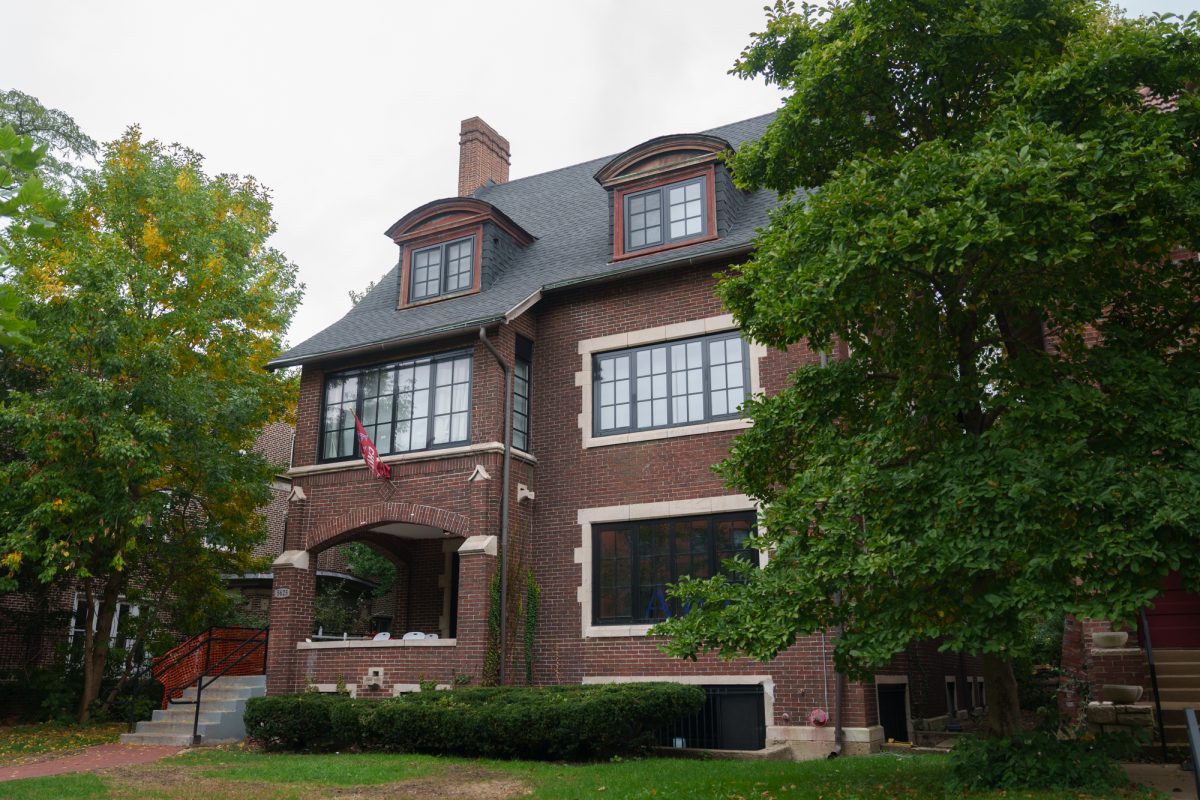
In 2020, the deed for the fraternity house was transferred from alumni of the chapter to the general council “as an act of good faith,” placing direct control of the house under the national organization, Saksena told the Maroon in an interview.
“To be blunt, [the general council] kind of owned us after we got reinstituted,” he said.
According to Saksena, the council assigned a contractor, David Rapinto, to oversee the house under the transferred deed at the start of the 2020–21 academic year. “Effectively, his whole job was to try and catch us with alcohol,” Saksena said. During one inspection, Saksena said, “[Rapinto] came on Easter morning at 5 a.m. [or] 6 a.m. I don’t celebrate Easter but the brothers who [do] were very angry.”
The relationship between Rapinto and the fraternity remained poor as the 2020–21 academic year continued. “As president, I tried to better our relationship with [Rapinto], but historically our relationship with him was terrible. He hated us, and unfortunately, the brothers hated him, so it never really worked out,” Saksena said.
“We eventually got caught again with alcohol. It was after a party that we had allowed to be hosted in our house. Another affinity group hosted a cultural program at our place, and then there was alcohol that wasn’t cleaned up afterward,” Saksena said.
Phi Delt plans to merge with PIKE. A representative from PIKE’s executive board reached out to Phi Delt in July 2026, but no formal agreement has been released. “A lot of my younger guys [in Phi Delt] have a lot of friends in PIKE, so it feels like a natural leap for us,” Saksena said.
“We had nothing else” after the news of their disbanding, Saksena said. “We had a vetting process.… It brought up a lot of conversations. We ultimately decided to go through with it, but I know that [I] and some other people are probably done with frats” after their time on the fraternity’s board ends.
“We hope to ensure that whatever social events we host in the future are safe and done in a tasteful way,” Saksena said.
Editor’s note: Arav Saksena, the former president of Phi Delt, is the Maroon’s chief financial officer. He was not involved in the reporting or editing of this article.