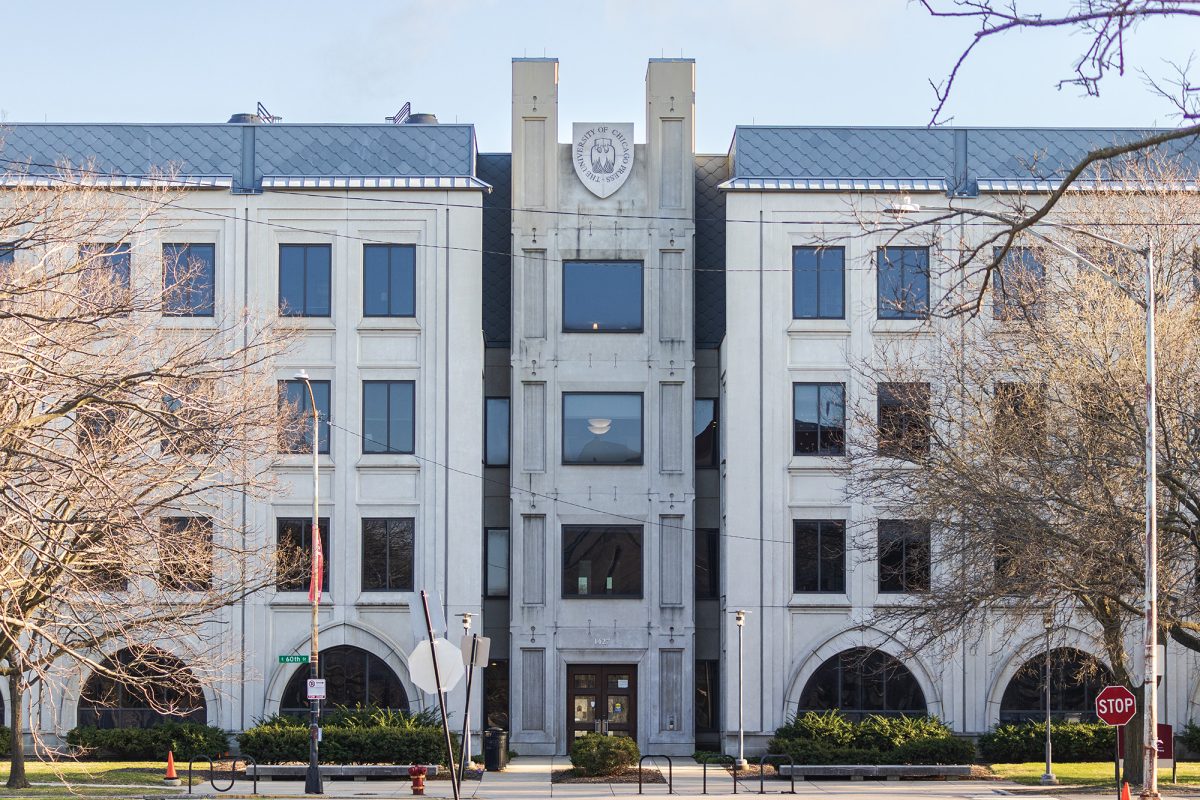
Bar Kupershtein, a 24-year-old Israeli who was held hostage in Gaza for more than two years, spoke at an event hosted by Chabad at UChicago and Maroons for Israel on Monday.
Kupershtein was abducted while working security for the Supernova music festival near the Gaza border during Hamas’s October 7, 2023 attack on Israel. He was among the 251 hostages taken from Israel into the Gaza Strip and was held for 738 days before being released on October 13, 2025, as part of an exchange deal for the remaining 20 hostages in Gaza.
According to Chabad, the event drew more than 180 students and community members, including Dean of the College Melina Hale.
Kupershtein recounted the events of October 7 leading up to his capture. “We [were] protecting 3,000 people, and I remember the moment at 6:30 I got a lot of messages… I look at the sky, and I see a lot of rockets.” He moved to shut down the festival and direct people to leave, instructing security guards to open the gates and clear the area.
As attendees attempted to leave, the surrounding roads backed up, leaving cars stalled. “If we stay here, we [won’t] survive… we [are] stuck in the middle,” he recalled thinking. Kupershtein said he directed a police officer to locate an emergency exit, who later told him that opening the route “saved more than 2,000 people.”
He remained at the venue as the attack continued. “I [told] myself, I’m the ambulance now, I need to help all of these people,” he said, describing how he repeatedly returned to the site to move victims to safety.
He eventually encountered attackers and fled, taking cover as gunfire continued. “They [started] to murder everyone… and I [heard] the screams, and after minutes and minutes, [gunshots], and then silen[ce].”
Displaying a surveillance video, Kupershtein said, “all of the people in this picture [were] murdered by the terrorist[s]. I’m the only guy [who] survived.” 344 civilians and 34 security personnel were killed at the festival, with 44 people taken hostage.
He was captured shortly after the shooting. “I don’t know why, but [they] didn’t kill me. [They took] me hostage.”
Kupershtein said he was transported into Gaza and moved between several locations before being held in an underground tunnel from day 47 onward.
“We [were] there in the tunnel with a little bit [of] food, with dirty water, salty water… we [took] showers [once] a month, we didn’t change clothes,” he said.
The hostages’ captors physically abused them, including by beating them with a stick; Kupershtein said both his legs were broken. “All the time I say to myself, ‘you need to be strong, not for you, for your family.’” Reports from released hostages and Amnesty International have documented physical and psychological abuse in captivity, including beatings and starvation.
Fights between the hostages occasionally broke out. “We are six men without food, without people we love, without our family,” Kupershtein said. Despite the tension, the hostages marked Shabbat. “We say ‘enough, this is Shabbat time’… we [sing] and close [our] eyes and dream and imagine we are at home.”
The men were given a radio transmitter to listen to the Qur’an, which Kupershtein used to find a radio signal from 30 meters underground. “I found [a] station in Hebrew… and I remember the moment I [screamed] to the terrorist, ‘I don’t need you anymore. I have news.’”
On his birthday, a broadcaster on the station wished him a happy birthday. “In this moment, I [understood] no one [had forgotten] us.”