For the past few weeks, UChicago students have taken their opinions on the ongoing Undergraduate Student Government (USG) election cycle to Sidechat, a social media platform where college students can anonymously share their thoughts with others on their campuses. But those posts may not be as anonymous as students think.
USG’s Elections & Rules Committee (E&R) can request account information associated with Sidechat posts that may violate its negative speech policy for candidates. The committee has already made a low single-digit number of such requests this election cycle, though Sidechat has not yet provided the information, according to E&R Chair Jay Love. “In the past, the committee has been able to contact Sidechat and get the actual authors of posts,” he said.
Candidates are informed early on in the election cycle that E&R “keeps an eye on Sidechat” and may investigate posts that could violate the Election Code, he added.
According to Love, the requests concern posts that have either been reported or that E&R itself has flagged as “reasonabl[y]” in violation of the Election Code. Article III, Section 5 of the code dictates that “[d]efamation or unwarranted personal attacks on campaigns or candidates may not be disseminated in any manner, particularly via anonymous social media platforms.”
Love described “unwarranted personal attacks” as statements about another candidate that E&R has determined have no bearing on their ability to take office, even if true, such as suggesting that a candidate’s political ideology or affiliation with Greek life is a reason not to vote for them.
“By far, the vast majority of complaints we get under both of those provisions [defamation and unwarranted personal attacks] are for discussions of outside political views as being important for campus politics,” former E&R Chair Nevin Hall said
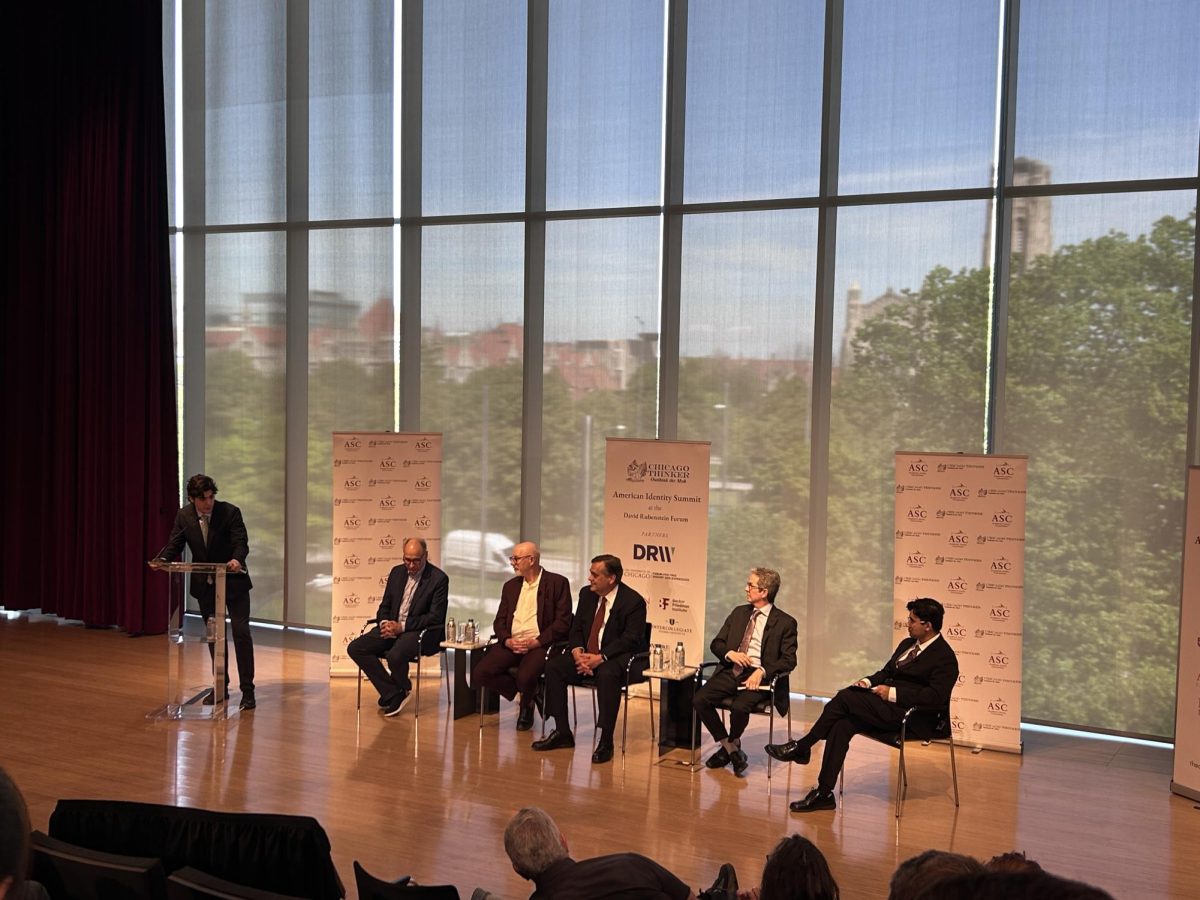
National politics have been a frequent point of contention on Sidechat this cycle, particularly in relation to the New Generation Party, whose presidential candidate, William Moller, serves as the social chair for the Chicago Thinker, a right-leaning student publication. One user speculated, “new gen GENUINELY support trump and israel do not get fooled,” encouraging students not to vote for the party, though they did not provide evidence to support their claims. The post has received over 250 upvotes as of publication.
Violations of the Election Code can result in a deduction of votes from the offender based on how many votes E&R believes a candidate may have lost as a result of the attack.
Hall described E&R’s calculations as “more of an art than a science.” After confirming a violation, E&R estimates how many people were exposed to an unwarranted attack or defamatory claim and deducts a “reasonable percentage” from the offender’s vote total, typically 3–5 percent, according to Hall. “It’s very much, ‘What have we done in the past? What is reasonable to expect? What have we communicated to candidates about this?’” he said.
Still, USG’s monitoring of the putatively anonymous social media platform is a much more recent development. Hall said that the committee first began requesting Sidechat account information during the 2022–23 academic year, following a flood of negative speech about USG presidential candidates on the platform. UChicago’s Sidechat community was created in early 2022.
“When you sign up for Sidechat, you may recall that your UChicago email was what you used to get into it, and that’s information that Sidechat retains, and so by virtue of that fact, we took a much more gung-ho approach to regulating Sidechat and trying to keep it quiet,” Hall said.
Sidechat’s official privacy policy states that users who log in using a “third-party service”—in this case a University email—may have their personal information shared with that third party.