


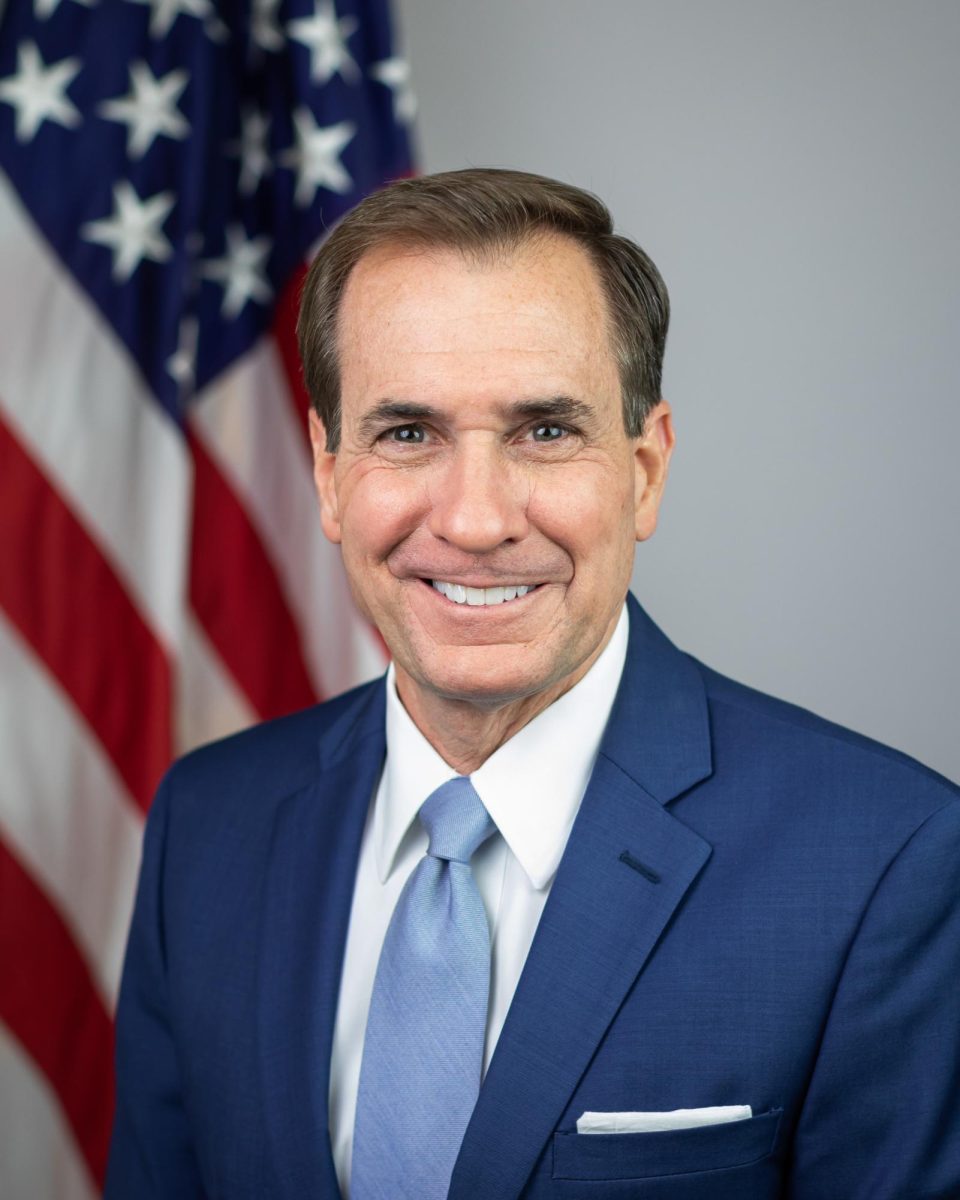
Retired Rear Admiral John Kirby will serve as the next director of the University of Chicago Institute of Politics (IOP), the nonpartisan center announced earlier this week. Kirby will succeed former U.S. Senator Heidi Heitkamp and will begin his new role on November 15.
“The University and the Institute have incredible reputations for rigor, for open dialogue, [and] for an innovative and creative approach to creating space where current events can be really explored… I just want to make sure that I continue to rise to that standard,” he told the Maroon about stepping into his new role.
Kirby comes to the IOP after serving in the Biden administration as assistant to the secretary of defense for public affairs, and most recently, as the White House national security communications advisor from 2022 to 2025. Kirby also served as spokesperson for the U.S. State Department under the second Obama administration.
Drawing from nearly three decades of military experience, Kirby said he hopes to incorporate an additional focus on national security in IOP programming. Specifically, he said he would provide students with opportunities to continue exploring challenges to U.S. security, including cyber threats, climate change, transnational criminal organizations, and the effects of mass migration.
Kirby intends to draw on his professional relationships and experience working in six presidential administrations across both parties to recruit new IOP guests and fellows. He said he is particularly interested in bringing current and former military leaders to the IOP.
“I want to make sure that we continue to have a healthy conversation in this country about the role of the United States military and continue to try to form muscle and sinew between American citizens and their military,” he said.
Kirby also plans to support the IOP in its fundraising and student engagement efforts—two key priorities Heitkamp highlighted for the next IOP director in her Maroon interview this spring.
As incoming director, Kirby plans to further evaluate the IOP’s fundraising goals to “get a better sense of where we need to go,” he said.
Kirby previously engaged with UChicago students in July 2024 when he participated in a moderated interview for IOP summer interns in Washington, D.C. He is now in the process of moving from Virginia to Chicago to be present on-site at the IOP, which, he said, was crucial to fulfilling his responsibility as director.
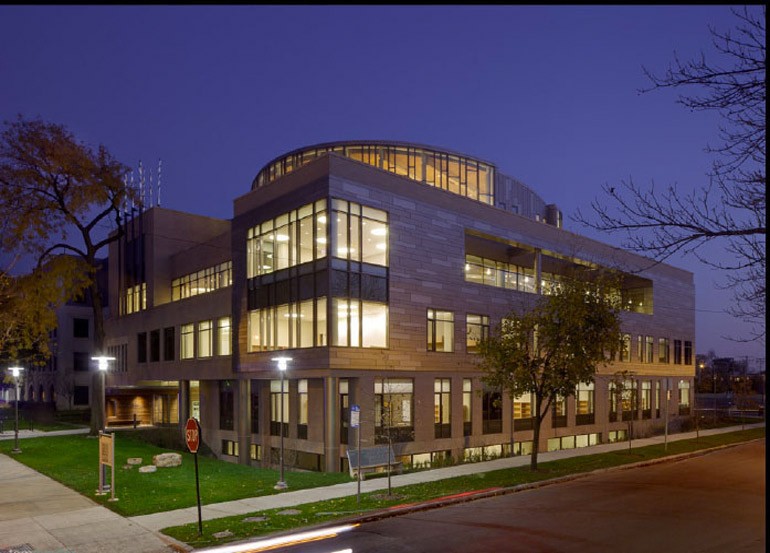
The IOP, founded in 2013, provides UChicago students with opportunities to engage in public service and discussions on pressing political issues. Two weeks after the establishment of a pro-Palestine encampment on the main quad in May 2024, pro-Palestine protesters briefly occupied the IOP building next to campus to protest the Israel–Hamas War and what they called the University’s “current complicity in the genocide of Palestinians.”
When Heitkamp, who was in the building at the time, asked the protesters why they were occupying the IOP, a nonpartisan institution, protesters responded “Everyone has to choose a side.”
While serving as White House national security communications advisor, Kirby drew criticism for saying it was “inappropriate” to describe Israel’s conduct in its war against Hamas after October 7, 2023 as a genocide. Instead, he said that Hamas wanted “a genocide. They want to wipe Israel off the map.… If we’re going to start using that word, fine. Let’s use it appropriately.”
Asked how his White House communications experience would shape his role at the IOP amid a divisive campus climate, Kirby told the Maroon that, although his role had been to explain national security policy on conflicts around the world including the Israel–Hamas war, “that’s not my job here.”
“My role here is to be the best possible director of the Institute of Politics that I can be, and to do everything I can to make sure that this amazing institution, and the terrific fellows, and students, and staff that make it up can have the conversations, can have the dialogue, [and] can explore the value of public service and engage citizenship in the most effective way possible,” he said.
President Paul Alivisatos and Provost Katherine Baicker called Kirby “exceptionally qualified to carry forward the Institute of Politics’ mission to provide students with the opportunities, mentorship, and perspectives necessary to engage thoughtfully and constructively in civic and political life.”
Following the announcement of Kirby’s appointment, David Axelrod, the IOP’s founding director and chair of its board of advisors, described him as “a thoughtful, proven leader whose lifelong commitment to service, extensive experience, and dedication to constructive dialogue align perfectly with our values and mission.”
Editor’s Note: David Axelrod is a member of the Maroon Advisory Board.



Matthew G. Andersson, '96, Booth MBA / Oct 25, 2025 at 2:08 pm
Who may be appointed to the IOP, and many similar university institutions across the US higher education sector, is less important than why these institutions exist in the first place. At UChicago, like other R1 research universities, such centers function as influence platforms for DoD and related funding allocations, usually immaterial vis-a-vis total university finance, while adding, it is thought, a prestige factor. They do not appear to have a defensible pedagogical function. This particular institute, with 12 full-time directors, including an executive director formerly of the USAID which is currently under OIG investigation for fraud and diversion of aid, is especially interesting if students consider its total overhead cost, versus reductions made in Humanities and other graduate student teaching programs. It is a small example of administrative priorities, while representing a number of simple cost-elimination opportunities under more rational and professional management. The Institute is largely a vanity project representing errors in assumptions of utility, except revolving door careerism, and back-channel influence. It may indicate the most critical, unresolved problem still, in higher education: the logical problem of induction. Concerning university ideological partisanship, readers may enjoy the James G. Martin Center for Academic Renewal essay, “The University of Chicago Isn’t Living Up to Its Principles,” 12 May 2023, and the NAS, “UChicago’s Management Crisis,” 25 September 2025
Dan / Oct 24, 2025 at 10:49 am
This is a very short-sighted choice by the IOP and the university. It is not out of the realm of possibility that Admiral Kirby could be charged with war-crimes in the future. He actively deceived the American public in matters of U.S. foreign policy. This is not up for debate, this is now recorded historical fact that he was actively misleading the American public about the crimes committed by the IDF and the blocking of food from entering Gaza.
This is not a case of someone merely having opinions that many on this campus would find disagreeable. It is Admiral Kirby’s actions (and possible future consequences for those actions) during the course of his career that should make the university wary of appointing him to this position.