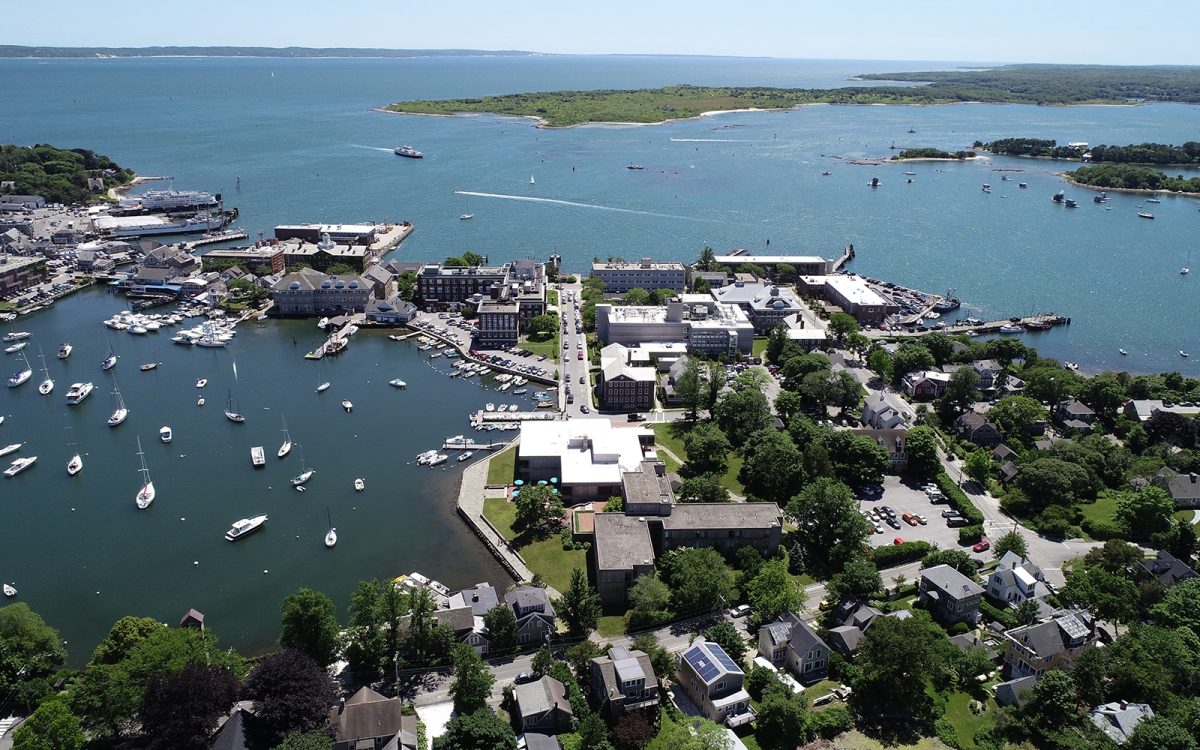
When the Marine Biological Laboratory (MBL) turned 124 in 2012, it was in deep financial trouble. According to archived annual reports, the storied research institution in Woods Hole, Massachusetts had run up an operating deficit of $6 million in 2012, and experienced a loss of $7 million in net assets in 2011 due to investment losses.
“Government grant revenue declined in 2012 due to the winding down of the federal stimulus funding received during the prior few years,” MBL Treasurer Paul Dupee wrote in an annual report that year. “By the end of 2012, MBL leadership and the [MBL] Board [of Trustees] had begun to explore the potential of affiliating with a strong research university partner in order to stabilize the financial position of the MBL.”
Fortunately, the University of Chicago was interested.
In July 2013, the two institutions entered a formal affiliation that has since cost the University over $100 million. It comes to an end this June, when the MBL will return to independence.
All the Benefits, “Essentially Cost-Free”
“[The MBL] had a business model that was not viable,” said Neil Shubin, the Robert R. Bensley Distinguished Service Professor of Organismal Biology and Anatomy, who led a faculty committee to study the affiliation’s prospects in 2012. “That kind of model of an independent research institution with a very small endowment was under a lot of stress financially, [and grants] can only pay so much to maintain [the MBL’s] expensive real estate.” The MBL’s endowment was $69 million in December 2012.
The MBL’s real estate includes research facilities like the 32,000-square-foot Marine Resources Center, designed to maintain and culture aquatic life, as well as the Central Microscopy Facility, which provides scientists with imaging instrumentation to study organisms and tissue. Specimens can be collected directly from the sea with the MBL’s research vessel, the Gemma. All these capabilities power the biological and ecological research that takes place at the MBL.
The University of Chicago’s involvement in rescuing an out-of-state independent research institution more than 850 miles away may seem puzzling at first. According to Shubin, the University’s involvement was the “brainchild” of then-President Robert Zimmer. As provost of Brown University in 2003, Zimmer approved an agreement between Brown and the MBL to establish a joint graduate program in biological and environmental sciences.
“[When] it hit the news that the MBL was financially distressed, Zimmer’s idea [was to] form an affiliation with the MBL that would give our students access to marine programs and other kinds of programs that we couldn’t offer otherwise on campus,” Shubin said.
To assess the idea, Zimmer set up a faculty committee to evaluate what new research and education opportunities the partnership could offer UChicago students. “From that side, it looked incredibly appealing,” Shubin said.
In exchange, the University would provide financial support to the MBL, help grow its suite of educational programs, and expand access to its philanthropic efforts and financial grants. Under the affiliation, UChicago’s president was also responsible for appointing members to the MBL Board of Trustees.
The prospect of an affiliation was broadly popular among faculty members, though there were some concerns about its potential cost, Shubin added.
Shubin recalled that a trustees’ committee was set up to evaluate the financial side of the proposal, bringing in consultants to make financial projections. These forecasts were notably optimistic. “The consultants had very rosy scenarios for what [the affiliation] would cost the University,” he said. These scenarios expected the MBL to offload various administrative costs to the University, such as “grants management, [and] animal care” that the University already had “huge resources” in.
This confidence may have been bolstered by the University’s strong financial position in 2013. A press release at the time said that administrative cost savings would arise “as the MBL benefits from the University’s favorable insurance rates, financial strength, and high-performing investment management.”
“They thought [costs] would [be] front-end loaded—there was a fair amount of money that would have to be spent, but then it would more or less zero out,” Shubin said.
Faculty members were told that the affiliation would be “virtually cost-free,” he added. “Like the price of a small department.”
The University did not comment on these early financial projections and how they developed in response to questions about the affiliation’s forthcoming end.
With the understanding that the affiliation would be cost-effective and create new opportunities for the University community, the affiliation became official on July 1, 2013. “The University has committed to substantial financial support to the MBL for the coming years,” wrote then-Treasurer Mary Harrington in the laboratory’s 2013 annual report.
Zimmer was confident that the University would be able to help turn the MBL around financially. “As a University, we have gained experience for decades in operating labs that not only produce great science on their own, but are an essential resource for scientists from multiple institutions around the world, a community we are committed to serving,” he said at the time.
Bringing UChicago to the MBL
Over the next few years, University faculty worked with the MBL to design new opportunities for both undergraduate and graduate students. Figuring out how undergraduates could take advantage of the MBL’s offerings despite its distance from campus was one of professor Jocelyn Malamy’s first major projects as the newly appointed master of the Biological Sciences Collegiate Division in 2014.
“Embracing that challenge that our students are in Chicago and this campus is in Massachusetts, the first thing that I thought of was to see if we could develop a term that’s equivalent to the [January-term] that other universities have in between their semesters,” Malamy said. “So the natural gap for us is actually September.”
The MBL’s preexisting programs influenced the design of the September courses. “Their motto is ‘learning by doing,’” Malamy said. “And people come there and are encouraged to just try stuff. And in undergraduate courses, we’ve adopted their model of having students come in and just try stuff. We tell them, ‘Doesn’t matter if it works or not, the idea is the design and data and the process.’”
The first MBL September courses were piloted in 2017 and were fully enrolled with waitlists by the following year, Malamy said. “The September program was sort of a success from the start,” she said. “Now, the September term [concept] has expanded throughout all the divisions. But the actual first [September course] was this one.”
Four to five biological sciences courses are offered at the MBL each September; this year’s lineup includes classes on recreating historic biology experiments and studying how ocean creatures manipulate light. All majors are welcome—the courses count as an elective for biology majors and count toward the biological sciences Core requirement for non-majors. Class sizes are small, capped at 15 spots.
“There’s a whole range of people [majoring in] creative writing, political science, economics, biology, [and the] geophysical sciences,” said professor Alexandra Worden, who teaches a September term course on marine ecosystems.
For her, the diversity of majors in these classes opens up a valuable opportunity to empower students to have direct conversations across disciplines. “As we think towards planetary problems, you have to have people in economics who are comfortable crossing over and having a conversation with scientists and vice versa,” Worden said.
Third-year biology and neuroscience double major Henry Evenson experienced these cross-disciplinary interactions firsthand during his second MBL September course last year, when he and his classmates studied the biogeography of Penikese Island, a small island 14 miles away from the MBL. After his classmate, a medieval studies major and a history buff, explained the island’s history as home to a school for troubled kids, Evenson’s group was inspired to investigate how the historical activities of these individuals had affected how invasive blackberries grew on the island. The blackberries seemed to be less prevalent in the areas where the students had been active.
“There were so many different angles from which to approach [the course content],” Evenson said. “I was thinking ‘Oh, the biology way is the right way.’ I very quickly [realized] that’s not the case.”
UChicago undergraduates can also participate in summer research at the MBL through Metcalf fellowships. Sara Ryan, a third-year biology and neuroscience double major who completed a Non-Traditional Model Organisms Metcalf Fellowship last summer, found the autonomy to direct her own research exciting.
“In your biology class at UChicago, you’re following [a set of] steps—‘this is what you record, and make a graph of this,’ or something like that—but this was really exciting because you had some say in what your project was going to be,” she said. Ryan studied gene expression in skates (which are similar to stingrays) and sea robins (fish with legs that allow them to walk on the ocean floor) during her fellowship.
Malamy added that the University had played a role in developing the Semester in Biological Discovery program at the MBL. The 12-week program is open to undergraduates from all colleges and is taught by MBL faculty, and a nine-week program is also available for students from schools on the quarter system. Originally another initiative exclusively for UChicago students, the program was handed over to the MBL after classes failed to fill.
When signups were low, opportunities dwindled. The original spring quarter just for UChicago undergraduates included a 10-day sea voyage on the research vessel SSV Corwith Cramer, where students would learn how to run the boat on their own. “We had to stop because we were funding it, and not enough [UChicago students] were signing up,” Malamy said. “It was one of the things students [who had participated] loved the most.”
Graduate students at the University can pursue research at the MBL through the UChicago/MBL Graduate Program or take a training course in research over the summer.
Over the course of the affiliation, joint faculty positions were also developed in the Department of the Geophysical Sciences, the Department of Ecology and Evolution, and the Department of Organismal Biology and Anatomy, according to Shubin.
New research published this April on how paired fins evolve resulted from these faculty positions and graduate student opportunities; first author Michael Wen is a UChicago Ph.D. candidate who conducted his research at the MBL, guided by Andrew Gillis, a joint MBL–UChicago faculty member. Professor of organismal biology and anatomy Victoria Prince was also a co-advisor on the paper and has taught advanced training research courses at the MBL.
Turning Deficits Into Surpluses
The increase in programs available year-round improved a problem that had plagued the MBL prior to the affiliation: the underutilization of its real estate due to courses being concentrated in the summer.
“We have a huge infrastructure to support all those courses—housing, dining facilities, all this sort of stuff,” said Nipam Patel, director of the MBL. “It was largely unused during the other eight months of the year or so, which financially is not a good plan.” To further keep the MBL filled with students throughout the year, the University also helped the MBL to start year-round programs for high schoolers in Massachusetts, he said.
Philanthropy has also been strong for the MBL. In July 2025, the MBL received an unrestricted donation of $25 million from cell biologist Mark Terasaki. Earlier this March, Valerie and John Rowe donated $5 million to support the MBL/UChicago Graduate Research Fellowship Program, which strengthened the MBL’s position as a research institution, Patel noted.
“The ability to have graduate students with the University of Chicago has made it much easier to recruit top faculty to the institution, knowing that they have an opportunity to get graduate students from the University of Chicago,” he said.
A review of the MBL’s financial statements also shows a dramatic financial recovery. From 2012 to 2025, the MBL’s net assets nearly doubled from $110 million to $212 million, and its endowment had grown to over $100 million. It ended fiscal year 2025 running a $1.2 million operating surplus.
But if you subtracted the University’s financial support of over $7 million that year, the situation would be very different. The MBL’s recovery—and every year of nominal surplus—depended on large transfers of funds from the University.
Annual transfers reached a peak in 2022, when the University transferred $13.9 million to the MBL, and they never dipped below $5 million. In total, the MBL has received upwards of $110 million from the University over the course of the affiliation, according to publicly available financial statements.
The transfers have decreased since 2022. But when reflecting on how initial predictions about cost savings had turned out, Shubin was blunt. “It’s fair to say that none of that worked out. The estimat[e] that the consultants made early on, which was actually part of the decision-making [process], did not realize itself.”
While Shubin was not involved in evaluating the financial aspect of the affiliation in 2013, he gained direct experience with the MBL’s finances when he managed its budget from 2017 to 2018 as the institution’s co-director (along with then-Vice Provost for Academic Initiatives Melina Hale, now dean of the College). Shubin suggested that the predicted cost savings had simply been “a very big overestimate” and that estimates of the anticipated revenue from course tuition had been “a little rosy, too.”
Recalling the largest budget stressors during his time as co-director, Shubin said, “I think the biggest thing for the MBL is the real estate [is] old. Real estate needs to be recapitalized. I think the infrastructure piece was very expensive.”
For Classics professor Clifford Ando, a frequent critic of the University’s financial decisions who was serving on the Council of the University Senate when it was informed of the upcoming affiliation in 2013, the cost of the affiliation raised a set of policy questions. “It was entirely unclear to me at the time why the University wanted to be the sole owner of the MBL instead of assisting the MBL in setting up a consortium of owners, so that the University bore only part and not the entirety of the risk,” Ando said.
While the University operates Argonne National Laboratory through its wholly owned affiliate UChicago Argonne LLC, the University partners with a consortium of institutions to manage the Fermi National Accelerator Laboratory.
The University did not respond to questions about the decision to become the MBL’s sole affiliate in 2013 and why administrative cost savings had not been realized as predicted.
Parting Ways
In February, the University and the MBL announced that their affiliation would formally come to an end on June 30. Both the University and the MBL have assured students that their joint programming will be unaffected.
Patel said the MBL was intent on continuing the Metcalf program, the MBL/UChicago Graduate Research Fellowship program, and September term courses, though he said that whether to maintain September offerings was “very much the University’s decision, because it’s their courses. But it’s something that’s very valuable to us.”
It remains unclear why discussions to end the affiliation arose. When asked whether both institutions had always intended for the MBL to return to independence, Patel said, “I don’t think that was the plan, but it was a natural kind of evolution of what’s occurred over the last few years.”
“The MBL is now in a much more stable financial position than it used to be, and the University’s been very helpful in doing that,” Patel added.
A University spokesperson cited the recent donation by Terasaki as a key development that has equipped the MBL to achieve its goals independently. “This return to independence, together with MBL’s 2025 announcement of a historic $25 million gift, will enable MBL to operate with enhanced flexibility, better positioned to advance its education and research mission, and sustain long-term growth,” the spokesperson wrote in a statement to the Maroon.
To Ando, the University’s decision to end the affiliation is “financially an intelligent thing to do.” Twelve years after committing to support the struggling MBL, the University now finds itself in its own financial difficulties. In 2025, the University’s budget deficit was $160 million, down from $288 million in 2024. It announced a slew of cost-cutting measures last September, aiming to reduce spending by $100 million in an effort to further reduce expense growth. No longer needing to transfer millions of dollars to the MBL every year may help close the gap further.
Patel expressed gratitude for the University’s support regardless of the impetus for the decoupling while embracing the MBL’s independence. “The affiliation has been wonderful, but the opportunity to be independent is also great,” Patel said. “Independence allows us to set our own priorities for the internal research that we do [and] our own resident faculty.”
He also expressed confidence that the MBL’s finances, which have grown much more stable, will be able to sustain its operations without the University’s financial support going forward, though he emphasized the MBL’s intent to maintain a close relationship with the University. “We are very much looking forward to maintaining the academic connections to the University for opportunities for Chicago students to really be able to take advantage of the unique resources that the MBL offers,” he said.
The University’s statement echoed a similar sentiment. “The relationships and programs developed since 2013 will continue to serve both institutions well into the future, consistent with the original vision of the affiliation,” the statement read.
To Shubin, this alignment bodes well for the impact of the end of the affiliation on students, or, rather, the lack thereof. “The really good news is that I don’t think students will notice,” he said.
If things work out as promised, many more generations of UChicago students will have the opportunity to do research and take courses at the MBL. Evenson had some words of encouragement for them: “If you have the opportunity to go to the MBL at any point for any reason, go to the MBL, go to the MBL, go to the MBL. It is the coolest place in the world.”