Provincetown, Massachusetts, is not typically associated with Anthony Bourdain, the globetrotting celebrity chef behind the beloved travel food shows Parts Unknown and No Reservations. Yet, the town played a quiet but pivotal role in his personal journey, and it’s precisely this story that director Matt Johnson chose to tell in his 2026 biopic, Tony.
An angsty, insufferable, 19-year-old wannabe writer, Bourdain (played by Dominic Sessa) moves to Cape Cod in pursuit of his crush, who’s working in Provincetown for the summer. The sheltered world Bourdain inhabits is turned upside down after an unexpected turn of events leaves him working in a local restaurant’s kitchen.
From the opening lines of Bourdain’s Kitchen Confidential: Adventures in the Culinary Underbelly, Tony begins with: “I was—to be frank—a spoiled, miserable, narcissistic, self-destructive, and thoughtless young lout, and badly in need of a good ass-kicking.”
Tony’s script was co-written by Matt Johnson, Todd Bartels, Lou Howe, and Matthew Miller, focusing on the point in time when the exact “ass-kicking,” both literally and metaphorically, took place: Bourdain’s first kitchen job.
Although Bourdain is a traveled cultural icon, as comfortable in French kitchens as he is among Cambodian street vendors, he was not always this way. Johnson’s critical decision to complicate the globetrotting persona of Bourdain embedded in cultural memory with the contained narrative of one summer of intense learning in Provincetown adds extra depth and provides a newfound appreciation for the beloved icon. In Johnson’s words, “It’s a coming-of-age story about somebody we all think that we know.”
Johnson’s daring decision to focus on an unknown period of Bourdain’s life pays off in a big way. Bourdain is taken under the wing of a nameless Chef (played by Antonio Banderas). Banderas, who is involved in the food industry himself, is right at home playing a culinary veteran running a tight ship. The father-son dynamic between an immature Bourdain and a demanding Chef propels the narrative forward as dishes are washed, oysters are shucked, and life lessons are learned.
How does a teenager learn discipline? Show up on time? Navigate illicit substances? In Tony, Johnson transports the audience back to the summertime misadventures of 19-year-old Bourdain in 1970s Provincetown and explores how they’d go on to shape the man he’d become.
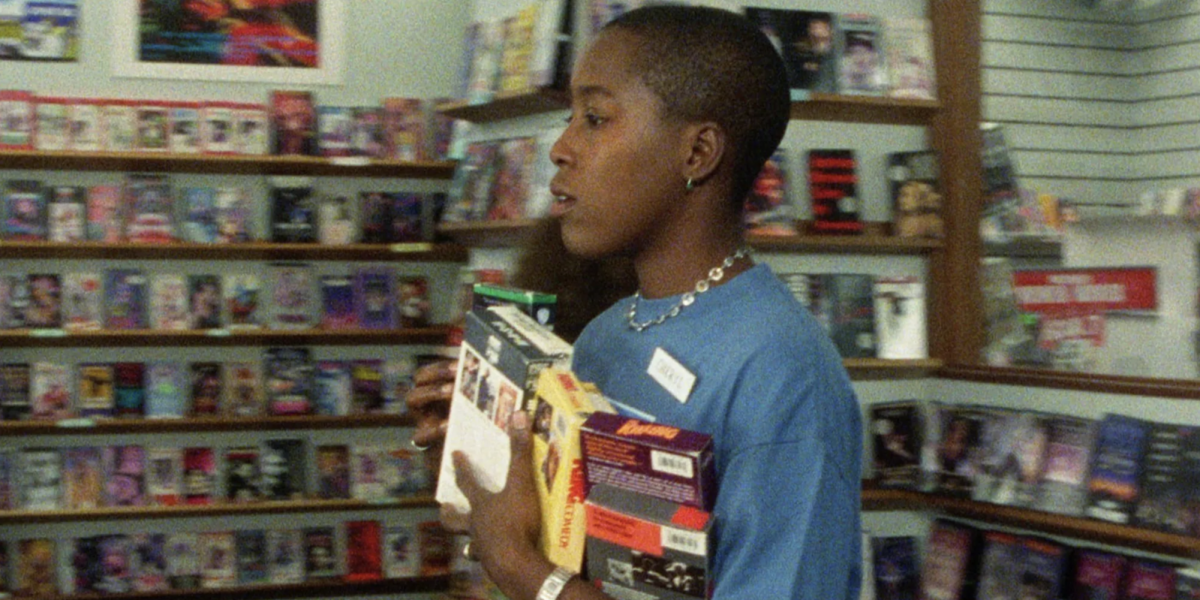
The film’s production designer, Ryan Warren Smith, crafts the world of ’70s Provincetown with finesse. Shot primarily in Cape Cod and Provincetown, iconic institutions such as Spiritus Pizza, the Lobster Pot, and the Old Colony Tap maintain their palpable charm even when translated into film. The characters are dressed with equal care by costume designer Chloe Karmin, featuring just enough bell-bottoms and wide lapels to evoke the time the story’s set in without taking away from the narrative.
Yet, capturing the time period extends beyond the world crafted on set. Cinematographer Michael Bauman plays an equal role in immersing viewers in 1975 Provincetown. Bauman employs vintage lenses from Panavision to emulate the visual language of classic films. “We used the PVintage series lenses and some of their H series lenses,” Bauman remarked. “Older glass that just has a lot more texture to it.” Bauman’s visual grammar of rich colors, soft rendering, and low contrast works in harmony with Karmin’s wardrobe and Smith’s design, grounding viewers in one particular moment in time, somewhere between archival photographs and footage and Bourdain’s own recollections.
Much like the kitchens Bourdain is known for inhabiting, Tony is testament to every constituent part working in perfect harmony, joining forces to tell a cohesive, captivating story. Tony represents a rare, utter triumph in contemporary cinema, a contained tale of a single person, grounded in a particular time and place, with of professionals cooking at the top of their game.
Irrespective of whether Johnson achieved his directorial vision of capturing a time capsule of Bourdain’s life, critical viewers may retort that this is not the version of Bourdain they wished to see on the silver screen, or that “Anthony would’ve hated Tony.” Yet, I worry such criticism risks missing the whole point.
Bourdain’s curiosity, authenticity, and storytelling are what help him linger in the cultural conscience all these years later. A user on TikTok even called Bourdain the “male Princess Diana.” As former president Barack Obama put it after the chef’s passing in 2018, “He taught us about food—but more importantly, about its ability to bring us together. To make us a little less afraid of the unknown. We’ll miss him.”
Instead of creating the expected retrospective biopic of the character audiences already know and love, Johnson chooses something entirely different, embodying the confessional spirit of Bourdain’s writing in Kitchen Confidential. Johnson’s Tony transports audiences to an adolescent version of Bourdain and an authentic recreation of Provincetown, shining a light on an unsung chapter of the chef’s life and offering an appreciation for the person we thought we knew. After all, is there anything more Anthony Bourdain than exploring the parts unknown?