The foremost adage about UChicago dubs it the place “where fun goes to die.” It’s a phrase cast over the institution: here in Hyde Park, we have laid joy at the altar for a bounty of curiosity and rigor. Put aside, for a moment, your disputes of that dubious claim—my concern is its implication for the space in which the University community lives and works and thinks.
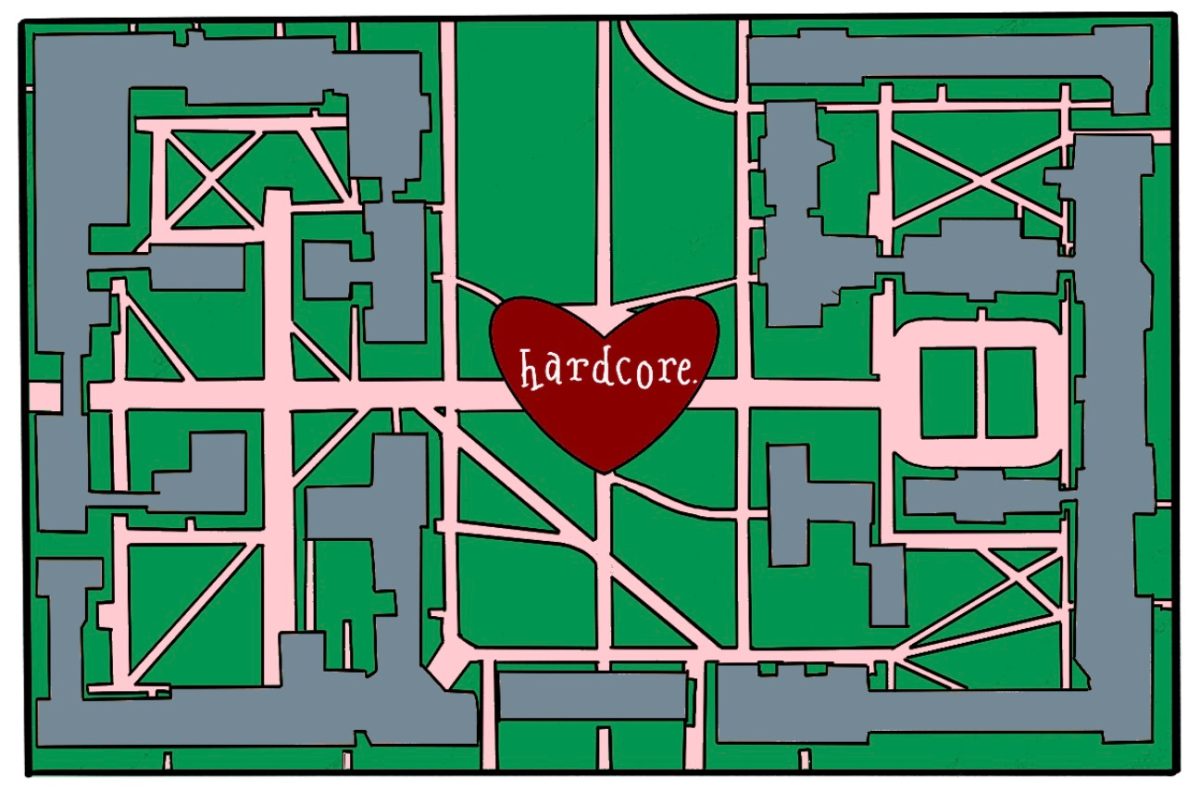
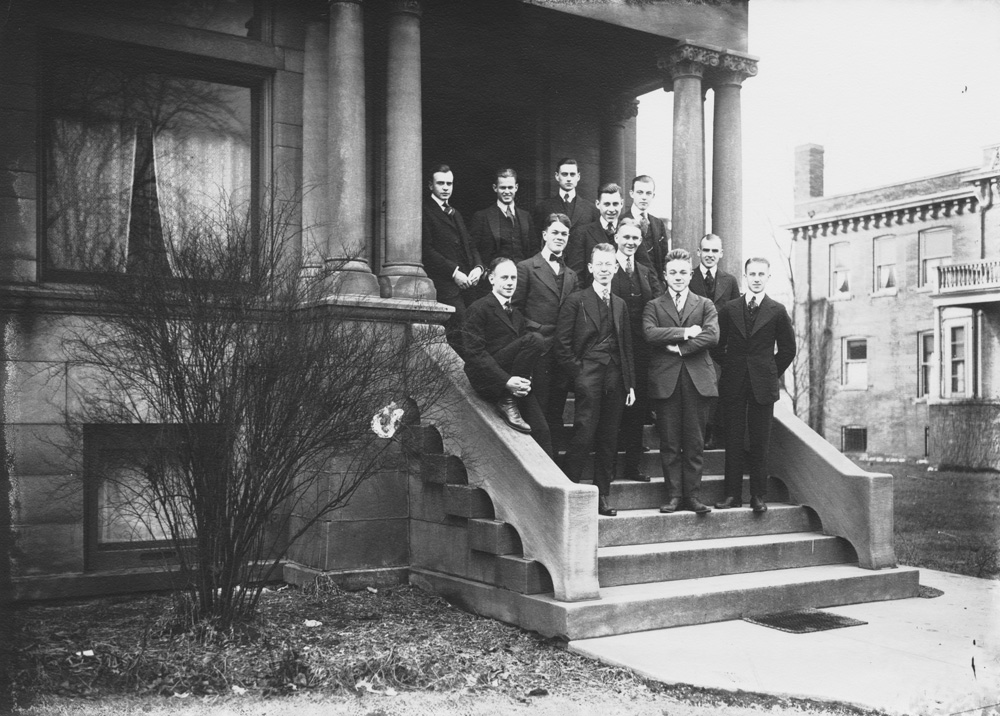
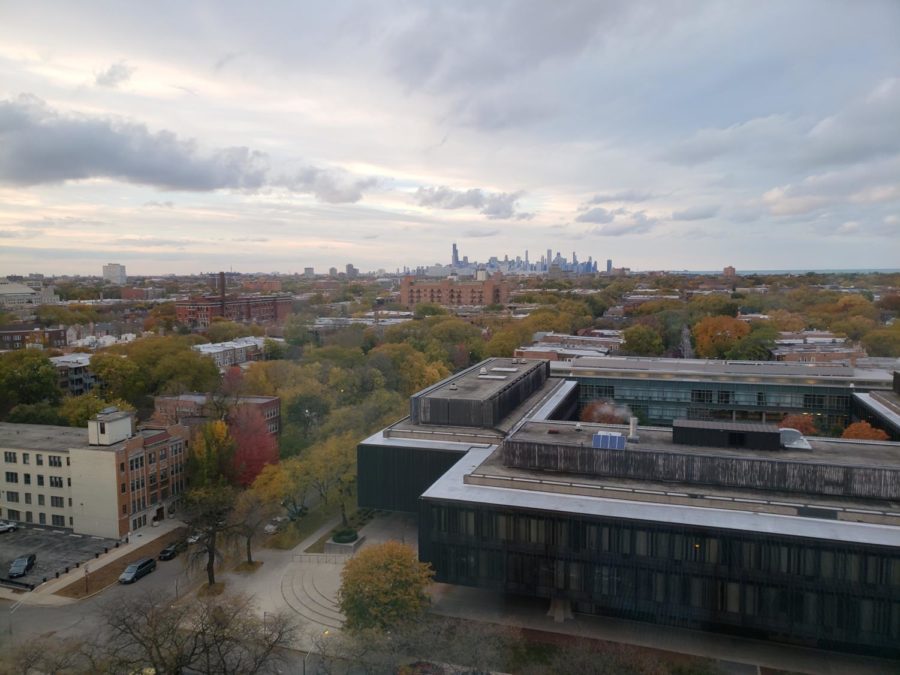
One might think fun was put to rest under a solemn granite headstone, but to the shock of touring prospies, incoming first-years, and visiting high school friends alike, fun goes to die on a handsome campus. It doesn’t take a degree in aesthetics or architecture to see that the South Side’s neo-Gothic kingdom is a beautiful place. Folks come from halfway around the world to see Mansueto bubble up from the earth and Rockefeller refract stained light across its hallowed walls. The Robie House is so seminally beautiful it was designated a World Heritage Site. The quad bows to the seasons: lush and ivy-lined in spring, bare branches sheathed in frosted string lights by winter. And yet, one day you will walk that corridor, which once inspired awe, without looking up.
After all, you have seen it a hundred times before, on good days and bad ones. In Eckhart, a professor will administer a final exam for which you will dull your eyes and caffeinate your blood and lay your fun to rest. In Walker, another will assign an essay that you won’t start writing until the night it is due, and you will feel panic rise in your chest as the minutes tick by. The next day, you will sleep through your first five alarms and hurry through the quad. When you get to Wieboldt, you are already halfway up the stairs before its crenellated battlement catches your eye—and you turn away.
The text I have been taught most frequently at UChicago is Viktor Shklovsky’s 1917 formalist cornerstone “Art as Technique,” wherein he argues that with habituation, perception becomes algebraized—that is, we see objects through their categories. Wieboldt Hall becomes the building with a long staircase; Mansueto becomes the Divergent set piece or the lock-in zone, depending on where you study. Art exists, in his formulation, to counteract this: to defamiliarize, to return the stone to its stoniness, to make the object perceptible again rather than merely recognizable.
Think of photographing the quad through Cobb Gate at sunset, when light crowns the campus as it never has before and never will again, until a lucky tomorrow or overcast Tuesday with tastefully latticed clouds. The technique is called ostranenie—making-strange—and its purpose is to prolong perception, to slow the eye enough that seeing becomes effortful again and induce that arresting gasp of sunset beauty.
Professors assign Shklovsky in part because his artistic credo extends in affinity beyond art to cognition and the academic architecture of the University. The Core is a subject-wide cold call, designed to force students to investigate claims they considered obvious. A university that prizes rigor over comfort has some investment in the idea that things worth learning are things you have to work to perceive. That discipline rarely turns outward onto the grounds that house the studying, and it ought to.
Of course, when your fun has been taken ‘round the barn, looking at the barn and soaking in its beauty may be hard to stomach. I urge you to do it anyway. You will likely not live somewhere so beautiful again, and in fact, it may untangle those stomach-knotting stresses, however slightly.
Finally, it is critical to consider that our beautiful campus is pruned and caulked by an overseeing non-fiduciary body that has reallocated its funds elsewhere. Administration already spends an inordinate amount of money maintaining its grounds and façades, but as the University tightens its belt to eliminate its $140 million deficit (down from $175 million in fiscal year 2025), the capital budget, or the allotment of funds toward long-term infrastructure projects like major repairs and construction, is among the most impacted sectors of spending. As a result, the University has deferred over $2 billion in maintenance and development, most of it concentrated in the quad.
Every glance at beauty is thus a glance at bruised neglect, at a decision that something else is worth more. There is nothing to be done about this but to look up at those monuments which seem, falsely, to stretch into eternity, and think: “how lucky I am to be here.”