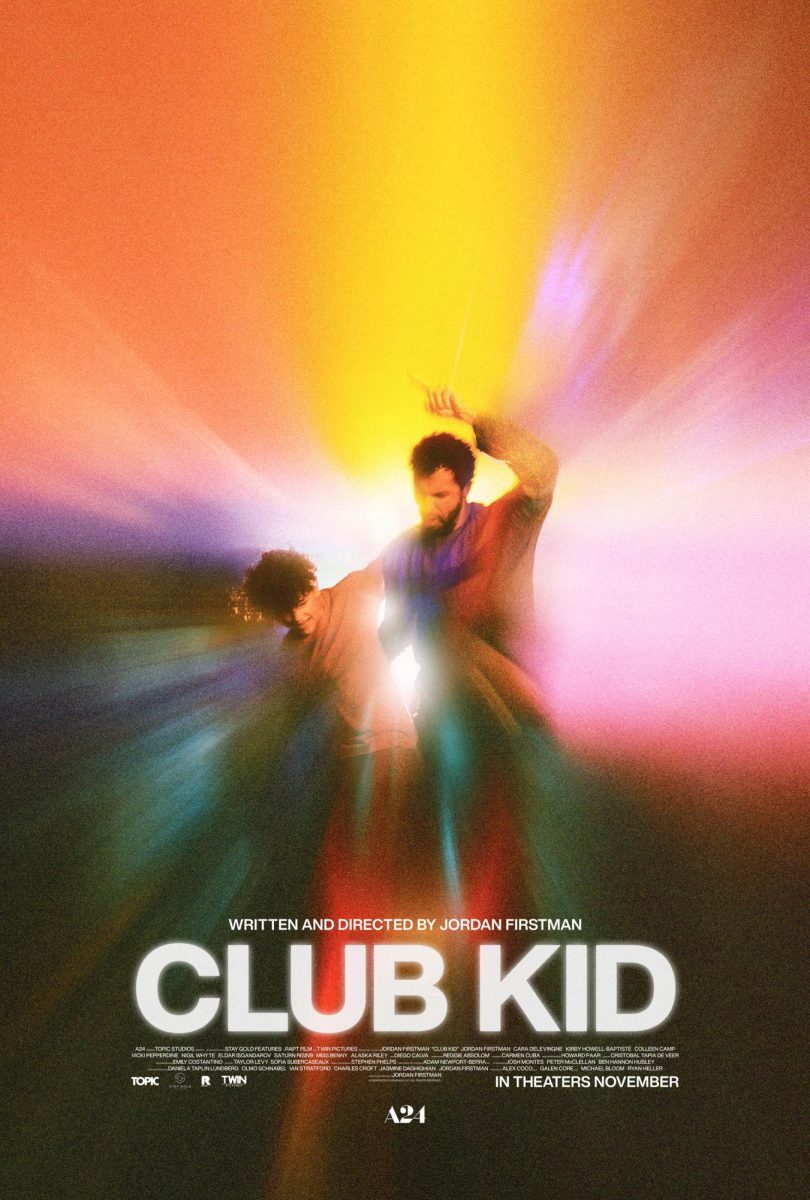
“You just got a kid, and he’s good to go despite a bit of trauma, obviously,” says Kirby Howell-Baptiste’s character Edison. This line in the first act announces Club Kid as the rare intersection of the specific with the universal. Writer-director Jordan Firstman’s feature debut threads the needle between a film lost in the therapy and club jargon of its day and universal themes of parenthood. The result is miraculous.
Peter (Firstman)’s journey of having his son Arlo (Reggie Absolom) thrust into his life reflects the most recent, and one of the most emotionally resonant, explorations of the bond that can form between a single parent and a precocious child. Arlo is brought to Peter’s apartment (he doesn’t really have a doorstep) after his mother’s death by Edison, his mother’s friend, whom Peter had met “about a decade” earlier on the night that led to Arlo’s conception.
The role of the cinema is not to show us exactly who we are or even who we should be. It reflects us insofar as we can see ourselves on screen, but the extent of that self-recognition needn’t be dependent on sharing traits with characters. Instead, identification stems from shared humanity. I don’t need to be a burnt-out party promoter to understand the ways in which the club could become both invigorating and isolating. I just need a good director to show me.
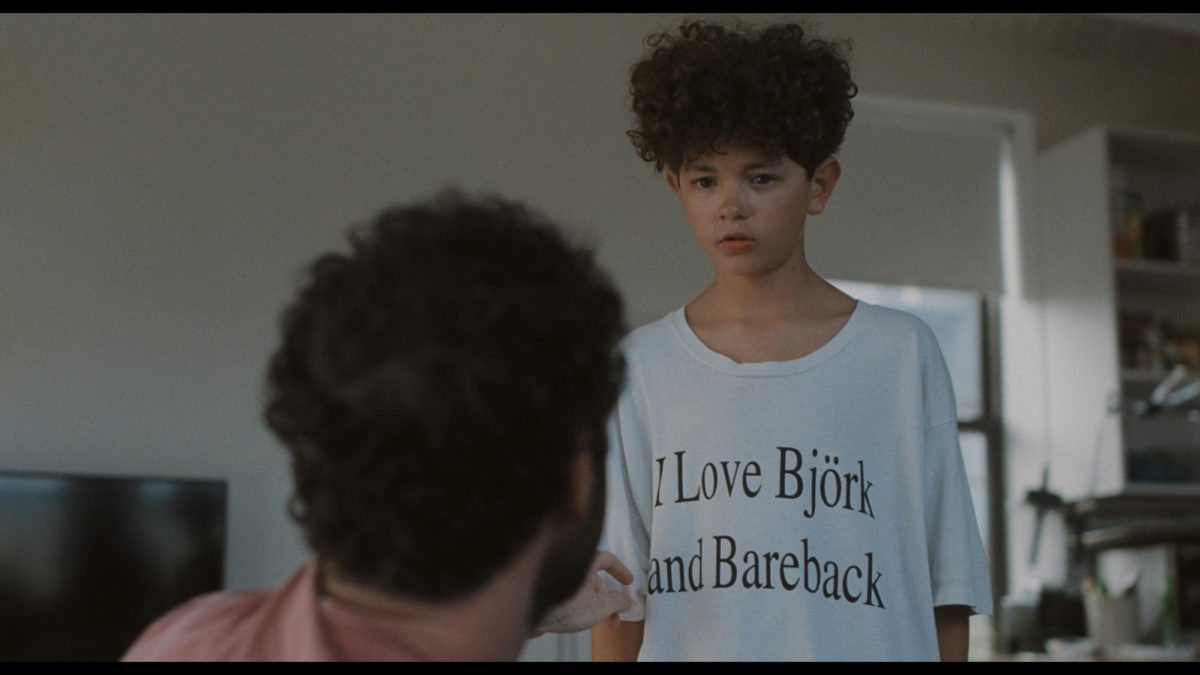
Everyone has been or is a child. Not everyone has moved across the Atlantic to live with their father who hadn’t known of their existence before that point. Not everyone’s father has an “I Love Björk and Bareback” shirt, though maybe they should. The examination of the general as refracted through the specific of Arlo’s childhood allows for audience recognition and identification at both levels of precision. The film’s premise necessitates self-reflection as to how one’s life were to change if someone came and dropped off a 10-year-old for them to raise. We identify with Peter insofar as we recognize the extent to which this would be a life changing event, even if the specifics of his life both before and after it are not in and of themselves relatable. In film, we look to deepen our perspectives on the world. Arlo does that for Peter.
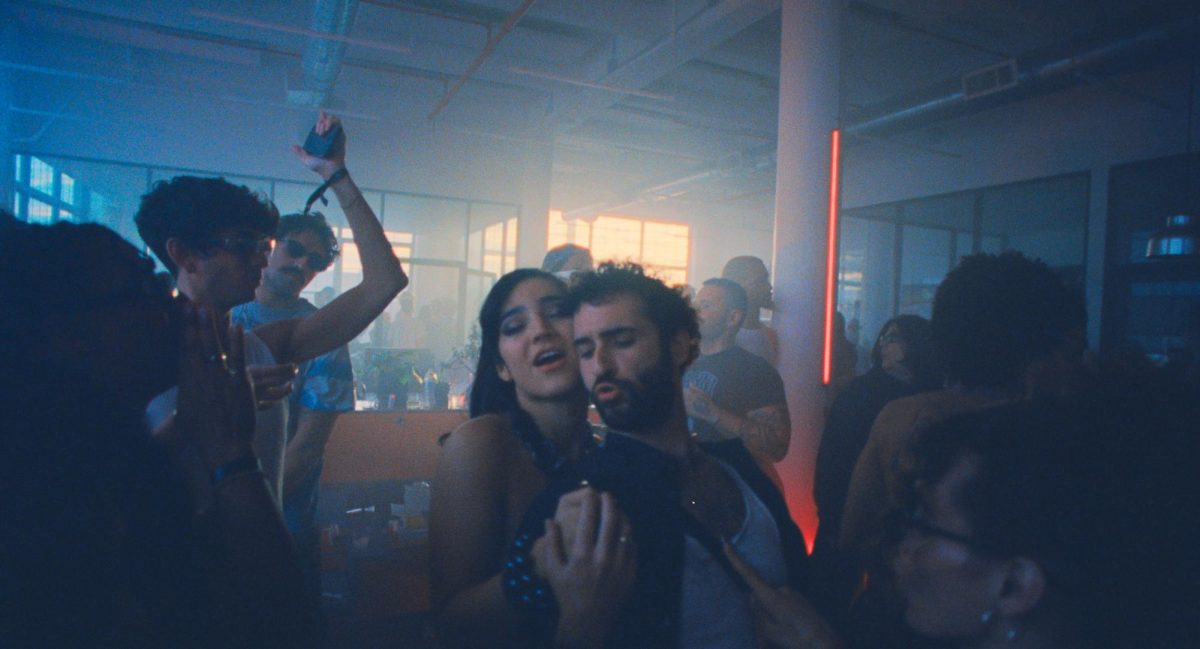
Firstman is well up to the task. In an interview with the Maroon, he said, “There’s so much you feel at the club: you feel so much euphoria, you feel so much love, you feel so much shame, you feel so much confusion sometimes.” He also said that he “just wanted [the club] to feel real and visceral.” It is clear that for Firstman, who does not have children, the club aspect of the film is as significant for the film as the kid aspect. The film’s universal themes are inexorably linked to its specific setting.
The discourse of representation in film has largely fallen into two camps—those that prize representation for the possibility of sharing the power of seeing oneself on screen and those that decry the former as being whiny. Club Kid is non-binary; it seeks to represent individuals, instead of marketing to a broad demographic, because doing so is the only way to find meaning. You will never find someone else exactly like you on screen. Instead, you must look for people that share your humanity. Eldar Isgandarov’s character, Nicky, is an Azerbaijani “aspiring queer philosopher,” an untrodden archetype if I’ve ever heard one. It is not that all films prior to this one fail due to such a character’s absence. Instead, Club Kid thrives in its exploration of the unique lives of its subjects.
Novelty goes beyond characterization. Youthful viewers will squeal with delight at “now” gags such as characters referring to cocaine and ketamine as “Charlie” and “Kirk”, respectively. Emotional moments are given space to breathe, but in between them, jokes come in seemingly endless barrages. Your parents may not get all of them, but they need not feel discouraged—there’s always next time.
The film’s temporal specificity extends to the music, but only so far. “Music has always been my first step into a story,” Firstman said. The film’s soundtrack is typified by avant-garde cellist Arthur Russell’s elegiac song “The Boy With a Smile,” which was recorded in the 1980s but only released in 2023, decades after his passing. Firstman brings emotional songs from the 20th century like the above and “Clementine” by Elliott Smith, and he inserts them into the aesthetic milieu of the 2020s with songs like “CRANK” by Slayyyter and “Contact” by Kelela. Sad songs from the past contrasted with club songs of the present help the viewer understand Peter’s growing sense of alienation from the club, because he feels, in several senses, out of time.
The most critical musical sequence, in both the trailer and the film, is set to Ethel Cain’s “Thoroughfare,” which Arlo and Peter play on the piano in Peter’s apartment, as shot from a nearby roof. It is one of the most emotional scenes and shots of the year, if not the decade. Its success speaks to the willingness of Firstman to adapt. “So much was going on that day that I just sent my DP [director of photography, Adam Newport-Berra] there [the roof], and I was like, ‘Do your thing,’ and so I didn’t even see it,” Firstman said. “I didn’t even know what he was doing until the dailies.”
Firstman could not be behind the camera for the shot because, of course, he was in front of it. Directors can create the space for the artists they employ to do great things and recognize those great things once they have been done. We are kept at an ever-growing distance from the tenderness shared between Arlo and Peter in this moment. We are made heartbreakingly aware that our time with them must come to an end, as all films do.
Newport-Berra does illuminating work throughout the film, as he did for The Invite earlier in the year. In discussing the general philosophy of framing the shots of this film, Firstman said, “I never wanted you to notice the camera, but I also didn’t want it to be boring and ugly.”
Firstman and Newport-Berra have succeeded in making a non-boring and non-ugly film. The opening shot of the film consists of the camera spinning around a packed Uber with Rihanna’s “Sex With Me” blasting. Newport-Berra and Firstman seek a typically A24 film grain. Emotional moments are variably shot in extreme close ups or medium oners that struggle to find any face at all. They are equally felt.
The film’s blisteringly paced third act could, in lesser hands, feel rote. Instead Firstman, in his first feature, delivers an incredible statement for the power of film to move its audience. It won’t be his last. Crank it.