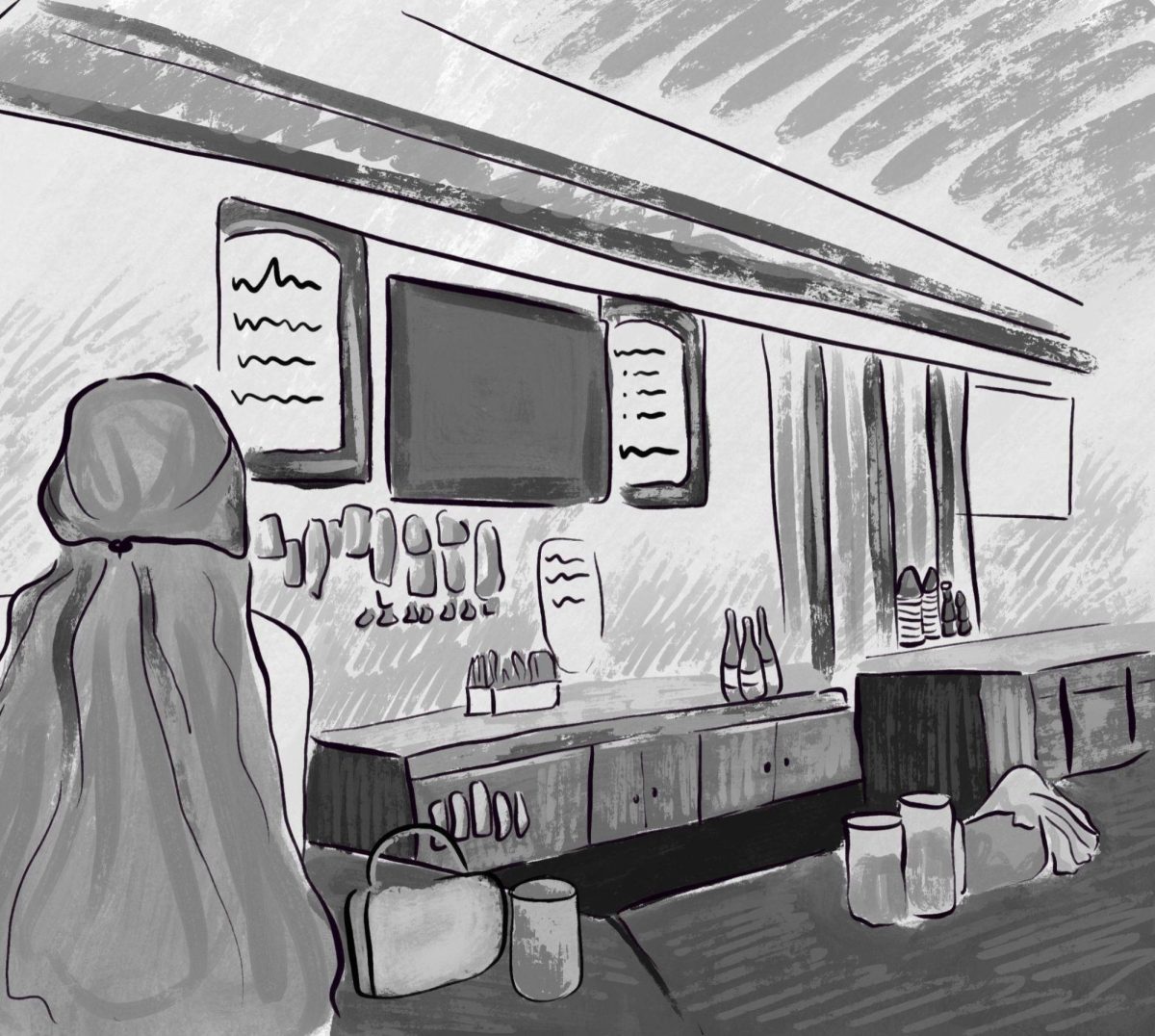
Every time I walk toward the Maroon office in Ida Noyes Hall on a Wednesday night, I’m greeted by a long line of people waiting to get into the Pub, their Beer Passports ready for a new stamp. A gaggle of grad students, lecturers, and suspiciously young-looking “Northwestern” students wait to be granted access to a place that is undoubtedly an integral part of UChicago’s student life. While I’ve heard complaints from upperclassmen about how these “Northwestern” students (read: UChicago undergrads) are encroaching on the sacred grounds of the Pub, the underground establishment remains a must for anyone wanting to experience nightlife on the campus where “fun comes to die.”
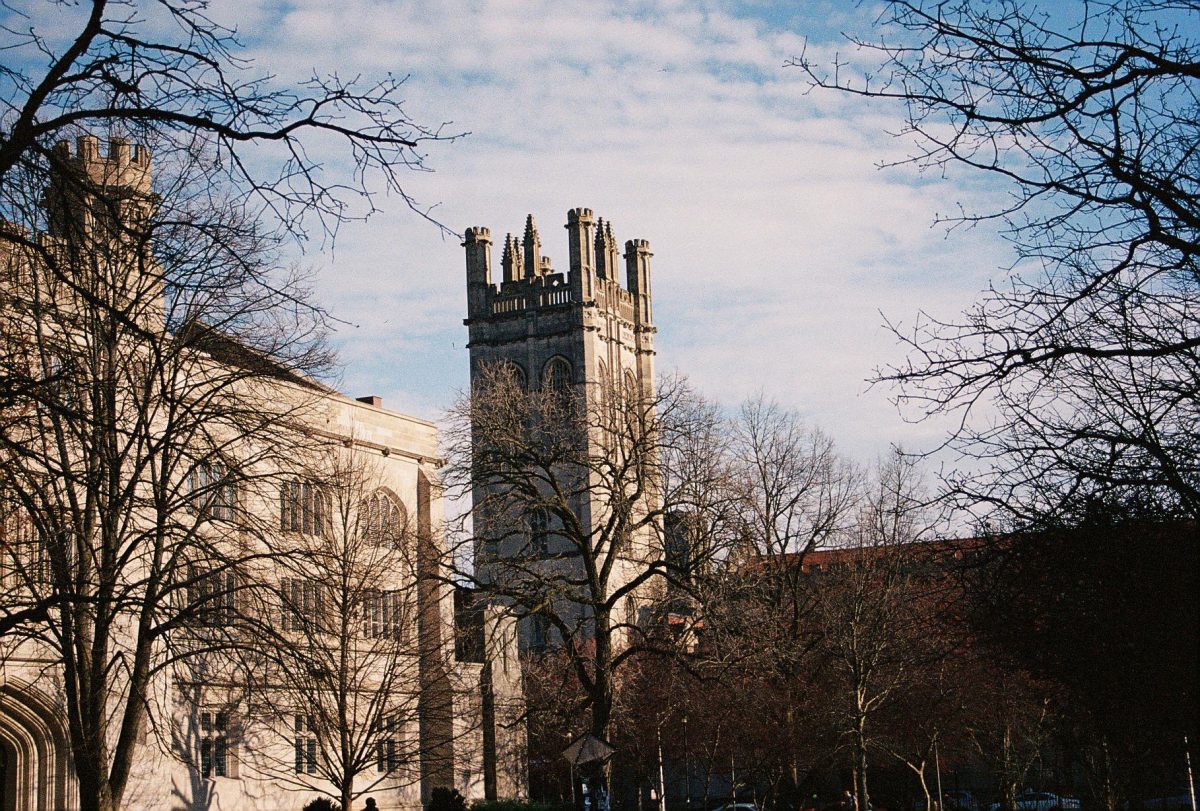
The Pub is one of many iconic parts of Ida Noyes Hall, alongside the Cloister Club, Max Palevsky Cinema (where Doc Films operates), and (weather permitting) the sheltered courtyard. Through visiting the building for RSO events, academic advising, and, of course, the Maroon, I have become quite familiar with it. I recently discovered that there are intricate faces carved into the bottoms of the banisters, their grotesque expressions morphing into the ornate staircase. While the building’s facilities are not the newest, such details give the building an irreplaceable charm.
So when I first heard news of the $50 million gift from Board of Trustees Chair David Rubenstein (J.D. ’73) that will fund a renovation of the building, I was immediately suspicious. Why so much money, why now, and why Ida Noyes Hall?
The announcement from the school was just vague enough to conjure images of a concrete behemoth engulfing the storied arches of one of the oldest buildings on campus. My first instinct was to put pen to paper (or, more aptly, fingers to keyboard) and write a sharp critique of what seemed like yet another frivolous donation from a trustee who had no idea what the student body actually needs. Amid cuts to humanities funding and RSO budgets, it seems like $50 million could go a long way if allocated across UChicago, rather than to a single building.
In retrospect, I think that instinct was fair. A gift of this size deserves a comparable level of scrutiny. $50 million is an extraordinary amount of money, and students are within their rights to ask whether renovating Ida Noyes is the best use of an investment of this scale. If the University can facilitate this level of philanthropy for a single building, it begs the question of what campus life might look like if a similar urgency was directed toward area studies, RSOs, or other neglected parts of campus.
These are all legitimate questions about the University’s priorities, and our community has the right to ask them openly. The issue is that, without clear information, the discussion around Ida Noyes has moved from scrutiny to speculation. One rumor circulating campus is that building renovations next year will prompt the Pub’s closure. Every few days, a post pops up on Sidechat bemoaning the injustice of the Rubenstein project taking the drinking spot out of commission, with numerous users arguing in the comments about what will actually happen. There is even an “Ida Noyes Party” running for Undergraduate Student Government’s Executive Cabinet with the tagline “Save the Pub.”
Given how central the Pub is to student life and to Ida Noyes Hall’s character, I understand why the fear has quickly taken hold. When the announcement is littered with words like “revitalize” and “modernization,” it’s easy to picture the sleek but boring contemporary architecture of the Rubenstein Forum across the Midway—the same image immediately popped into my head. But after speaking with Rubenstein’s team and the University News office, I learned that the designs have not yet been finalized, and the University plans to select an architectural firm this spring. No one, not even Rubenstein, has a precise image in their head.
Right now, nobody knows enough to say with confidence what will happen to the Pub. The University does need to clearly communicate its plans, but it’s easy to play off uncertainty. And that uncertainty cuts in both directions, as it weakens the claims behind the rumors, while not settling the larger questions raised by Rubenstein’s donation.
For my part, I’m not one to cozy up to billionaires. The ethics of accumulating a billion dollars in the first place are questionable enough. Don’t expect me to treat Rubenstein like a benevolent god blessing us with his capital just because he decided to part ways with a tiny fraction of his wealth.
Still, his latest gift seems to fit within his broader philanthropic interest in the preservation of historical documents and buildings. Rubenstein’s gifts extend across universities, museums, and preservation projects, many of them tied to history and public memory. In the past decade alone, he donated $61 million to the Law School, providing scholarships to a tenth of its student body. This does not exempt the most recent gift from criticism, but it does mean that objections to the Rubenstein Commons project should be grounded in how the renovation will actually impact the character of Ida Noyes Hall and the student life it hosts, rather than Rubenstein’s presumed intentions.
This is part of my frustration with the University’s communication on the topic (though we are no strangers to President Paul Alivisatos’s less-than-forthcoming emails). If a donor is going to reshape one of the most recognizable and frequently used student spaces on campus, we deserve something more substantial than an email and an article filled with buzzwords like “creat[ing] a center of gravity for the University community.” We deserve to know how student activities in the buildings will be protected and who has a voice in imagining the future of buildings that already have an active life of their own.
Ida Noyes Hall’s value lies in the fact that it already functions as a space for students to host events, screen films, and wait in an ungodly long line to get their Beer Passports stamped every week. Any renovation should have that understanding as its starting point and should work to preserve that life, not paint over it.
While a $50 million gift is worth welcoming, it is also worth thinking twice about. It is the University’s responsibility to provide public accountability and set clear expectations for what this project means for the students who use Ida Noyes Hall every day. We all pride ourselves on inquiry, and that commitment should include asking serious questions about the gifts that shape our campus without lapsing into automatic gratitude or rumors.