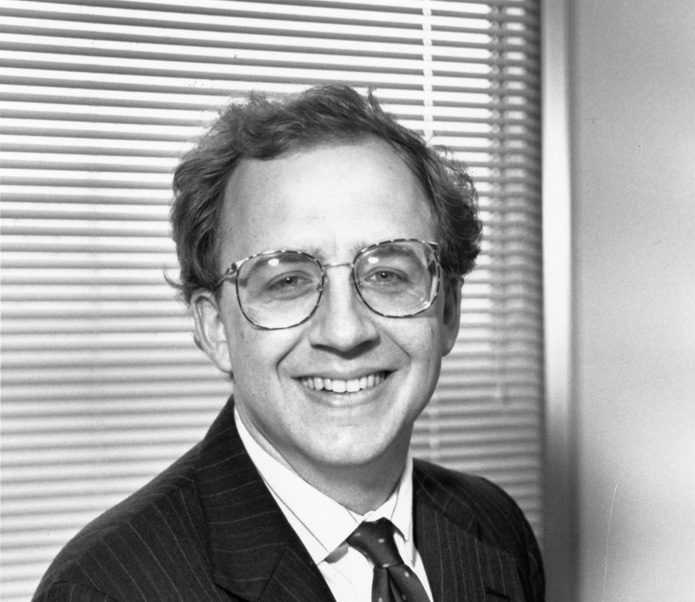
Former Vice President Mike Pence took questions from a panel of undergraduates about U.S. foreign policy, President Donald Trump’s second term, and the future of the Republican party at UChicago’s International House on Tuesday.
Pence answered questions from fourth-year students Vera Chaudhry, Ava Partridge, and Tyler Shasteen at the event, hosted by UChicago’s Institute of Politics. Afterward, Pence took questions from the audience.
The event began with a discussion of Pence’s failed 2024 presidential campaign and whether his self-described “Reagan conservative” political beliefs were still popular among younger Republican voters.
Pence attributed the loss to a variety of external factors that ultimately led to Trump’s victory, claiming that his ideas were still popular among the party base. “I don’t think it was so much a rejection of the policies that we stood for as a reflection of the moment,” he said.
“I think it’s going to be more important for Republicans to focus on what we’re for before we focus on who we’re for,” said Pence about the Party’s future, adding that members of the party should be able to “disagree without being disagreeable.”
Shasteen asked about a potential generational divide between Pence’s political views and young conservatives, referencing a Pew Research study showing that U.S. support for Israel—a stance long held by Pence—is largely unpopular among younger Republicans.
“Count me dubious on Pew on this one,” Pence said. “I believe Israel is our most cherished ally, and that’s been true since before the founding of this country… I hold that there’s a common bond and a heritage that we share that springs out of the Judeo-Christian tradition.”
The Pew poll, conducted approximately one month into the U.S. and Israel’s war with Iran, found that 57 percent of Republicans aged 18 to 49 have a somewhat or very unfavorable view of Israel—up from 50 percent at the same time in 2025.
Pence also emphasized his support for active U.S. involvement in foreign affairs, particularly regarding military involvement in Ukraine.
“I would say with great respect that America is the leader of the free world. If America is not leading the free world, the free world’s not being led,” Pence said. “Over the last four years since Russia’s unprovoked and brutal invasion of Ukraine, I have held the view that America and our allies across the West need to continue to give the military in Ukraine the support they need.”
Pence also expressed support for the recent U.S. intervention in Iran, stating that the U.S. will “eliminate the threat of a nuclear holocaust perpetrated by Iran.”
Secretary of Defense Pete Hegseth claimed in June 2025—8 months prior to the start of the current U.S. conflict—that “Iran’s nuclear ambitions have been obliterated,” after a U.S. strike on various Iranian uranium enrichment facilities.
“There’s an old saying that one doesn’t make peace with one’s enemy, one makes peace with one’s defeated enemy. And I don’t get the impression that the Iranians feel they’re defeated just yet,” Pence said.
When asked about an April 7 post President Donald Trump made on Truth Social threatening Iran—in which the president wrote “A whole civilization will die tonight”—and how to interpret similar messages from the president, Pence neither endorsed the message nor expressed major concerns with it.
“I’m not here to defend him, that’s not my job anymore, but sometimes he’s just trying to make a point and get attention,” he said.
Pence discussed his relationship with Trump several other times during the event and cited “differences” with him during the January 6 attack on the Capitol in 2021 as a key reason he didn’t endorse Trump in his 2024 reelection campaign.
Pence presided over the joint session of Congress to certify Joe Biden’s win in the 2020 election. While the process has historically been largely a formality, Pence faced heavy pressure from Trump to reject the election results.
“I’ll always believe in my heart of hearts that I did my duty on January 6,” Pence said. “I actually had a good working relationship for four and a half years, and I’ll never quite understand how I was unable to reach him in those waning days.”
Pence also said repeatedly that he has not approved of Trump’s economic policy during his second term, including his use of executive power to implement tariffs and a proposed $500 million bailout of Spirit Airlines. He also disapproved of how Trump’s 2024 campaign took a less clear stance against abortion.
“The president in his campaign in 2024 was marginalizing the right to life, which has always been a priority in the Republican Party,” Pence said. “We’ve seen that in this administration, particularly with the appointment of an abortion rights supporter as secretary of health and human services.”
Health and Human Services Secretary Robert F. Kennedy, Jr. expressed largely pro-choice sentiments during his own 2024 presidential campaign but has recently described his politics as more moderate, stating that he would follow Trump’s lead on abortion policy.
Several other social issues were also discussed at the event, including gay marriage and the trend in America toward marrying later in life.
“As a Bible-believing Christian, I will always hold the view that marriage is between one man and one woman,” Pence said in response to an audience question. While he said he still disagrees with the Supreme Court’s 2015 decision, which struck down bans on gay marriage nationwide, he emphasized that it is important to respect the decision.
While Pence said that people have the right to “live their lives according to the dictates of their conscience,” he argued it was important to make the traditional nuclear family with one stay-at-home parent an economically feasible option.
“I think doing what we can to make it possible for more Americans to choose to be in marriage, raising children, and make that economically viable—and also, that we celebrate [that] in our culture—is very much in the interest of the country and the interest of rising generations of kids,” Pence said.