O-Week is all about settling in. But the growing itch to escape Hyde Park and explore the city of Chicago means that navigating transportation outside of the neighborhood is just as important as navigating within it.
As you begin to traverse the area, you may notice the many UChicago-labeled buses that pop up all around campus. Running year-round from 6:30 a.m. to 12:00 a.m., these UGo buses are part of the free transportation services provided by the University.
As the name suggests, UGo shuttles seem TOgo wherever YOUgo (pun intended). However, utilizing these buses and understanding their routes can prove challenging for those unfamiliar with the system. The UGo shuttle service operates on a rotating day and night schedule, with nine daytime routes and six night ride routes. Buses travel around Hyde Park and into the Loop via the downtown campus connector. Some stops are not labeled because they aren’t directly adjacent to Chicago Transit Authority (CTA) bus stops. Many labeled stops are clear because they share signage with CTA posted bus stops.
“Sometimes, trying to navigate and figure out when a shuttle is arriving and exactly what time is really difficult,” third-year Alethea Oakley said.
Last spring quarter, Oakley became one of the first UGo shuttle ambassadors for a new program that aims to increase shuttle usage among undergraduates and help solve this problem. Piloted by the Transportation Student Advisory Board, which includes students from UChicago Transit Enthusiasts & Explorers (UCTEE) and the UChicago Democrats (UCDems) Transportation Caucus, the UGo shuttle program enlists volunteer ambassadors to help their peers become more familiar with the buses by taking 5–10 people of their choice on shuttle rides on and off campus throughout a quarter.
Oakley’s goal, like that of many ambassadors, is to promote the UGo shuttles by teaching other students that these buses provide another transportation option. “The biggest thing is just showing people how to use them, telling people they exist, [and] that they go to these locations. [That] has been kind of the main part,” she said.
The ambassador program is part of a larger effort by the UCDems Transportation Caucus to improve transportation services at UChicago. It is the latest development of long running tradition of students campaigning for transit options throughout UChicago’s transportation history.
Where to go before UGo
The current UGo shuttle system is the product of a long history of transportation services offered at UChicago.
In 1957, UChicago launched its first University-subsidized shuttle route, the UC Bus. The UC Bus was available to students and staff for five cents per ticket or two dollars per month. Unlike the extensive UGo routes offered today, this shuttle service only traveled from Stony Island Avenue to Cottage Grove Avenue in a loop around 57th Street and 59th Street. Its route was just enough to reach all of the dorms at the time.

Due to popular demand, the UC Bus service was expanded in 1958 to include routes along Woodlawn Avenue from 48th Street to 59th Street, and bus fare was increased to 10 cents per ticket. Student initiatives also contributed to the expansion of the bus service in these early days. At a 1966 Student Government Assembly meeting, members urged the University to extend bus services into South Shore in order to make the place more desirable for students to live. This route was eventually opened one year later.
By the summer of 1971, there were four distinct shuttle lines, including a free evening “minibus” route. The minibuses operated seven days a week from 6 p.m.–12 a.m. (5 p.m.–12 a.m. on Saturdays) and had three separate routes.


Transportation services continued to evolve in the early 2000s, when the Chicago Transit Board approved a contract between the University of Chicago and the CTA. The contract allowed the University to share the costs of operating four CTA bus routes: #170 U. of Chicago/Midway, #171 U. of Chicago/Hyde Park, #172 U. of Chicago/Kenwood, and #173 U. of Chicago/Lake View Express. Routes #170, #171, and #172 were free for anyone with a UChicago ID. In 2006, an additional weekday express route was added: #192 University of Chicago Hospitals Express. This rush hour service operated from Ogilvie Transportation Center and Union Station to the Goldblatt Building on the UChicago Medicine campus, traveling southbound in the mornings and northbound in the evenings.
Today, all CTA buses are free for anyone carrying a Ventra U-Pass card, a card issued to all students in the College during O-Week. Only routes #171, #172, and #192 still operate alongside the current UGo shuttle system.
Technology also began to play a role in UChicago’s transportation network during this time. In 2010, the Office of Transportation partnered with Student Government to launch Transloc, the first app that tracked both University-subsidized CTA buses and campus shuttles. This app was eventually replaced with the current shuttle tracking app, Passio GO!, in 2024, completing the development of the UGo shuttle system as students recognize it today.
UGo where the ambassador goes
The UGo Ambassador program is one way students are currently contributing to the ever-changing transportation system at UChicago. The program piloted last spring and is a partnership between the Transportation Student Advisory Board and the Transportation & Parking Office. Student ambassadors are required to complete five trips throughout the quarter, and each ride has to be with at least one other un-affiliated peer. Ambassadors are additionally required to submit a photo of themselves on a UGo shuttle with their peer(s) as proof of completion.
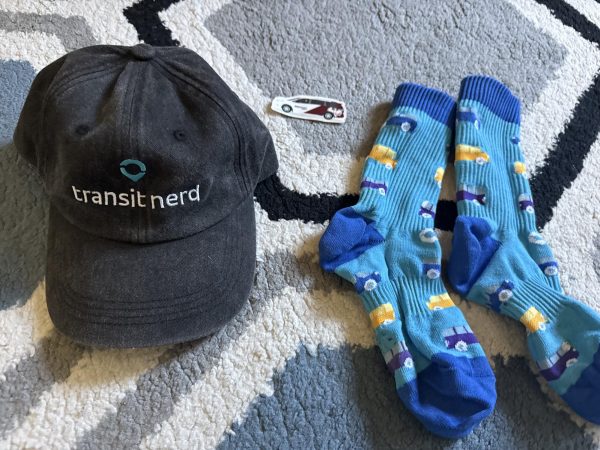
“The University is supporting this student-led effort, and the Transportation & Parking Office is providing merchandise giveaways as part of the pilot,” a University spokesperson wrote in a statement to the Maroon. During the pilot, ambassadors who completed five rides within the quarter received goodie bags with “transit nerd” hats, Ridesmart socks, and a transportation-related pin.
According to Nicholas McNamara, a member of the UCDems Transportation Caucus and active member of the ambassador program, one major goal of the program is helping undergraduates who may not have as much familiarity with University-subsidized transportation as graduate students may have. Graduate students do not receive U-Passes and may be more incentivized to use the UGo shuttles.
“The way to see success is a cultural shift in the undergraduate student body with more awareness of the UGo shuttle programs among the undergraduate students, because if you have more people using it, more people know how to do it,” McNamara said.
The University does not publish data on the share of undergraduate versus graduate shuttle riders. Both groups are eligible to utilize the transit system.
Evan White, social chair for UCTEE, sees connecting students with the greater Hyde Park area as another goal of the program. “The University has a historic role in Hyde Park, but also has influences in Kenwood, Woodlawn, and beyond, and students are really excited to connect with these places.”
The University describes UGo as providing “extensive coverage of nearby neighborhoods,” while the CTA’s #171 and #172 routes extend service into Hyde Park and Kenwood. According to CTA data, these routes recorded over 491,000 rides combined in 2024, suggesting demand for connections between campus and the surrounding neighborhoods.
“We can still truly be the University of Chicago because we have such great access to the city, whether that’s through the metro, the buses, the trains, and around campus through our amazing UGo shuttles and the Via program that’s helping students explore different neighborhoods,” White said.
According to third-years Sara Baudler and Arya Sharma, members of the Transportation Student Advisory Board and co-leaders of the UCDems Transportation Caucus, the pilot for the ambassador program was limited to students within transit related organizations, and feedback from new riders was recorded by ambassadors and tracked through a spreadsheet. Baudler and Sharma hope to increase the range and impact of the program during this academic year by growing the number of ambassadors.
“We got pretty good feedback that people felt like they knew the system more,” Baudler said. “Hopefully in the future, when we expand the program in the fall to be open to non-transit affiliated people, we’ll see an even more widespread effect.”
The UGood
According to a campus-wide transportation and parking survey conducted in 2025, UGo shuttles are a popular option for many students. 44 percent of respondents reported using daytime UGo shuttles compared to just 13 percent in 2019. For members of the Transportation Student Advisory Board and UGo student ambassadors, the UGo system is worth promoting because the shuttles provide transportation flexibility.
“[UGo shuttles] give you more options,” McNamara said. “Say you miss your CTA bus. Okay, well, there’s a UGo shuttle bus right there as well. Or you miss your UGo shuttle bus, there’s a CTA bus again. It’s another option that students have available in the toolbox for transportation and mobility.”
McNamara added that he believes traveling to and from downtown via the downtown campus connector is a large pull for users. Other students see traveling around campus as a larger benefit than traveling into the Loop.
“I think students that are living around 53rd Street and a little bit north of that probably would utilize [the shuttles] coming to and from campus … I live north of the Loop, so there isn’t really a UChicago option for me,” said Aleksandra Skinner, a graduate student in the Master of Arts Program in the Humanities who used UGo shuttles when going apartment hunting. “I had decent experience from on campus [to] off campus. It was a little harder for me to get from off campus to on campus.”
Safety is also the main reason why UGo is important, according to Skinner. “It’s good for students to have that kind of security, especially students that have late classes in the winter when it gets dark early. It’s just a safer option overall in Hyde Park.”
CTA interim leader Nora Leerhsen reported that transit-related crime on CTA buses and rail lines has decreased by 30 percent in 2026 compared to the previous year. The Red Line, which many UChicago students access via the #55 CTA bus or the UGo Red Line/Arts Block shuttle, has seen a 47 percent decline in overall crime and 76 percent decline in violent crime. However, a 2024 WBEZ analysis found that CTA’s violent crime rate has tripled since 2015, from 1.1 per 1 million rides to 3.4. In the 2025 Biannual Survey conducted by the CTA, personal security on trains was rated one of the lowest areas of satisfaction, with only 46 percent of survey respondents indicating satisfaction with safety.
Unlike the CTA, UGo shuttles are only offered to current UChicago students and staff, and passengers are required to tap a valid UChicago ID when boarding. For some students, this has contributed to a greater sense of safety.
“[UGo] helps students and even families of students feel more comfortable about letting their kids live off campus. Even for grad students who live off campus, it’s a nice comfort to have,” Skinner said.
The UBad
While many students may benefit from UGo shuttles, the current system isn’t without flaws. According to Baudler and Sharma, the need for an ambassador program also stems from existing problems students run into when considering taking a UGo shuttle.
“From talking to a number of undergraduates as well as grad students, and then from going around campus and using the transit systems available to us ourselves, we thought that the shuttle system was an area for substantial improvement,” Baudler said.
“There’s a very high learning barrier to figure out actually how to use [the shuttles]—like where do they stop, how do you hail, and how do you tell them when you want to get off, or how do you even know what the routes are, and so on,” Sharma added.
For some, difficulty with the shuttles starts before the bus even arrives. Third-year Alethea Oakley’s struggles with UGo come from tracking the buses through Citymapper and Passio GO!, the University’s transportation apps. Citymapper overlays UGo bus routes with CTA and Metra public transit, while Passio GO! allows for real-time GPS tracking of UGo shuttle locations.
“I have to have Citymapper to get the route and the [time] and then Passio GO! to sometimes be able to see the actual location of the shuttles” Oakley said. “I shouldn’t need to have two separate apps open to use them.”
She added that she often finds the shuttle tracking features and the stated arrival times to be inaccurate. “It’ll say it’s gonna arrive at 5 p.m. and then it won’t arrive until 5:15 p.m.”
Oakley’s concerns are shared by other students. In the 2025 campus-wide transportation and parking survey, many students requested more communication about shuttle route changes, delays, and service outages. Around half of the respondents stated that they were somewhat or very dissatisfied with the Passio GO! app.
Additionally, while the survey revealed an increase in students using Daytime UGo shuttles, only 13 percent of students reported using UGo NightRide shuttles. The low nighttime usage rate coincided with the University’s introduction of RideSmart by Via, a free and unlimited rideshare program offered to students from 5 p.m. to 4 a.m.. Survey respondents indicated that Via is now the preferred nighttime transportation option. As a result, NightRide shuttle services, which previously ran from 4 p.m. to 4 a.m., were reduced to 4 p.m. to 12 a.m.
In light of the negative feedback and reduction of shuttle services, the UCDems Transportation Caucus began thinking of ways to improve the UGo experience, but resolving transportation problems has not been easy.
Last fall, Baudler and Sharma wrote a proposal with potential UGo improvements to Beth Tindel and Christopher Ledbetter—executive director of Transportation & Parking Services and transportation operations manager, respectively. The proposal recommended a redesign of shuttle stops to make them more intuitive for users, increased promotion of the Citymapper app, greater incorporation of UGo shuttles in O-Week programming, and an expansion of shuttle service on the weekends.
“A lot of the issues that we’ve noticed with the shuttle we’ve brought up with Beth and Chris, and it just turns out that those are not things that they are realistically able to fix,” Sharma said.
One of the rejected proposals that Sharma described was to add signage indicating where UGo buses stopped to pick students up, as a number of stops don’t have signs. “We talked to Beth about this, and she said, ‘oh, that’s actually not possible because a UGo shuttle sign has to be connected to a CTA signpost,” Sharma said.
Under Chicago Municipal Code 10-28-010, without a permit it is illegal to construct, install, or maintain a sign on a public way that is not owned by the city. CTA is allowed to establish transit stop concession agreements approved by the City Council that allow UGo bus stops to share signage with CTA bus stops, and, as a result, UGo shuttle stop signs have only been placed on pre-existing CTA signposts. The University can apply for a public way use permit to build more signs but has yet to do so.
“The University is mid-term in its current contract with the CTA. The UGo shuttle service contract is approaching the end of its term, and Transportation & Parking is preparing for the next UGo service contract,” a University spokesperson wrote in a statement to the Maroon.
“There’s just all these logistical financial components that make a lot of these things that we had proposed, and that just seem like they should be obvious fixes, very difficult to implement,” Sharma said.
Both Baudler and Sharma agree that establishing the ambassador program was an option that seemed most feasible in helping students learn and understand the shuttle system.
“We just think [UGo shuttles are] a great resource that’s kind of poorly advertised, and especially among the undergraduates, and we think that the shuttle program will kind of reduce that knowledge barrier,” Baudler said.
A (bus)ier future
Last year, the UCDems Transportation Caucus published an op-ed in the Maroon describing ways transportation policy affects student life and advocating for ways to increase the efficiency and accessibility of UGo shuttles as well as improving the accuracy of the Passio GO! app.
“[C]reating effective campus mobility requires effort and involvement from the student body as well. That means speaking up when parts of the system don’t work and showing up to support the services when they do,” the authors wrote.
Since its humble beginnings in 1957, the UC Bus has undergone years of transportation developments and adaptations with the support of the student body. Shuttle services have grown from a single round-the-block system to a sprawling network of UGo bus lines, and the UGo Ambassador program is, in many ways, just another initiative students are leading in the University’s never-ending transit story.
Investing in improving future shuttle experience and ridership is a continued goal for student transportation advocates.
“What has guided us is the idea that mobility is not just one form of transportation, you need a system that involves walking, biking, shuttles, Via, and all of that comes together to create a productive way of mobilizing yourself,” Baudler said.
Understanding and utilizing transportation successfully can change the UChicago experience, White said. Or, in other words, “wouldn’t it suck if you lived here for four years and you only saw as much as a tourist does in one week?”